Last updated: January 2025. Based on discussions from r/gtd, r/productivity, r/OmniFocus, r/thingsapp.
"I've been doing GTD for 5 years. I have 1,247 tasks across 23 projects with perfect weekly reviews. I crushed 847 tasks last year. And I feel... exhausted. When did productivity become the goal instead of the means?"
This confession appears in GTD communities more often than you'd expect. The system works. But for what?
What Is GTD?
David Allen's "Getting Things Done" (2001)
GTD is a personal productivity methodology designed to achieve "stress-free productivity." The core insight: your mind is for having ideas, not holding them. By capturing everything and organizing it into a trusted system, you free mental bandwidth for actual work. The method has 5 steps and emphasizes "next actions" - the specific physical action required to move something forward.
The 5 Steps of GTD
1
Capture
Get everything out of your head into your inbox
2
Clarify
What is it? Is it actionable? What's the next action?
3
Organize
Put it in the right bucket: projects, next actions, waiting, someday
4
Reflect
Weekly review to keep system current
5
Engage
Actually do the work
GTD Apps Compared
| App |
GTD Support |
Projects |
Contexts |
Weekly Review |
Price |
| OmniFocus |
Built for GTD |
Full hierarchy |
Tags + perspectives |
Review feature |
$149.99 (Mac+iOS) |
| Things 3 |
GTD-inspired |
Areas + projects |
Tags only |
Manual |
$49.99 (Mac) + $9.99 (iOS) |
| Todoist |
Adaptable |
Unlimited nesting |
Labels + filters |
With setup |
Free / $4/mo |
| Notion |
Fully custom |
Database relations |
Any property |
Build your own |
Free / $10/mo |
| TickTick |
Flexible |
Lists + folders |
Tags |
Smart lists |
Free / $35.99/yr |
| Funtasking |
Life-balanced GTD |
8 life areas |
Built-in categories |
Visual balance |
Free / $2.99 Pro |
Reddit's Top Picks
OmniFocus - The Purist's Choice
Built specifically for GTD. Perspectives, defer dates, review cycles, nested projects. Extremely powerful, steep learning curve. Apple-only ecosystem. Reddit consensus: "If you want full GTD, this is it. If you don't need full GTD, it's overkill."
Things 3 - Beautiful GTD-Lite
GTD-inspired but not dogmatic. Best-in-class design. Areas for life categories, projects for actionable items. Less powerful than OmniFocus, more approachable. One-time purchase (Apple only).
Todoist - Cross-Platform Flexibility
Works everywhere. Natural language input. Can be configured for GTD with labels and filters, but requires setup. Karma gamification (love/hate). Reddit: "Good enough GTD for most people."
Notion - Build Your Own GTD
Not a GTD app - it's a canvas. Build exactly the GTD system you want. Extremely flexible, extremely time-consuming to set up. Reddit: "You'll spend more time building the system than using it."
The Productivity Trap
When GTD Becomes the Goal
A pattern emerges in r/gtd: users with perfect systems, hundreds of completed tasks, pristine weekly reviews... and burnout. GTD optimizes for getting things done, not for living a balanced life. Your inbox fills with work tasks because work generates tasks. Where are the tasks for rest, fun, relationships? GTD captures what you add - and you add what feels "productive."
The Missing Dimension: Life Balance
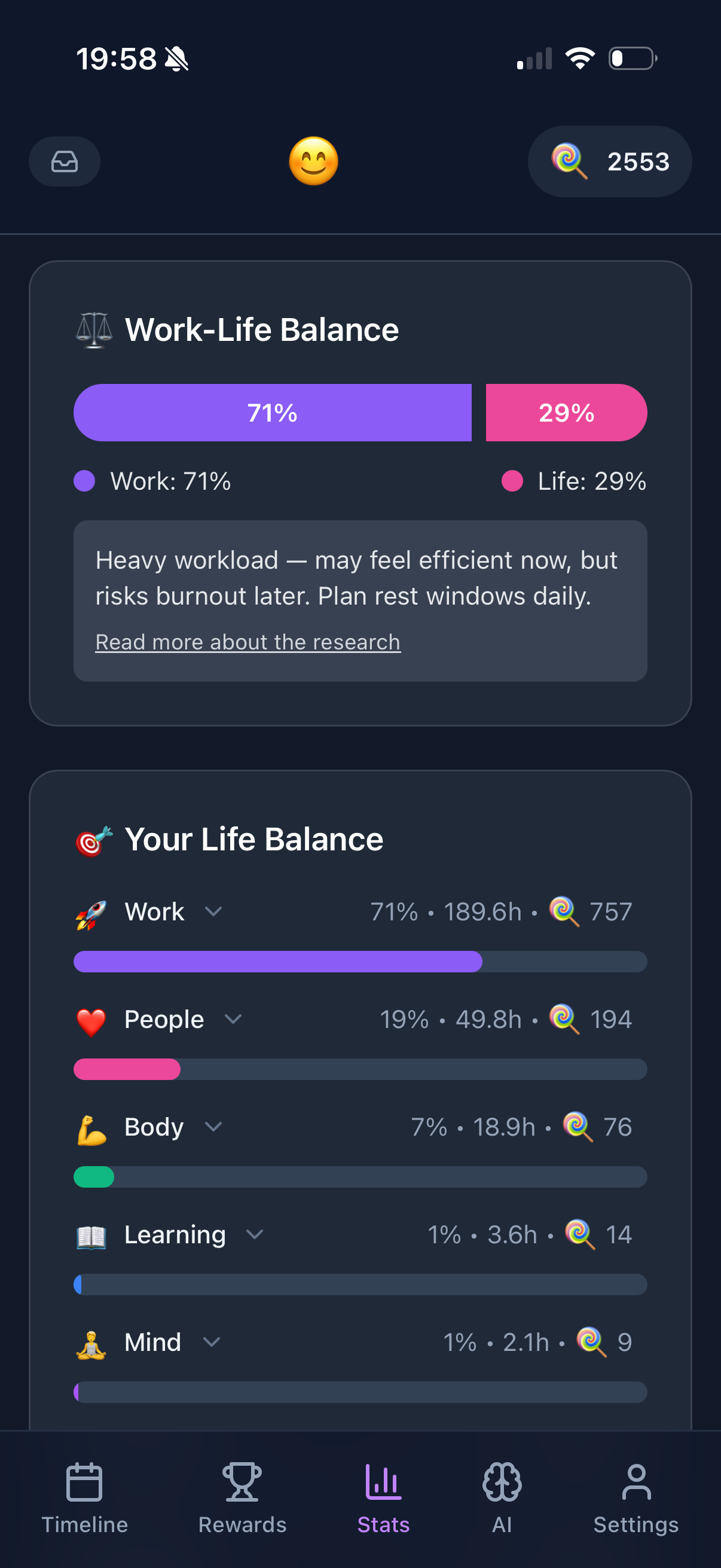
GTD organizes tasks by context (@home, @work, @calls) and project. But it doesn't ask: "Are you spending time on what matters?" You can complete 1,000 tasks and still neglect health, relationships, and joy. The system is agnostic about what you do - only how you organize it.
GTD + Life Balance = Funtasking's Approach
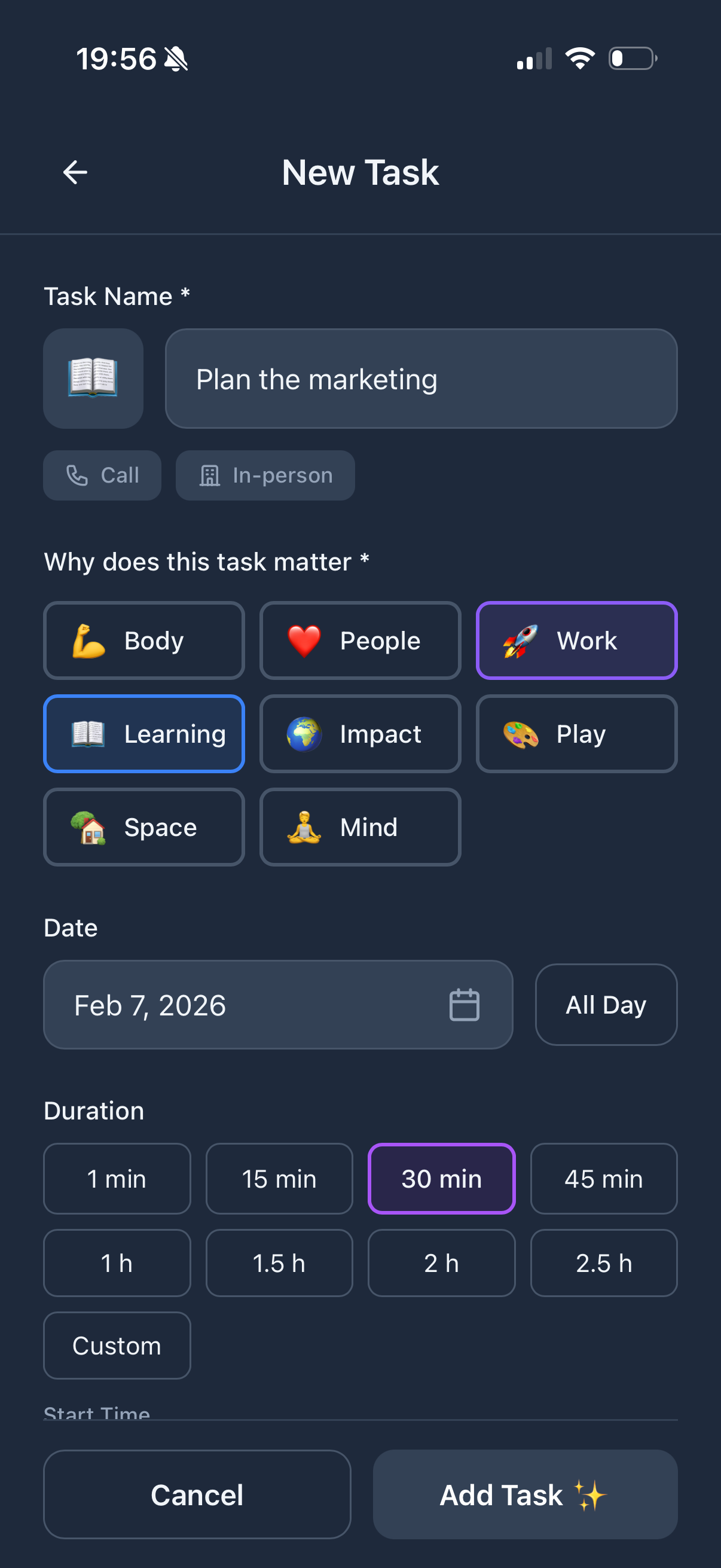
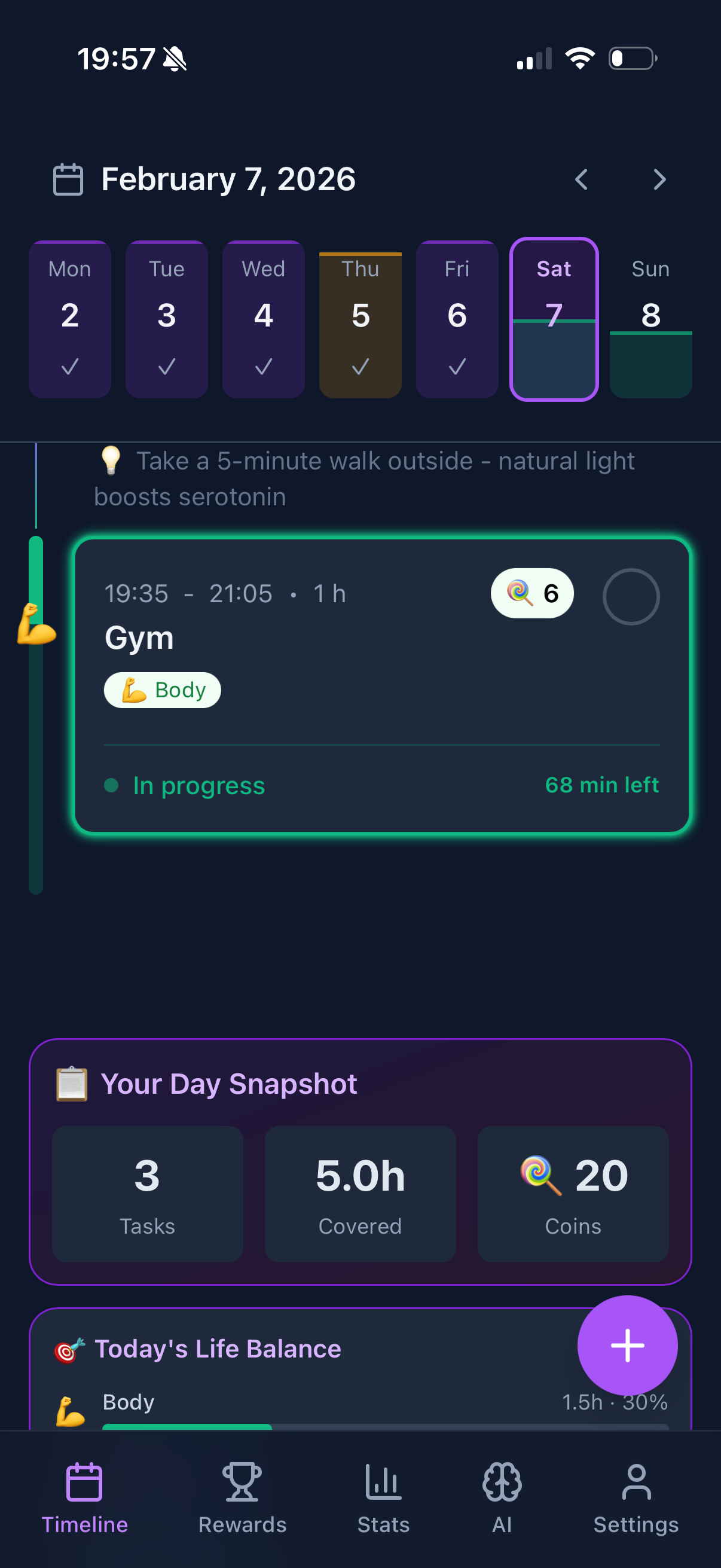
Funtasking adds a layer GTD lacks: life balance tracking. Every task belongs to one of 8 life areas (Work, Body, Mind, Connection, Learning, Impact, Play, Space). The visual Purpose Wheel shows which areas you're focusing on - and which you're ignoring. It's not anti-GTD; it's GTD with guardrails against burnout.
GTD Criticisms on Reddit
"Weekly reviews take forever"
Common complaint. GTD purists say 1-2 hours weekly; many users report 3+ hours. Solutions: time-box reviews (45 min max), simplify your system, or accept less-than-perfect reviews. Some users switch to daily mini-reviews instead.
"I spend more time organizing than doing"
The meta-work trap. If your system requires constant maintenance, it's too complex. Simpler systems (like time blocking or MIT - Most Important Tasks) might serve you better. GTD's overhead is worth it for complex project management; for simpler lives, it's often overkill.
"GTD doesn't work for ADHD"
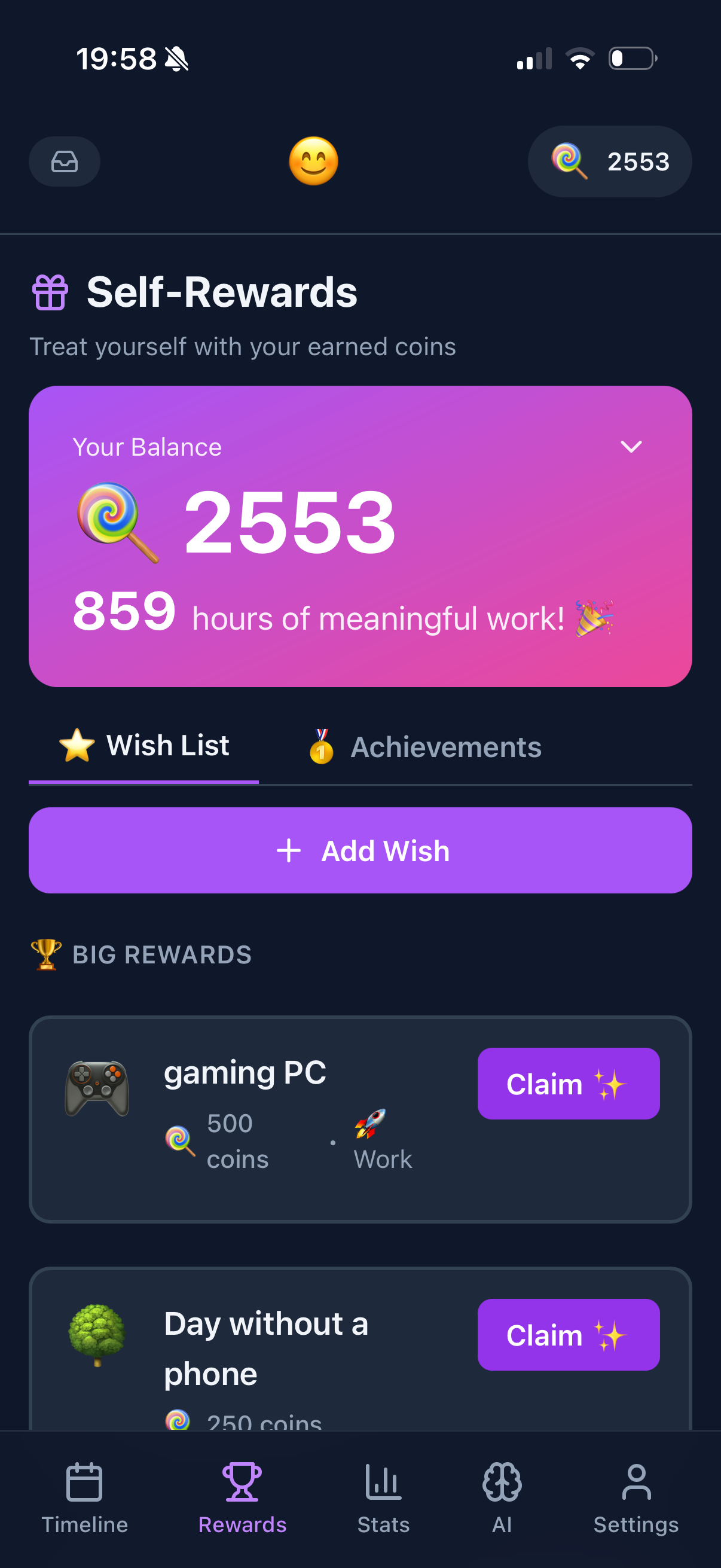
Controversial. Some ADHD users thrive with GTD's external brain. Others find the maintenance impossible. ADHD-friendly adaptations: visual systems (not text lists), gamification, body doubling for reviews, simpler categories. Apps like Funtasking add immediate rewards that help ADHD brains stay engaged.
"I feel productive but empty"
The core issue. GTD asks "what's the next action?" but not "should I be doing this at all?" It's a productivity system, not a life-design system. Consider combining GTD with life balance approaches that ensure you're completing tasks in areas that matter, not just areas that generate tasks.
GTD Alternatives
Time Blocking
Instead of lists, schedule blocks of time. "Deep work 9-11am" instead of "15 work tasks." Reduces decision fatigue, creates boundaries. Works better for day-to-day; GTD better for project tracking.
MIT (Most Important Tasks)
Pick 3 MITs each morning. Everything else is bonus. Simple, low-maintenance, focus on impact. Pairs well with light GTD for capturing ideas.
Life Balance Planners
Apps like Funtasking organize by life area first, tasks second. Ensures you're not just productive but balanced. Shows neglected areas before burnout hits.
Bullet Journaling
Analog system with flexibility. Migration (rewriting tasks monthly) forces intentionality. Creative outlet + productivity. Slower than digital but more reflective.
Making GTD Work in 2025
If You're Starting GTD:
- Start simple. Inbox, Next Actions, Projects, Waiting, Someday. That's it. Add complexity later only if needed.
- Pick one app. OmniFocus for full GTD, Things 3 for beautiful simplicity, Todoist for cross-platform. Stop app-hopping.
- Time-box reviews. 45 minutes max. Done is better than perfect.
- Add balance checks. Use an app like Funtasking alongside GTD to ensure life balance, or manually review: "Am I only doing work tasks?"
If You're Burned Out on GTD:
- Simplify ruthlessly. Cut projects, merge contexts, delete Someday/Maybe items over 6 months old.
- Add life areas. Manually or with an app, ensure non-work tasks get equal weight.
- Consider alternatives. Time blocking + simple capture might serve you better.
- Ask "why." What are you being productive for? Productivity without purpose is a treadmill.