Here's an uncomfortable truth: many productivity apps cause burnout. Not prevent it. Cause it.
They push you to do more. They guilt you for breaks. They measure success in tasks completed, not life lived. They're designed to maximize your output, not protect your wellbeing.
Burnout prevention apps are different. They're designed with your sustainability in mind. They help you notice warning signs before you crash. They support rest as much as work.
Burnout is real and serious. It's not just being tired. The WHO classifies burnout as an occupational phenomenon with three dimensions: exhaustion, cynicism, and reduced efficacy. Once you're there, recovery takes months. Prevention is the only good strategy.
Features That PREVENT Burnout
Protection Feature
Life Balance Tracking
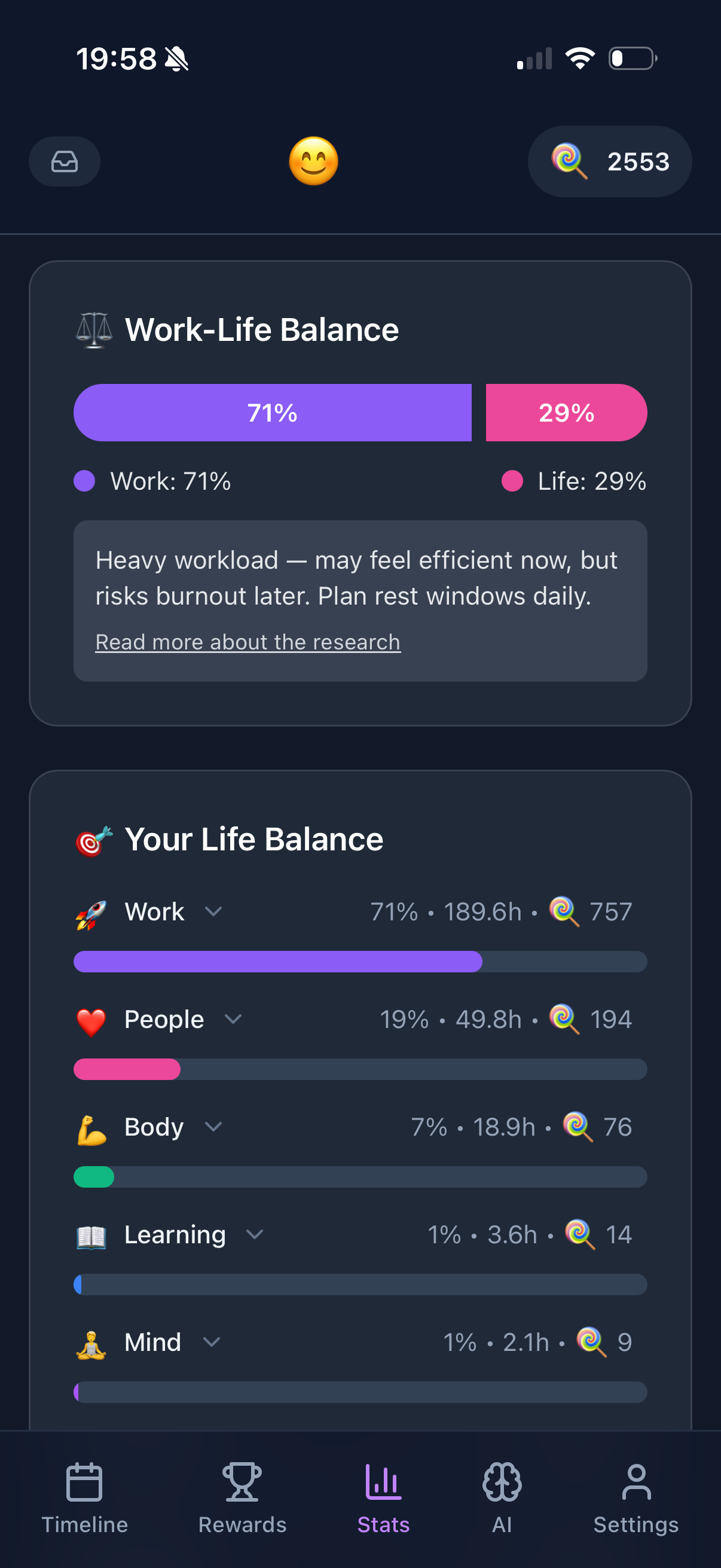
Burnout often comes from neglecting life areas that recharge you. When work dominates and health, relationships, and hobbies disappear, you're on the fast track to breakdown.
Funtasking's Purpose Wheel shows your balance across 8 life areas. When you see Career dominating while Health and Fun are empty, you have a visual warning. This awareness is the first step to correction.
Why it works: You can't fix what you can't see. The wheel makes imbalance impossible to ignore.
Protection Feature
Positive-Only Gamification
Streak-based systems create anxiety. Miss a day and feel like a failure. This is the opposite of sustainable motivation.
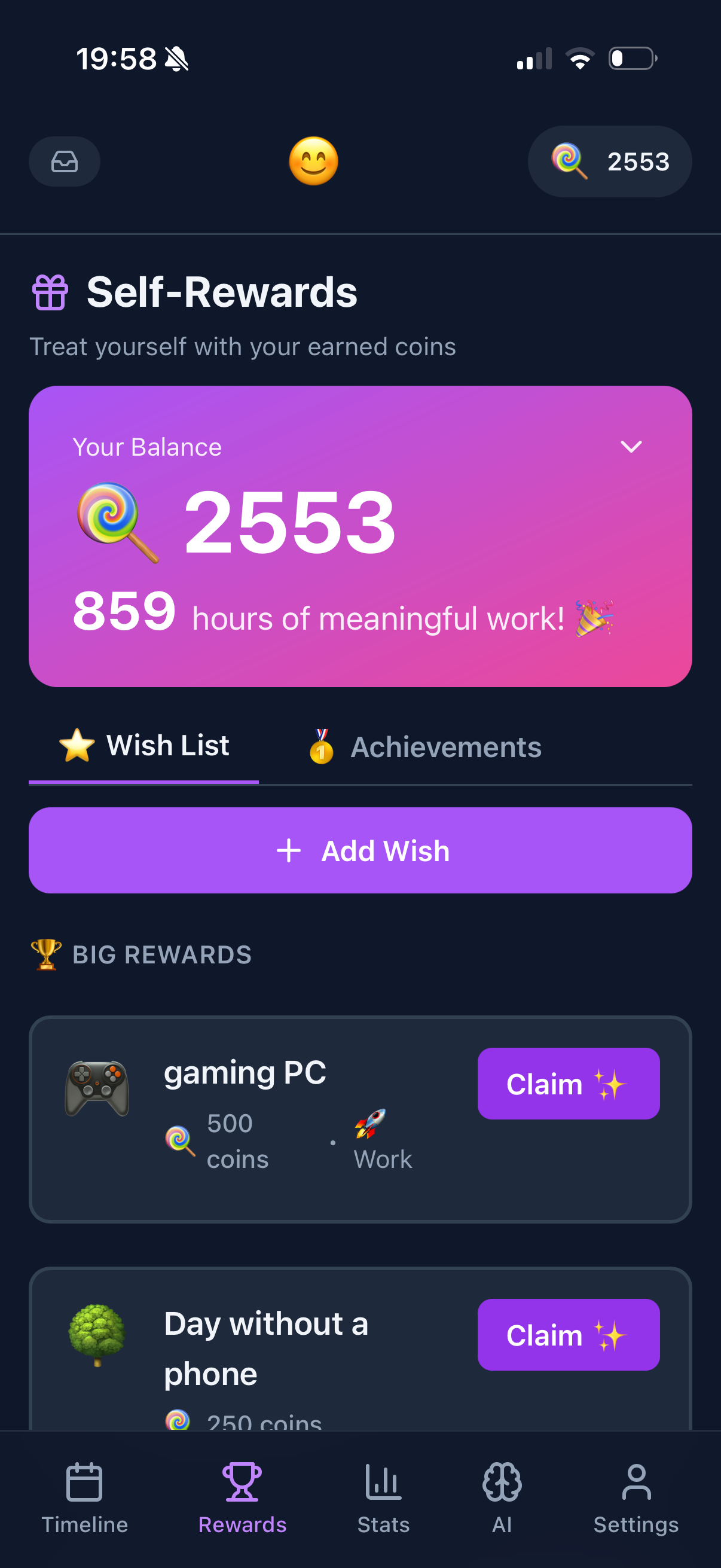
Funtasking uses positive-only gamification. You earn rewards for progress, but nothing is taken away for rest days. Your achievements stay. Your progress stays. Breaks are guilt-free.
Why it works: Positive reinforcement creates sustainable motivation. Punishment creates anxiety and eventual avoidance.
Protection Feature
Progress Over Perfection
Some apps celebrate 100% completion and shame anything less. This perfectionism is a direct path to burnout.
Better apps celebrate any progress. Did you do one thing in an area you've been neglecting? That's worth celebrating. The focus is on moving forward, not on hitting arbitrary completion metrics.
Why it works: Perfectionism is unsustainable. Progress is something you can maintain forever.
Protection Feature
Workload Warnings
Some apps like Sunsama actively warn you when you're planning too much. They calculate whether your planned tasks fit in your available time and push back if they don't.
Why it works: Overcommitment is a burnout precursor. Catching it at the planning stage prevents the stress of impossible days.
Features That CAUSE Burnout
Danger Feature
Punishing Streak Mechanics
Duolingo's angry owl. Habitica's dying avatar. Streak counters that reset to zero. These mechanics work short-term by hijacking your psychology. Long-term, they create anxiety, guilt, and eventual burnout.
You shouldn't feel bad for taking a vacation. You shouldn't lose "progress" for getting sick. Any app that makes rest feel like failure is working against your wellbeing.
Danger Feature
Productivity-Only Metrics
Apps that only measure work output with no concept of life balance. They'll celebrate you for completing 50 work tasks while your health and relationships crumble.
These metrics are toxic because they define success narrowly. A "productive" week where you didn't exercise, see friends, or have any fun is not actually a good week.
Danger Feature
Aggressive Notifications
Constant reminders that you haven't done enough. Guilt-inducing messages. Notifications at all hours. These keep you in a constant state of low-grade stress.
Good apps notify you helpfully, not aggressively. They respect your time and mental space.
Danger Feature
Social Comparison
Leaderboards that show you how much more productive other people are. Public accountability that creates shame. These features use social pressure as motivation, which is exhausting and often counterproductive.
How Competitors Handle Burnout Prevention
Todoist
Todoist is productivity-focused with minimal burnout prevention. It tracks tasks and Karma (productivity points), but has no life balance concept. You could burn out spectacularly while maintaining a high Karma score.
Burnout risk: Medium. No punishing streaks, but no protection either.
Habitica
Habitica's gamification includes significant punishment mechanics. Miss habits and your character takes damage. Skip enough days and you die, losing equipment. This creates real anxiety for many users.
Burnout risk: High. The punishment system can become a source of stress rather than motivation.
Sunsama
Sunsama explicitly targets burnout prevention. It has workload warnings, daily shutdown rituals, and intentionally slow pacing. It's designed for sustainable work.
Burnout risk: Low. But it's expensive ($16/month) and requires a calendar-centric workflow.
Finch
Finch is built around self-care rather than productivity. You care for a virtual pet by completing self-care tasks. The entire approach is gentle and encouraging.
Burnout risk: Low. But it's not a full planner - more of a self-care companion.
The Science of Burnout Prevention
Recovery Time
Research shows that adequate recovery time between work periods is essential for preventing burnout. Apps that pressure you to be productive during evenings, weekends, and vacations work against this recovery.
Life Balance
Studies consistently show that balance across life domains protects against burnout. People who maintain health, relationships, and hobbies alongside work are more resilient than those who sacrifice everything for career.
Autonomy
Self-determination theory shows that feeling in control matters. Apps that dictate your behavior through punishment mechanics undermine autonomy, which increases stress and burnout risk.
The research is clear: Sustainable productivity requires rest, balance, and autonomy. Apps that support these factors protect against burnout. Apps that undermine them accelerate it.
Warning Signs to Watch For
Your app might be contributing to burnout if:
- You feel anxious about opening it
- Breaks feel like failures because of streaks or metrics
- You've hidden from the app's notifications
- Your "productivity" is high but you feel worse than ever
- You dream about task lists or feel guilty on weekends
- The gamification has become another source of stress
If any of these resonate, it's time to reconsider your tools.
Building a Burnout-Resistant System
1. Choose Tools That Support Balance
Use apps with life balance tracking, not just productivity metrics. Funtasking's Purpose Wheel is designed for this. Make sure your tools remind you about health, relationships, and fun - not just work.
2. Avoid Punishing Mechanics
If an app punishes breaks, find a different app. Your tools should support rest, not create guilt around it. Streaks are not worth your mental health.
3. Set Boundaries with Notifications
Disable aggressive notifications. Schedule "do not disturb" periods. Your app should work for you, not interrupt you constantly.
4. Celebrate Progress, Not Perfection
Use tools that reward any progress, not just 100% completion. Sustainable success comes from consistency, not intensity.
Plan Without Burning Out
Funtasking helps you track life balance with the Purpose Wheel. Positive gamification without guilt.
Try Sustainable Planning
Related Articles