Raise your hand if you've ever avoided opening a productivity app because you didn't want to see all the things you didn't do.
Yeah. Me too.
Here's the dirty secret of the productivity industry: many apps are designed to make you feel bad. Not as an accident, but as a feature. Guilt and shame are powerful motivators, so apps weaponize them. Overdue tasks in red. Broken streaks. Disappointed virtual pets. Shameful completion rates.
It works short-term. You feel bad, so you do something to stop feeling bad. But long-term? You start avoiding the app. You feel worse about productivity in general. You burn out. The guilt that was supposed to motivate you ends up being the thing that makes you give up.
A different approach: Non-judgmental task managers focus on encouragement and progress. They celebrate what you did, not shame what you didn't. They're designed for your wellbeing, not just your output.
Signs Your Task Manager Is Judging You
Judgmental Pattern
Overdue Tasks in Red
When missed deadlines are highlighted in angry red, the message is clear: you failed. Every time you open the app, you're confronted with your inadequacy. This creates shame and often leads to avoidance.
A non-judgmental app might note that a task is overdue, but without the emotional weight. It might ask if you want to reschedule rather than shame you for missing it.
Judgmental Pattern
Streak Pressure
Streaks are designed to create anxiety. Once you have a streak going, you're motivated by fear of losing it rather than genuine desire to do the task. Miss one day and it all resets to zero, making your previous consistency seem worthless.
Non-judgmental apps might track cumulative progress instead. 50 days of exercise over 2 months is great, whether or not those days were consecutive.
Judgmental Pattern
Completion Rate Metrics
Apps that prominently display your "completion rate" are implicitly judging you. 70% completed means 30% failed. The metric focuses on what you didn't do rather than celebrating what you did.
Better metrics focus on progress and trends rather than pass/fail percentages.
Judgmental Pattern
Guilt-Inducing Notifications
"You haven't completed any tasks today." "Your streak is about to break." "Don't let your team down." These notifications use guilt as a motivational tool. They might work once, but they create negative associations with the app.
Non-judgmental notifications are informative or encouraging, not guilt-inducing.
What Non-Judgmental Looks Like
Kind Pattern
Celebration of Progress
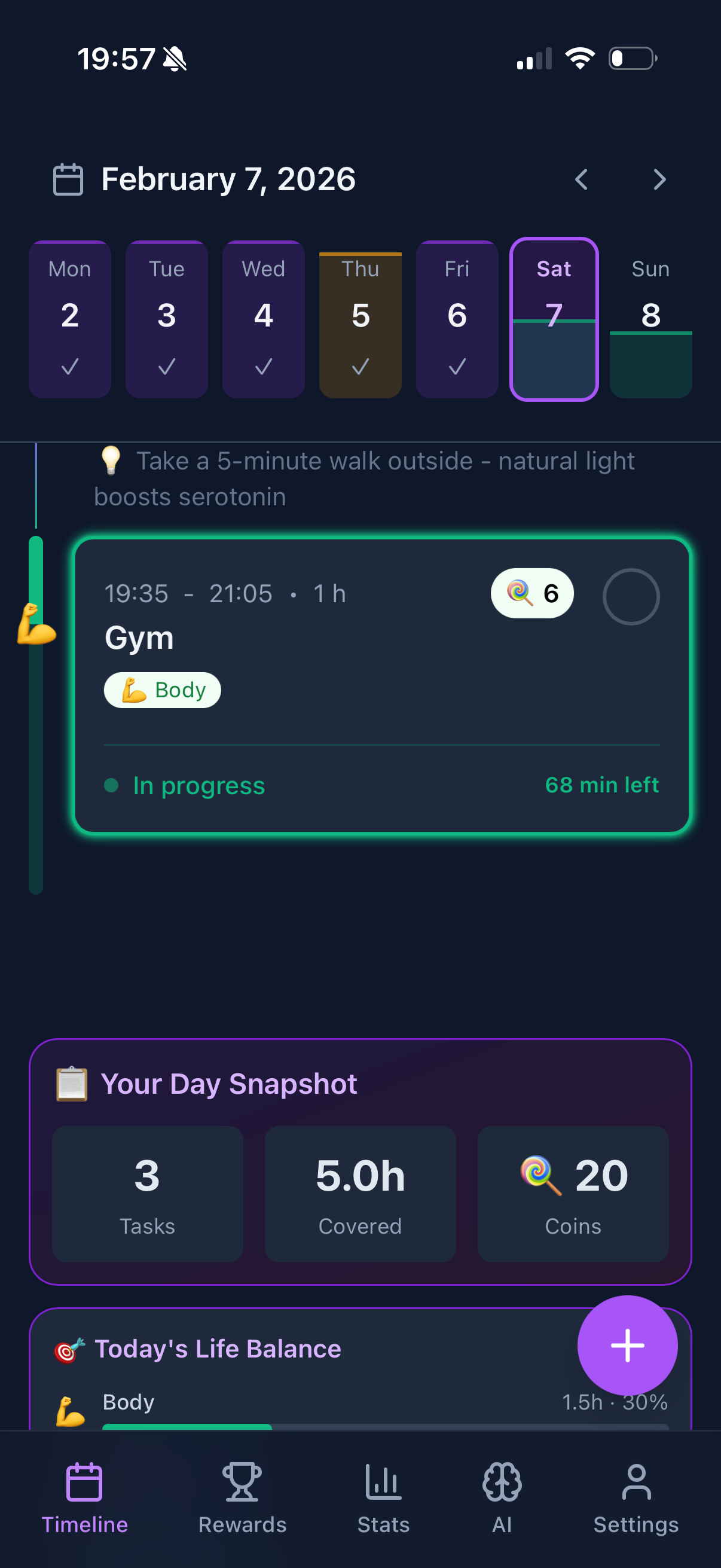
Instead of "you completed 7 of 10 tasks (70%)", a kind app might say "you completed 7 tasks today!" The focus is on what you accomplished, not what remains. This feels different psychologically.
Kind Pattern
Flexible Deadlines
Life happens. A non-judgmental app makes rescheduling easy and guilt-free. Moved a task? Great, it's now scheduled for when you can actually do it. No red shame, no "overdue" label following you around.
Kind Pattern
Cumulative Progress
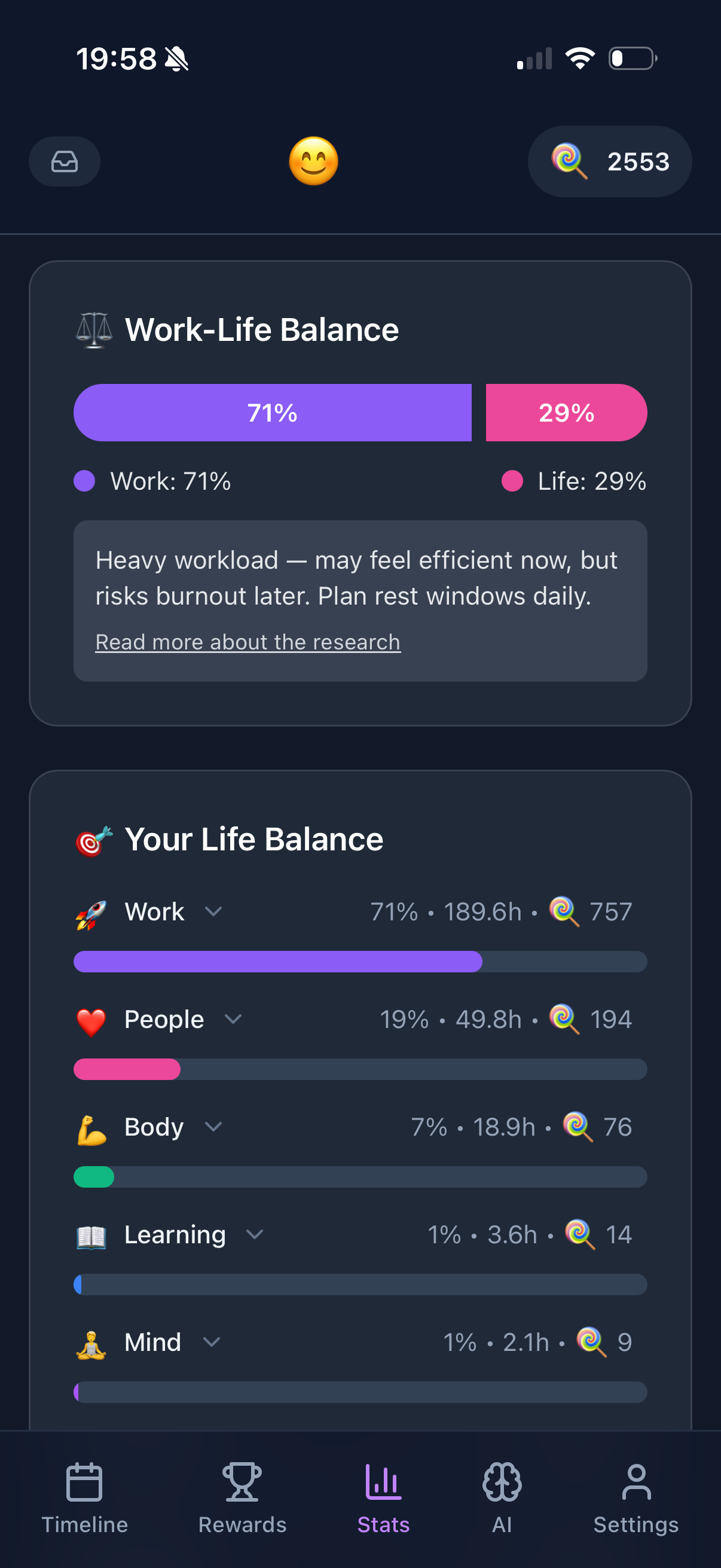
Instead of streaks that reset, cumulative progress shows everything you've ever accomplished. Your total tasks completed, your lifetime balance across life areas. Progress stays. Nothing is taken away.
Kind Pattern
Supportive Language
The words an app uses matter. "You didn't finish" vs "Ready to continue?" "Failed" vs "Incomplete." Non-judgmental apps choose language that supports rather than criticizes.
Why Kindness Works Better
The Psychology
Self-compassion research by Kristin Neff and others shows that treating yourself kindly after setbacks leads to better outcomes than self-criticism. People who practice self-compassion are more likely to try again, learn from mistakes, and maintain motivation over time.
Guilt works short-term but fails long-term. It creates avoidance, anxiety, and eventually burnout. Kindness creates sustainable motivation.
The Practical Reality
If your app makes you feel bad, you'll stop using it. Then you have no system at all. An app that feels supportive is one you'll actually open. Consistency beats intensity, and you can only be consistent with tools you don't dread.
The goal: An app should feel like a supportive friend, not a disappointed parent. It should help you get things done while also caring about how you feel in the process.
How Competitors Handle This
Todoist
Todoist is relatively neutral. It doesn't aggressively shame you, but it also doesn't go out of its way to be kind. Overdue tasks are visible but not screaming at you. The Karma system is more gamification than judgment.
Judgment level: Low-moderate. Not actively harmful, but not actively supportive.
Habitica
Habitica's gamification includes real punishment. Miss habits and your character takes damage. Die and you lose your gear. This is judgment in game form. For some it's motivating; for many it creates real anxiety.
Judgment level: High. Punishment is a core mechanic.
Duolingo
Duolingo's owl has become a meme for guilt-tripping. The notifications are aggressive, the streak pressure is real, and the sad owl when you miss a day is designed to make you feel bad.
Judgment level: Very high. Guilt is the primary motivation strategy.
Finch
Finch is designed to be gentle and non-judgmental. The virtual pet never dies or gets hurt. The focus is entirely on self-care and encouragement. It's one of the kindest apps available.
Judgment level: Very low. Kindness is the design philosophy.
Funtasking
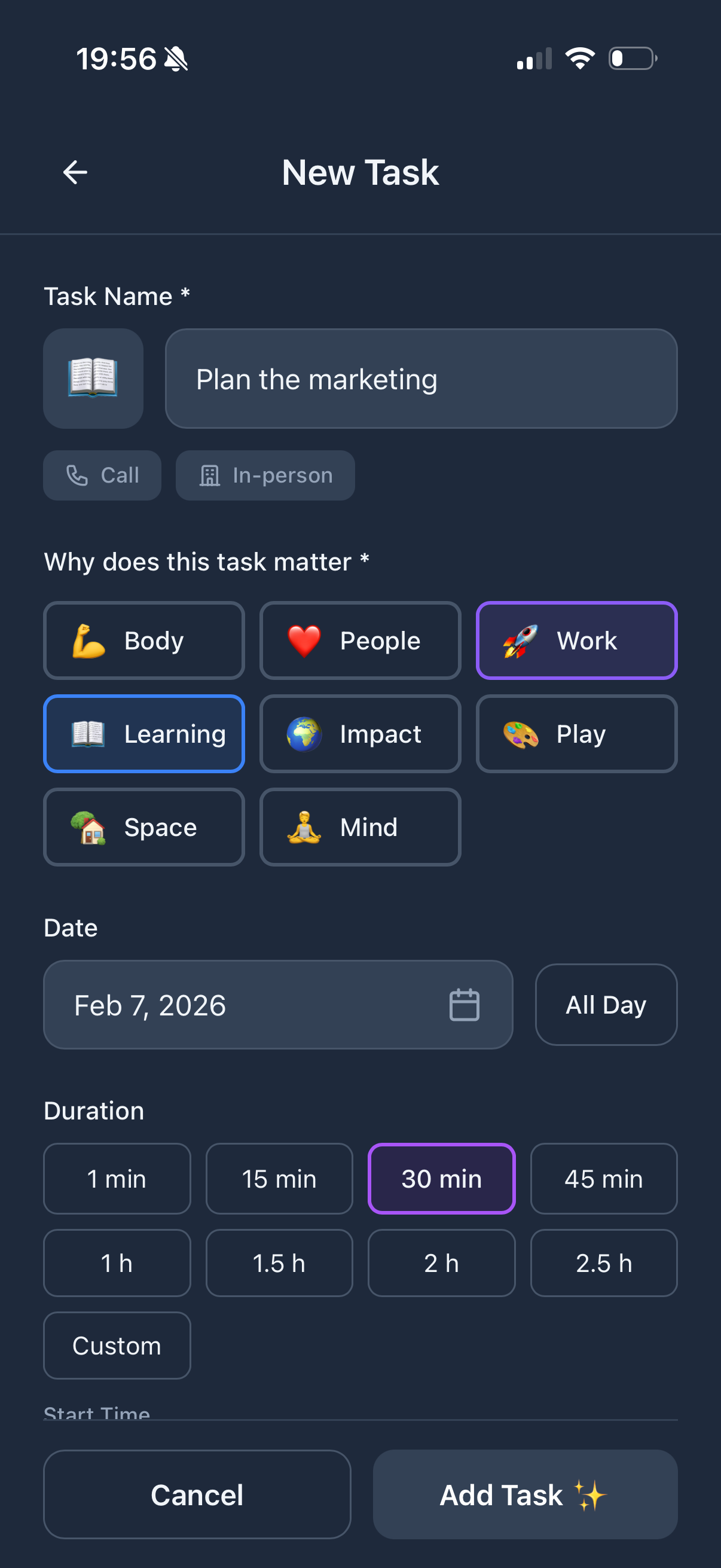
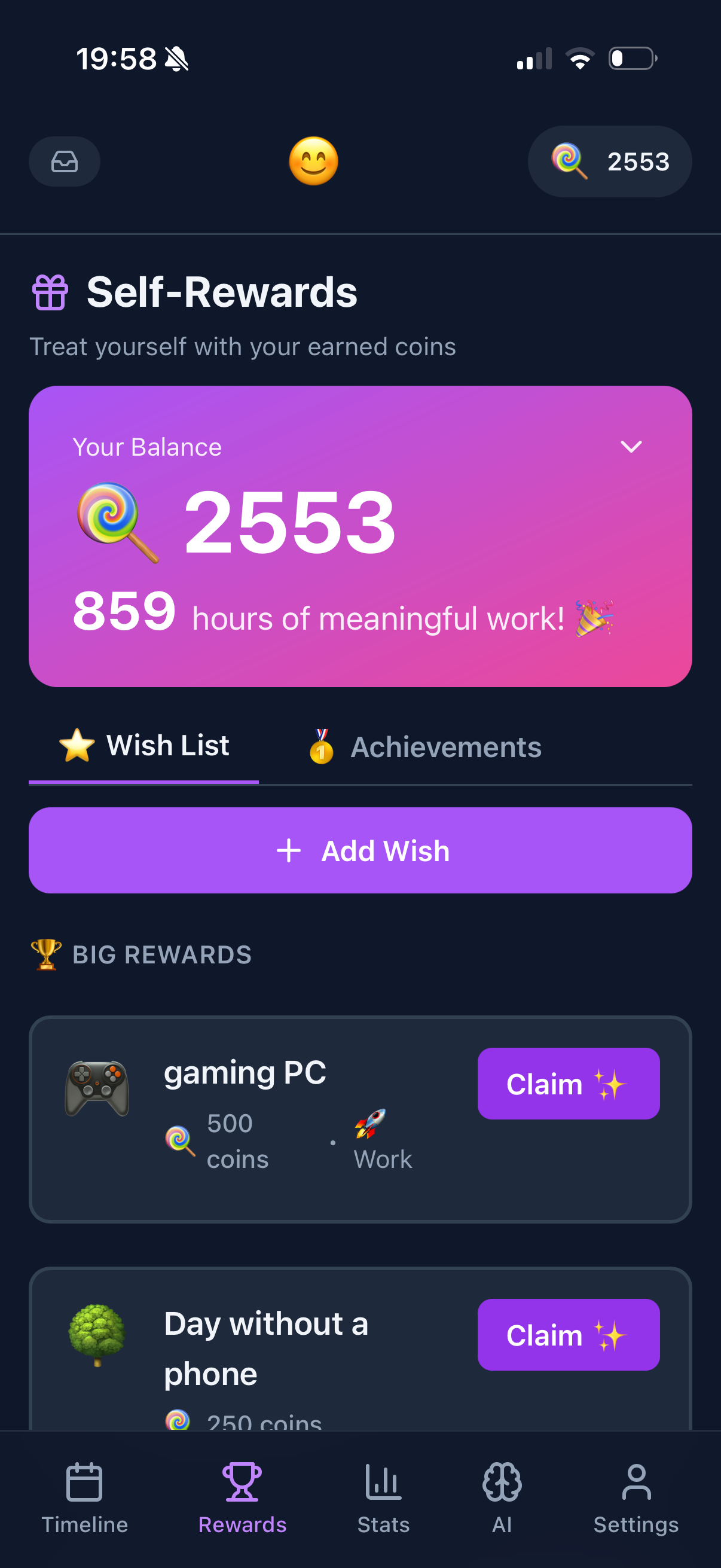
Funtasking uses positive-only gamification. You earn rewards for progress, but nothing is taken away for rest days. There are no punishing streaks, no red overdue tasks, no guilt-inducing notifications. The Purpose Wheel shows balance without judgment.
Judgment level: Very low. Built around encouragement and life balance.
Who Needs a Non-Judgmental App?
Everyone could benefit, but these groups especially:
- Anxiety sufferers: Traditional apps amplify anxiety. Non-judgmental ones don't.
- Burnout survivors: If you've burned out before, you need tools that protect you, not push you.
- Perfectionists: Perfectionists are already too hard on themselves. They need apps that provide balance, not more criticism.
- People with ADHD: ADHD often comes with rejection sensitivity. Judgmental apps can feel devastating.
- Anyone tired of hustle culture: If you're done with the "always be productive" mentality, you need tools that align with a gentler approach.
Making the Switch
1. Notice How You Feel
Start paying attention to how your current app makes you feel. Do you dread opening it? Do you feel guilty after using it? These feelings are data telling you the app isn't right for you.
2. Identify Judgmental Features
What specifically makes you feel bad? Streaks? Overdue labels? Completion rates? Knowing the triggers helps you find apps that avoid them.
3. Try a Kinder Alternative
Give a non-judgmental app a real try. Notice how different it feels. The absence of guilt can be surprisingly liberating.
4. Let Go of Productivity Guilt
You don't need to maximize every moment. You don't need to feel bad for resting. A good app supports these truths rather than fighting them.
Reality check: Switching apps won't solve everything. If you're deeply stuck in productivity guilt, you might also benefit from working with a therapist or coach. Apps are tools, not therapy. But the right tool makes a real difference.
Plan Without Judgment
Funtasking celebrates your progress without shaming your rest. Try a kinder approach to planning.
Try Kinder Planning
Related Articles