Last updated: January 2026. Based on discussions from r/productivity, r/getdisciplined, r/selfimprovement, r/ADHD, and countless "what app do you ACTUALLY use" threads.
"My graveyard of abandoned productivity apps could fill a museum. Notion, TickTick, Things 3, Structured, Sorted - all downloaded with excitement, all forgotten within weeks. The app isn't the problem. I'm the problem. But also... maybe the app is a little bit the problem."
Sound familiar? Every few months there's a new "best productivity app" thread, and every few months we all download something new, convinced THIS time it'll be different. But the pattern keeps repeating. Let's talk about why - and what actually breaks the cycle.
The Honeymoon Phase Is Real (And It Lies to You)
Here's the thing nobody mentions in app reviews: every app feels amazing for the first week. You're excited. You're motivated. You spend 2 hours setting up the perfect system. You add 47 tasks you've been meaning to do. You feel productive just organizing things.
Then week two hits. The excitement fades. Opening the app feels like a chore. Your perfect system has 23 overdue tasks staring at you. You stop using it. A month later, you read another "best apps of 2026" article and the cycle repeats.
The 2-Week Survival Test
Reddit's r/productivity has an unofficial rule: don't recommend an app until you've used it for at least 2 weeks consistently. The honeymoon phase lasts about 5-7 days. If you're still using something by day 14 - not because you forced yourself, but because it actually helps - that's when you know it might stick.
Why 90% of Apps Get Abandoned
After reading hundreds of "why I quit X app" threads, patterns emerge:
- Too much friction: If adding a task takes more than 3 taps, you'll eventually just remember things in your head instead
- Feature overwhelm: You wanted a to-do list, not a project management suite for a 50-person team
- No satisfaction: Checking off a task should feel good. If it doesn't, why bother?
- Setup guilt: Those empty databases and unused templates silently judge you every time you open the app
- Subscription fatigue: Paying $5/month for something you barely use creates resentment
What Actually Makes an App "Sticky"
The apps people actually use long-term share specific traits. Not features - traits. The distinction matters.
The 3 Things That Make Apps Stick
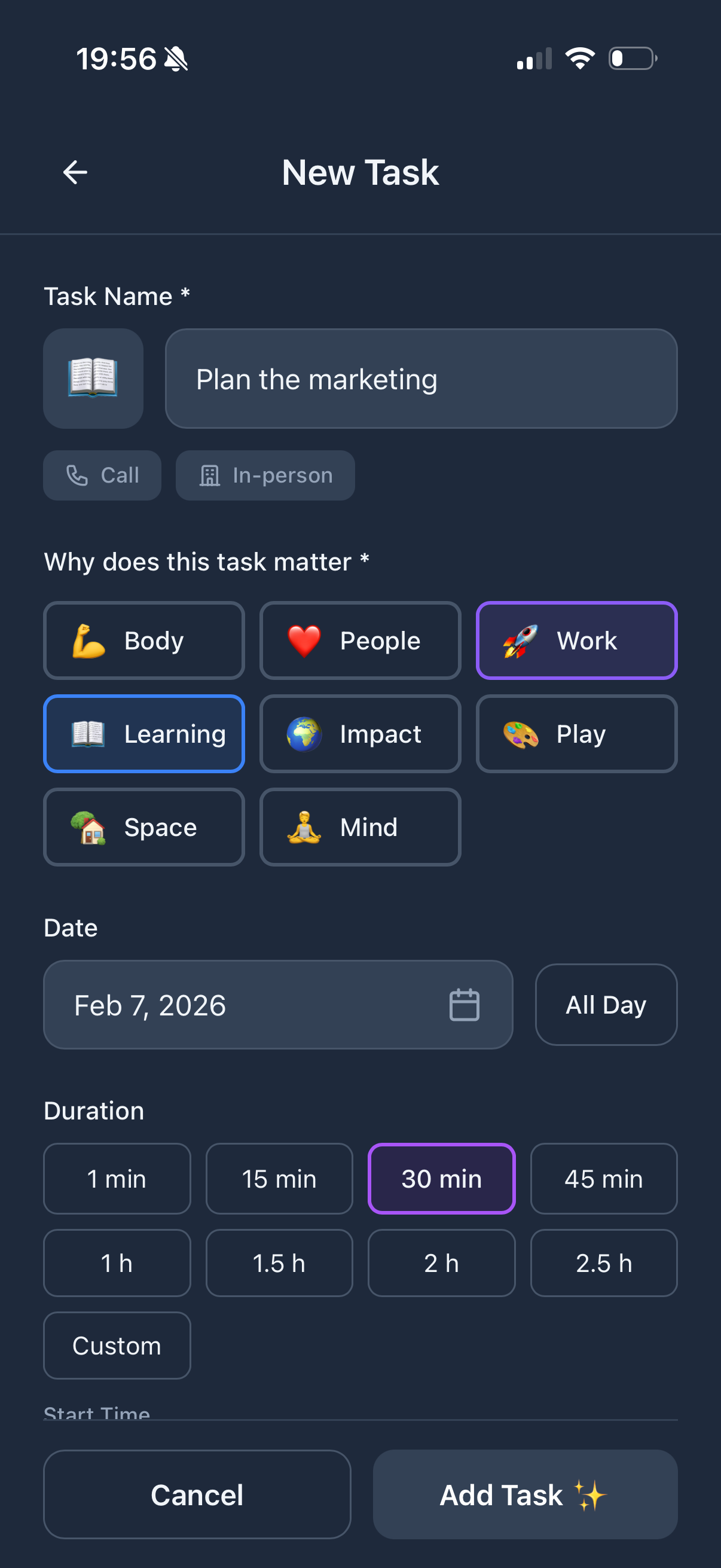
- Low friction entry: You can add a task in under 2 seconds. No categories, no due dates, no priority levels required. Just capture and go.
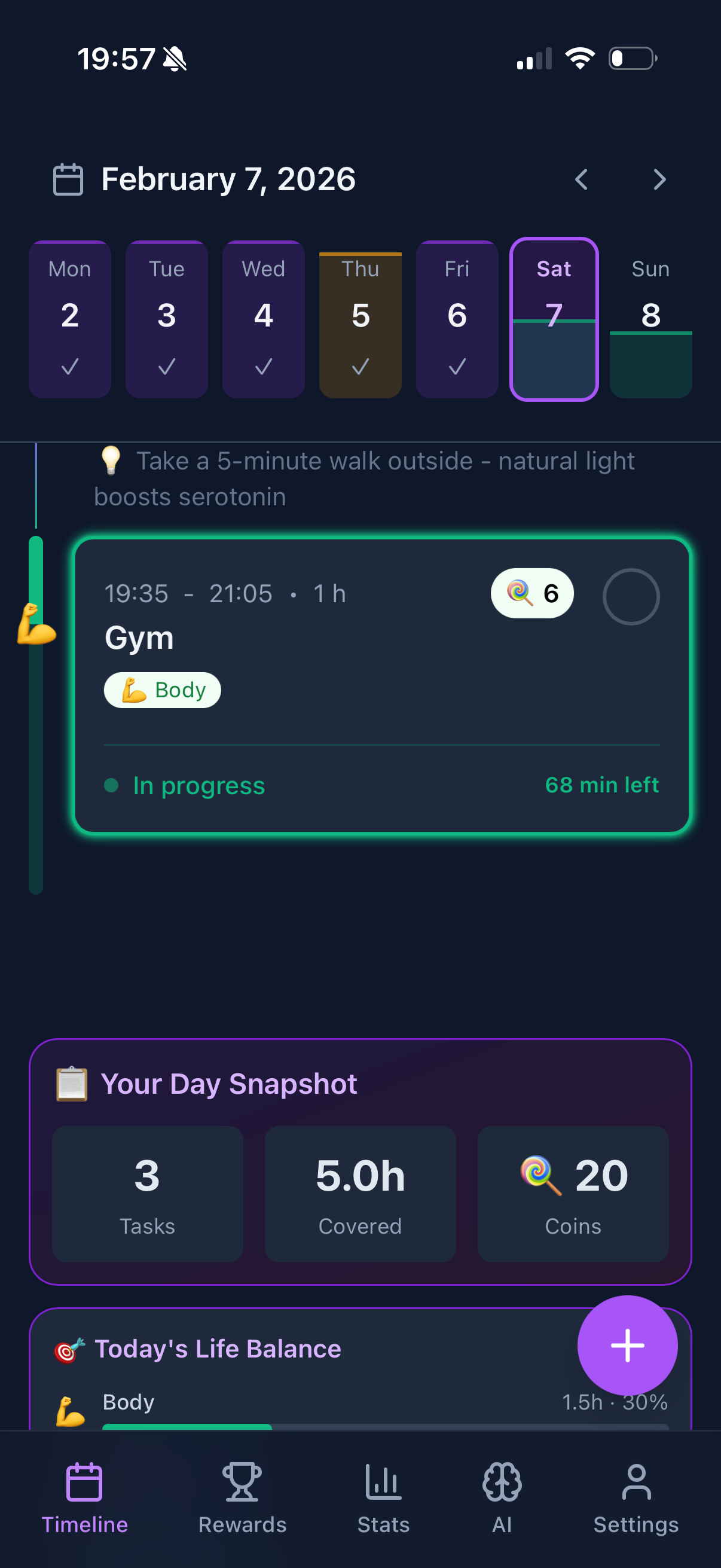
- Visual/tactile satisfaction: Something about completing a task feels good. A satisfying animation. A sound. A progress indicator. Your brain needs a small reward.
- Forgiveness: Miss a few days? The app doesn't punish you with red overdue badges and guilt trips. It just waits.
Simple Beats Feature-Rich (Every Time)
This is the hardest lesson and nobody wants to hear it. The apps with the most features are almost never the apps people actually use daily.
A Tale of Two Users
User A: "I spent 30 hours building my Notion productivity system. Templates, databases, linked properties, rollups - it's beautiful. I haven't opened it in 3 weeks because it feels like work."
User B: "I use Apple Reminders. It does like 5 things. I've used it every single day for 4 years. Sometimes boring and simple is the whole point."
The pattern repeats across thousands of threads. People RECOMMEND complex apps. People USE simple ones. There's a massive gap between what sounds good in a review and what survives daily life.
Apps Reddit Actually Uses (Not Just Recommends)
| App |
Why People Stick |
Who Abandons It |
Honest Take |
| Apple Reminders |
Zero friction, always there, Siri integration |
Power users who need more structure |
Boring but bulletproof. The app equivalent of a paper list. |
| Todoist |
Natural language input, cross-platform, karma system |
People who need time blocking or calendar views |
Best balance of features vs simplicity. Most recommended AND most used. |
| Google Calendar |
Time blocking, already using Gmail, shared calendars |
People who don't think in time blocks |
Not really a to-do app, but many use it as one. Works if you're calendar-brained. |
| Funtasking |
Purpose Wheel satisfaction, visual design, gamification that isn't annoying |
People who hate any gamification |
The tactile satisfaction is real. Spinning the wheel actually makes you want to complete tasks. |
| Notion |
Ultimate flexibility, great for documentation |
90% of people who try it for daily tasks |
Amazing for projects, rough for daily task management. Most people quit within a month. |
The Unpopular Truth About Notion
Look, I know Notion has almost religious devotion. And for certain use cases - project wikis, documentation, second brain systems - it's genuinely excellent. But for daily task management? The data tells a different story.
From r/productivity (147 upvotes): "Notion is the app I recommend the most and use the least. I spent 40 hours setting up my productivity system. Now I use Todoist for actual tasks and Notion just sits there making me feel guilty about all those empty templates."
Common response: "Same. Notion is for building systems. Todoist/Reminders/whatever is for doing things. Different tools for different jobs."
The Funtasking Surprise
Something I've noticed in 2026 threads: Funtasking keeps coming up in "apps I actually kept using" discussions. Not as the most powerful or feature-rich, but specifically in conversations about what survives the 2-week test.
Why the Purpose Wheel Works
The visual design isn't just aesthetic - it's functional. Spinning the Purpose Wheel to see your tasks arranged by life area creates a moment of satisfaction before you even start working. It sounds small. It isn't.
- Visual progress: Seeing the wheel fill up as you complete tasks hits different than checking boxes
- No setup required: Default categories work immediately - customize later if you want
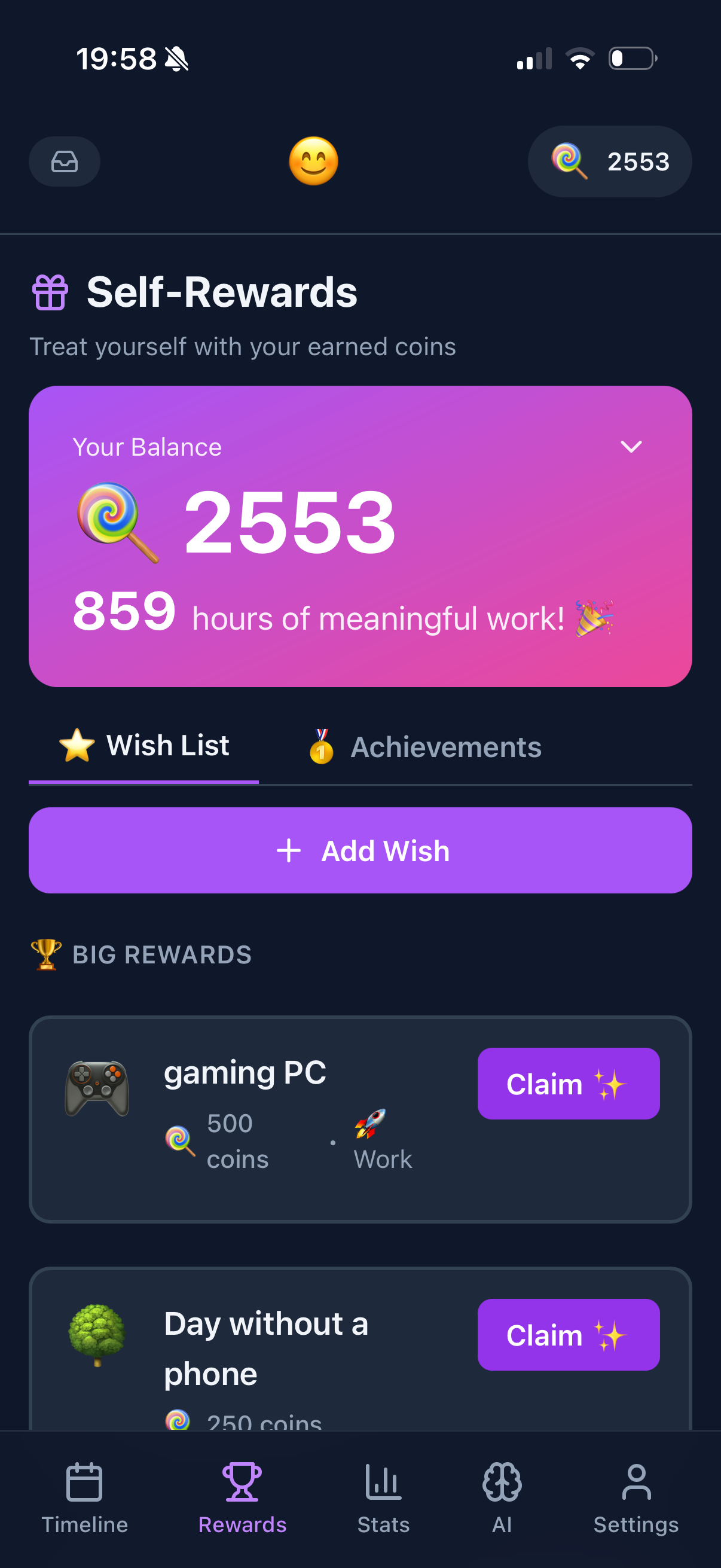
- Gamification that doesn't feel childish: Earning coins is satisfying without being Duolingo-annoying
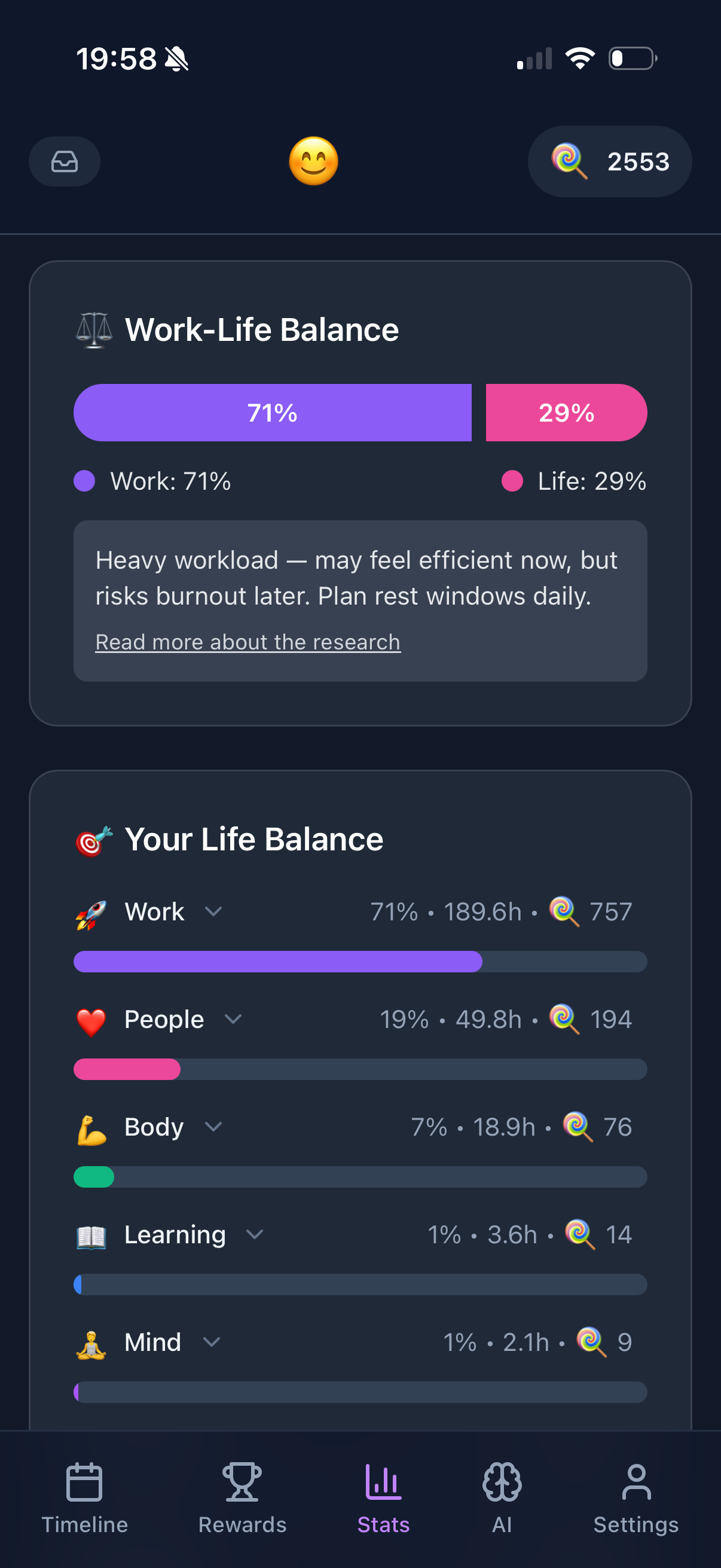
- Life balance visibility: Instantly see if work is eating your whole life or if you're neglecting health
The common feedback: "I thought the wheel thing was gimmicky until I realized I was opening the app just to see it. That's when I knew it was working."
What Actually Works: Lessons from Thousands of Threads
The "Only Use 2 Apps" Rule
Over and over, the most productive Redditors share the same insight: they use fewer apps, not more. The magic number seems to be 2-3 tools max.
- Capture tool: Something instant for when ideas hit (Apple Notes, Google Keep, voice memo)
- Daily driver: Your main task manager (Todoist, Funtasking, Reminders, whatever)
- Optional: Calendar: If you need time blocking
That's it. People who use 7 apps for productivity spend more time managing their systems than doing actual work.
The App Matters Less Than You Think
"I've been using a paper notebook for 3 years. Zero features. No sync. Can't share it. Best productivity system I've ever had. The tool matters way less than actually using it."
Harsh truth: the best productivity app is the one you'll actually open. A mediocre app used daily beats a perfect app abandoned in a week. Stop optimizing your tools and start using them.
FAQ: What Reddit Really Asks
Q: What productivity app do people actually stick with?
The apps with the highest long-term retention according to 2026 Reddit threads: Apple Reminders (simplicity), Todoist (balance), and Funtasking (visual satisfaction). The common thread isn't features - it's low friction and some form of completion satisfaction. Apps that feel good to use get used.
Q: Why do some productivity apps work and others don't?
Three factors matter: How fast can you add a task? Does completing it feel rewarding? Will missed days make you feel guilty? Apps that nail quick entry, satisfying completion, and forgiveness for imperfect use become habits. Apps that require setup, feel neutral when you finish tasks, or shame you for gaps get abandoned.
Q: What's the most used daily planner app?
Based on actual usage (not recommendations), Google Calendar and Apple Reminders dominate simply because they're already on your phone. For dedicated apps, Todoist has the widest consistent daily usage. Funtasking is increasingly mentioned in "apps I actually kept" threads due to its visual appeal making daily use feel less like a chore.
Q: How do I find a productivity app that works for me?
Stop researching and start testing. Pick ONE app. Use only the free tier. Commit to 14 days without switching. If you're still using it on day 14 without forcing yourself, keep it. If not, try something else. Most people fail because they never give any single app enough time to become a habit.
The Real Secret: Habits Beat Features
After reading probably a thousand productivity threads over the years, here's what I've learned: the app graveyard exists because we keep searching for external solutions to internal problems. No app will make you disciplined. No feature will make you motivated. The best apps just get out of your way.
The 3-Question App Test
Before committing to any productivity app, ask yourself:
- Can I add a task in under 3 seconds? If not, you'll eventually stop adding tasks.
- Does completing a task feel satisfying? If not, you'll lose motivation.
- Will I feel OK opening this after a week away? If not, one bad week kills the habit.
Apps that pass all three become daily habits. Apps that fail any one of them end up deleted within a month. It's that simple.
My Current Stack (For What It's Worth)
Since everyone always asks:
- Quick capture: Apple Notes (fastest possible entry)
- Daily planning: Funtasking (the Purpose Wheel genuinely makes me want to open it)
- Scheduling: Google Calendar (meetings and time blocks only)
That's it. Three apps. Tried dozens. These survived. The wheel thing in Funtasking sounds gimmicky until you realize you're actually using your task manager every day because it's enjoyable. Sometimes the "gimmick" is the whole point.
But honestly? The specific apps don't matter. What matters is picking something - anything - and actually using it long enough for it to become automatic. The best productivity system is the one you don't have to think about.