Last updated: January 2025. This page summarizes Reddit discussions about gamification in productivity apps. Based on threads from r/productivity, r/ADHD, r/getdisciplined, and related communities.
The Numbers: Does Gamification Actually Work?
+43%
Task Completion
Journal of Business Research, 2023
+83%
Motivation Increase
Employee Studies, 2024
+30%
Participation Rates
University of Colorado
$25.9B
Market Size 2025
Global Market Analysis
The global gamification market has grown from $6.6 billion in 2019 to approximately $25.94 billion in 2025. This growth reflects widespread recognition that traditional motivation techniques often fall short - research indicates only 28% of employees feel engaged with standard methods, while gamification increases commitment with a 48% boost in participation.
The Psychology: Why Games Motivate Us
Dopamine and Reward Loops
Dopamine is a neurotransmitter of our central nervous system and is considered the main pleasure center of our brain. It is synthesized during pleasurable situations and increases blood pressure to produce a feeling of well-being, causing the body to repeat the behavior that led to this pleasant feeling. Gamification exploits this by providing immediate rewards for desired behaviors.
Self-Determination Theory (SDT)
According to research, gamification leverages Self-Determination Theory by fostering intrinsic motivation through satisfying three psychological needs: autonomy (control over choices), competence (sense of mastery), and relatedness (connection to others). When these needs are met, people are naturally motivated to engage.
The Reddit Debate: Childish or Effective?
This is THE most common question about gamified productivity apps. Here's what real users report:
Initial Skepticism is Universal
"I'm a grown adult getting excited about earning coins/points/funts but here we are."
This exact sentiment appears across hundreds of Reddit threads. The pattern is consistent: initial skepticism → reluctant trial → surprised effectiveness → continued use. Most adults feel silly at first, then find it genuinely works.
Types of Gamification (Not All Are Equal)
Points & Badges
How it works: Earn XP, unlock achievements, collect badges.
Effectiveness: Works initially, often loses meaning over time. "Another badge, so what?"
Leaderboards
How it works: Compete with others on rankings.
Effectiveness: Great for competitive people, anxiety-inducing for others. Can backfire.
Progress Visualization
How it works: Streaks, progress bars, completion percentages.
Effectiveness: Solid for habit building. Duolingo streaks are addictive for a reason.
Personal Rewards
How it works: Earn currency, spend on YOUR chosen rewards.
Effectiveness: Highest sustained motivation. Rewards you actually want.
RPG Elements
How it works: Avatars, quests, character development.
Effectiveness: Great for gamers, overwhelming for others. Habitica's approach.
Punishment Systems
How it works: Lose HP, trees die, streaks break.
Effectiveness: Can motivate through fear, but often causes anxiety long-term.
App Comparison: Different Gamification Approaches
Funtasking
Gamification style: Personal rewards + life balance tracking
What Reddit Appreciates:
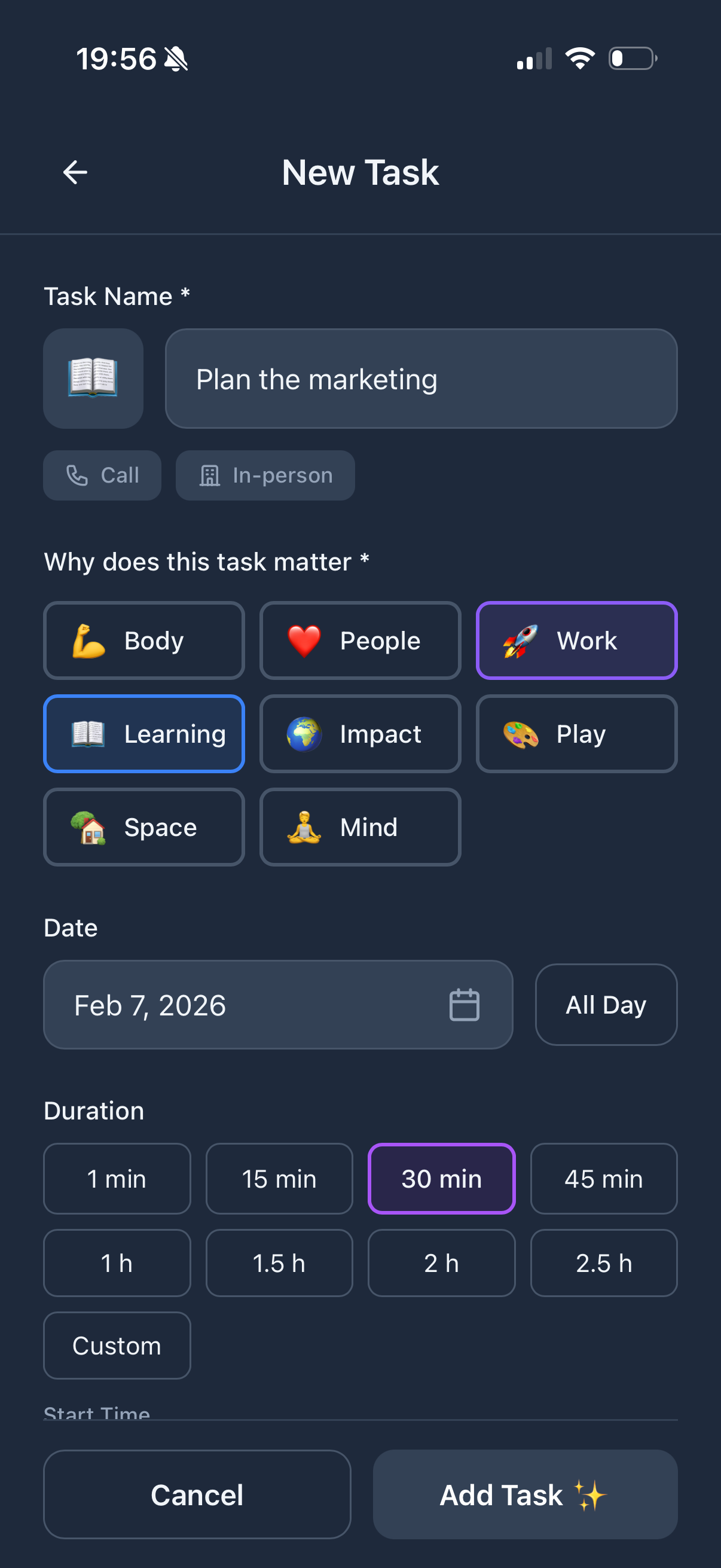
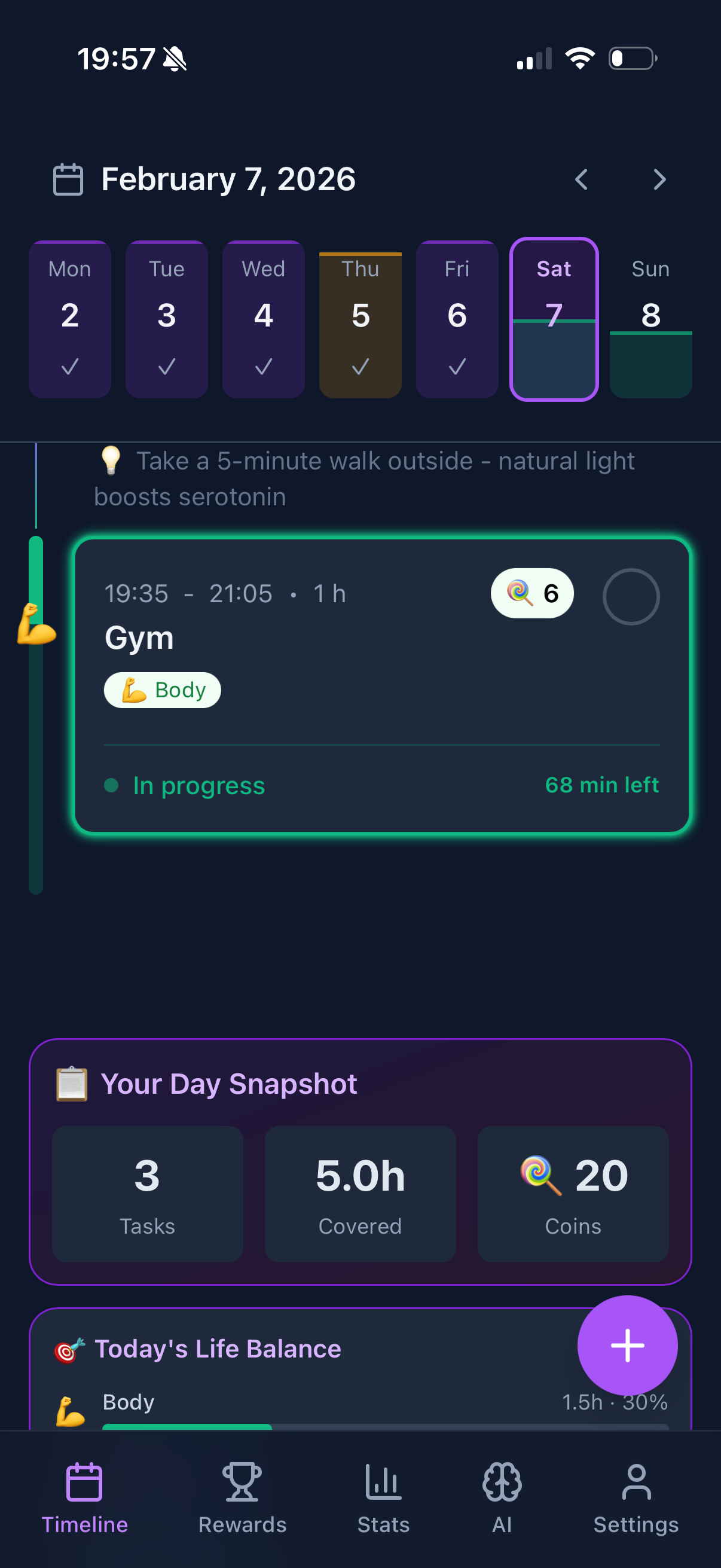
- 15 min = 1 coin - Simple, immediate reward
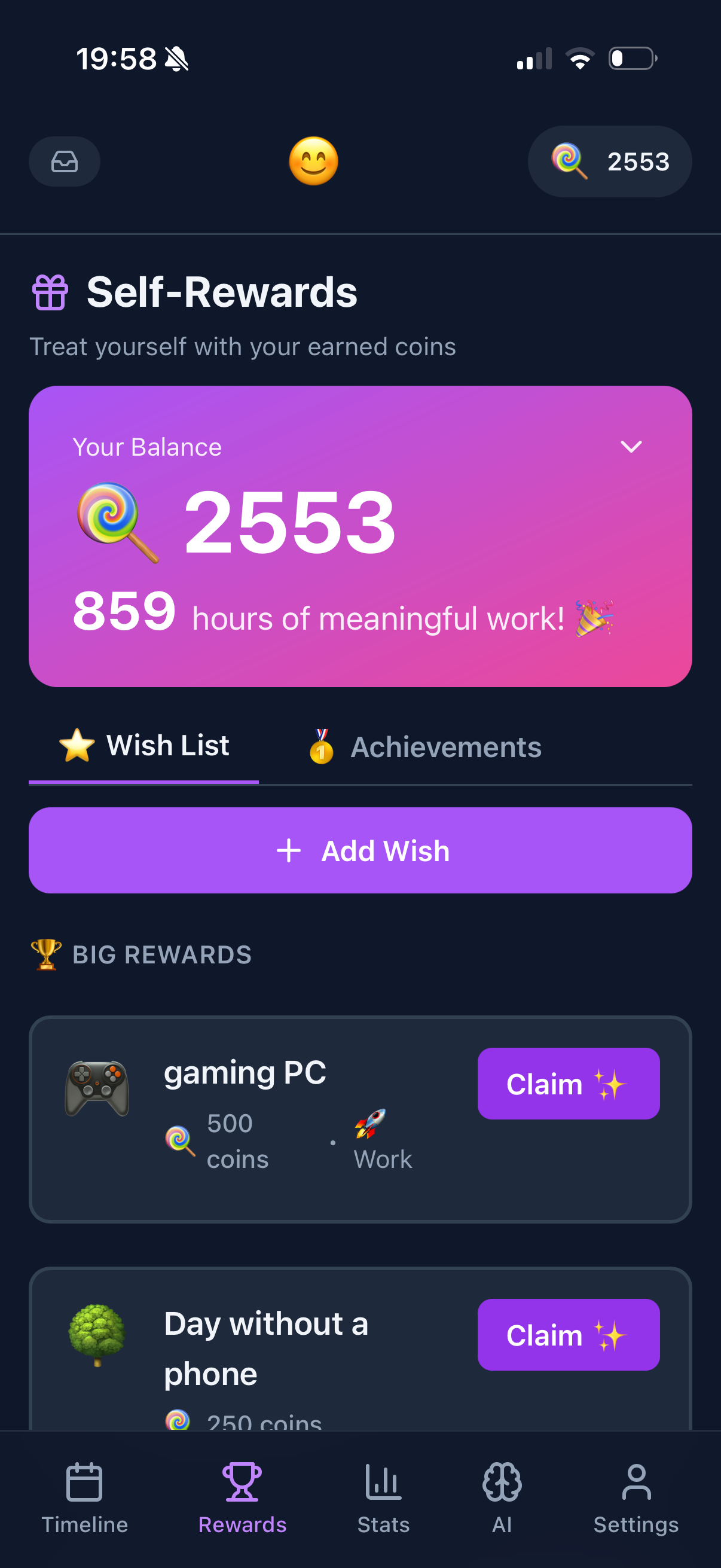
- Personal rewards - Trade coins for spa day, coffee, Netflix
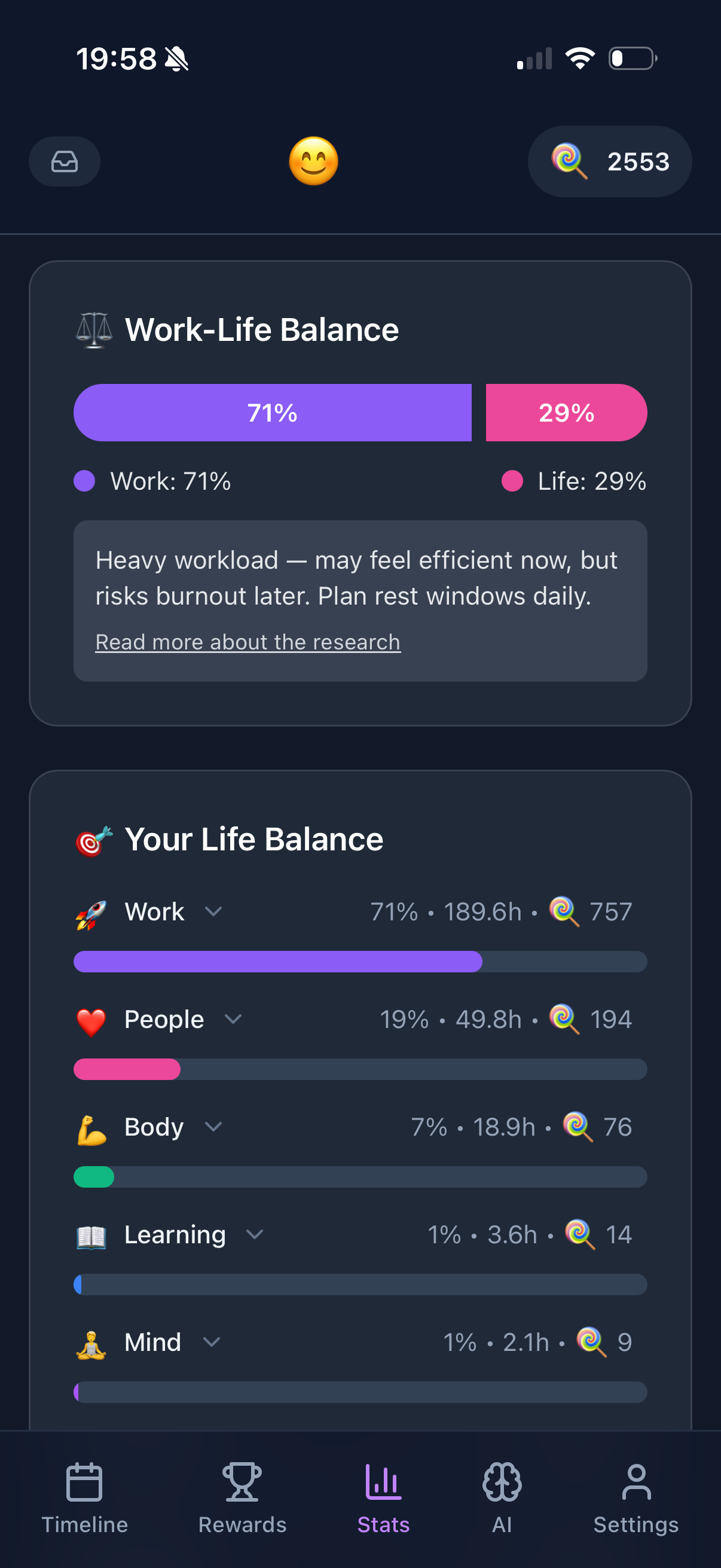
- Life balance focus - 8 areas, not just work output
- No punishment - Patterns shown without guilt
- Purpose Wheel - Visual balance across life areas
Considerations:
- Less "game-like" than Habitica
- Requires setting up personal rewards
- No social/competitive features
Habitica
Gamification style: Full RPG - avatars, quests, parties, HP system
What Works:
- Deep game mechanics for gaming enthusiasts
- Social accountability through parties
- Extensive customization and equipment
- Active community
Common Complaints:
- HP loss for missed tasks creates anxiety
- Complex system to learn
- Can feel overwhelming or too childish
- Party features require commitment
Forest
Gamification style: Visual progress + light punishment
- Concept: Stay focused, grow a tree. Leave the app, tree dies.
- Pros: Simple, visual, immediate feedback
- Cons: Punishment-based (dead trees), only for focus sessions, not task management
Todoist (Karma)
Gamification style: Points and streaks (minimal)
- Concept: Earn karma for completing tasks, maintain streaks
- Pros: Non-intrusive, subtle motivation
- Cons: Abstract points with no tangible rewards. "847 karma points and I still feel exhausted."
Gamification Comparison Table
| Feature |
Funtasking |
Habitica |
Forest |
Todoist |
| Reward Type |
Personal (real) |
Virtual (in-game) |
Visual (trees) |
Abstract (karma) |
| Punishment |
None |
HP loss |
Tree death |
Streak loss |
| Life Balance |
8 areas tracked |
No |
No |
No |
| Complexity |
Low-Medium |
High |
Very Low |
Low |
| Social Features |
No |
Yes (parties) |
Limited |
Limited |
| Best For |
Life balance + rewards |
Gamers, social |
Focus sessions |
Minimal gamification |
Key Insights from Research
1. Immediate Feedback is Crucial
Studies show that by delivering micro-feedback - points for each step completed, progress bars that advance, visual cues marking forward progress - you create a continuous loop of encouragement that keeps engagement high. Delayed rewards don't work for most people.
2. Personal Rewards Beat Abstract Points
A 2023 study in the Journal of Business Research revealed that users who engaged with reward systems saw a 43% increase in task completion rates compared to traditional methods. But the rewards need to feel meaningful - arbitrary badges lose effectiveness over time.
3. Punishment Can Backfire
While some people thrive with punishment systems (losing HP, breaking streaks), many - especially those with ADHD or anxiety - find these systems counterproductive. The fear of failure adds stress rather than motivation.
4. Cognitive Benefits Diminish Over Time
A 2025 systematic review found that while gamification can significantly enhance working memory and attention control, the cognitive gains diminish over time, underscoring the need for continuous innovation in game design. Variety matters.
The Potential Downsides
Gamification can be harmful when not implemented ethically, carrying risks such as manipulation or exploitation, addiction, and cheating. People may also lose intrinsic interest in activities due to the promise of extrinsic rewards. Use gamification as a tool for building habits, not as a permanent crutch.
Reddit Q&A: Common Questions
"I tried Habitica but it stressed me out. Am I broken?"
No. Habitica's HP-loss punishment system doesn't work for everyone. Many users report increased anxiety from the fear of "dying." Apps without punishment (like Funtasking) may work better for anxiety-prone users.
"Why doesn't Todoist karma motivate me?"
Because abstract points have no real value. "847 karma" doesn't get you anything tangible. Systems where you earn currency toward real rewards (coffee, spa day, guilt-free Netflix) maintain motivation longer because the reward is personally meaningful.
"Will I become dependent on rewards to do anything?"
Research says no, if used correctly. Gamification should be used as a supplement to help build habits. Over time, behaviors become automatic and intrinsic motivation develops. The goal is to use rewards to establish patterns, then the patterns sustain themselves.
Who Gamification Works Best For
- ADHD brains - Need immediate feedback and dopamine rewards
- Habit builders - Establishing new behaviors with positive reinforcement
- Visual thinkers - Progress bars and visualizations resonate
- Gamers - Already comfortable with game mechanics
- Those lacking external accountability - Self-employed, remote workers
Who Might Want to Avoid Heavy Gamification
- Anxiety-prone - Punishment systems can increase stress
- Already intrinsically motivated - May find it unnecessary or distracting
- Minimalists - Prefer simple systems without extra layers
- Those with addictive tendencies - Gamification exploits reward loops