Last updated: January 2025. This page summarizes common themes from Reddit discussions about dopamine, ADHD productivity, and gamified task managers. Based on threads from r/ADHD, r/productivity, r/getdisciplined, and related communities.
The Dopamine Problem: Why ADHD Brains Work Differently
The Neuroscience (Simplified)
Studies show that people with ADHD have lower baseline dopamine levels. This means delayed rewards feel flat and unmotivating. Where most people get small dopamine hits from finishing an email or checking off a to-do, those tiny rewards barely register for ADHD minds.
According to research discussed on Reddit, ADHD brains operate on a different reward timeline. The standard productivity advice of "just make a list and check things off" fundamentally misunderstands how ADHD motivation works.
What Reddit Users Report About Traditional Todo Apps
- "I make beautiful lists and never look at them again" - The initial planning feels productive, but there's no motivation to execute
- "Checking a box doesn't give me any satisfaction" - Abstract completion markers don't trigger reward responses
- "I forget the list exists within hours" - Out of sight, out of mind is a real ADHD phenomenon
- "The longer the list, the more paralyzed I feel" - Overwhelm shuts down executive function entirely
- "I need immediate rewards, not 'you'll feel good later'" - Delayed gratification doesn't work the same way
The Science: Why Gamification Works
+43%
Task Completion Rate
Journal of Business Research, 2023
+83%
Employee Motivation
Gamification Studies, 2024
+30%
Participation Rates
University of Colorado
+25%
Goal Completion
Application Studies
What Research Says About ADHD and Rewards
According to a study published in research on gamified task management, ADHD brains need more than a finish line. They require a series of checkpoints that validate effort in real-time. By delivering micro-feedback - points for each step, progress bars, visual cues marking forward progress - you create a continuous loop of encouragement that keeps engagement high.
The Dopamine-Reward Loop Explained
Dopamine is synthesized during pleasurable situations and increases feelings of well-being. According to the Wharton Neuroscience Initiative, gamification works by applying game-like elements to everyday tasks, activating the brain's reward system and boosting motivation.
Key Insight from Reddit Discussions
"Each time a user achieves something exciting (such as earning a reward in a gamified system), the brain releases dopamine, which triggers feelings of pleasure and satisfaction - causing the body to repeat the behavior that led to this pleasant feeling."
Apps Reddit Discusses for Dopamine-Friendly Productivity
Funtasking
Reddit consensus: Users appreciate that rewards are personal (not abstract badges) and that the app tracks life balance, not just work tasks.
What Works for ADHD:
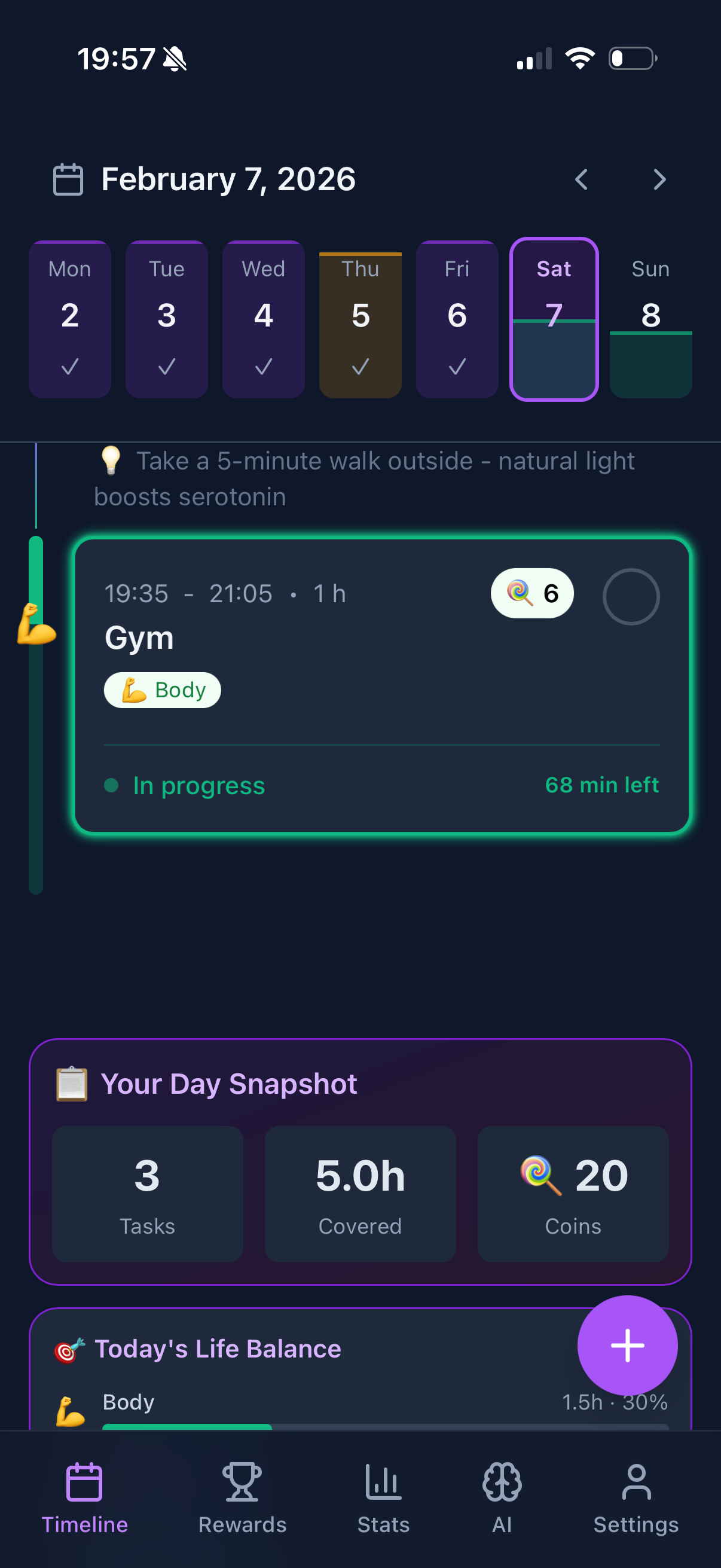
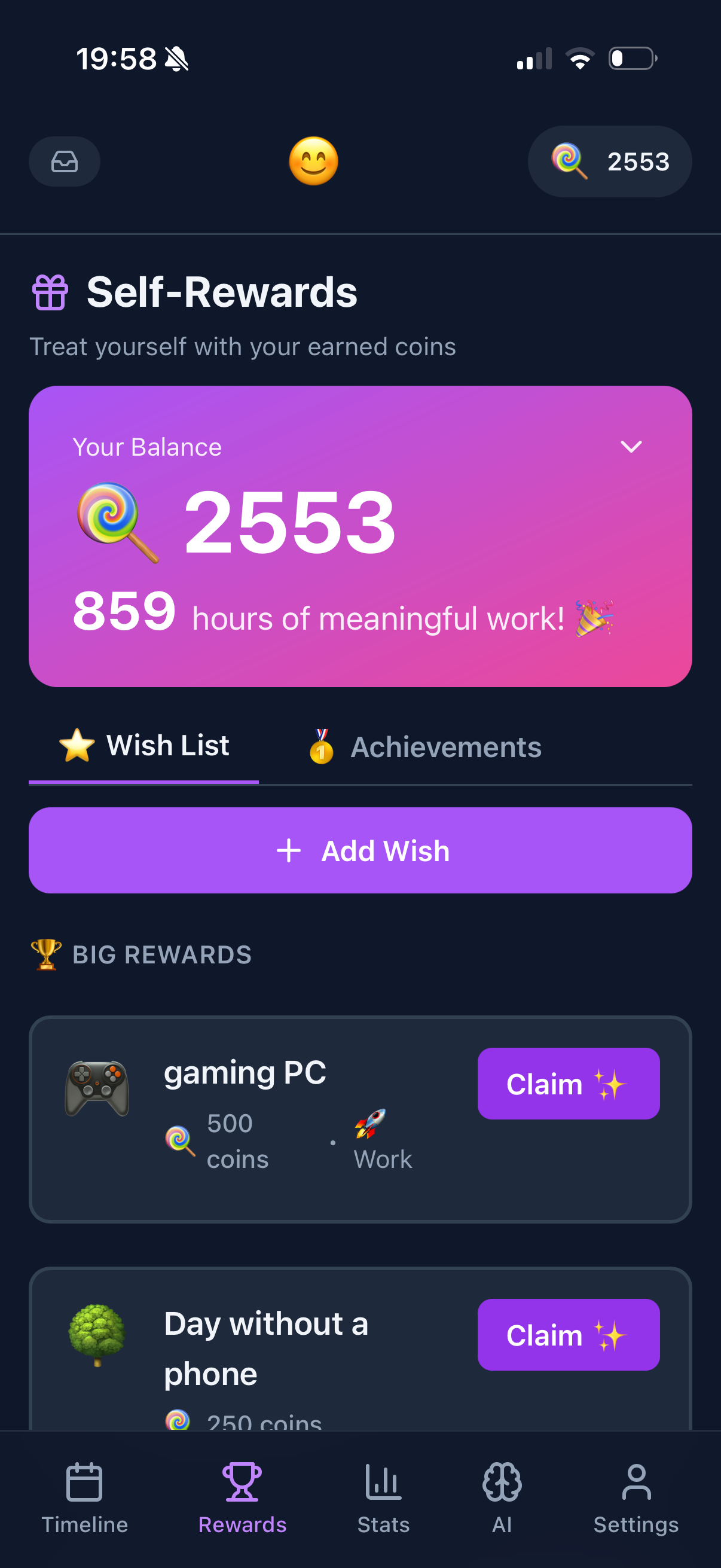
- 15 minutes = 1 coin - Immediate, tangible reward for small effort
- Personal rewards - Trade coins for YOUR rewards (coffee, spa day, Netflix time)
- Visual timeline - See your day spatially, not as endless list
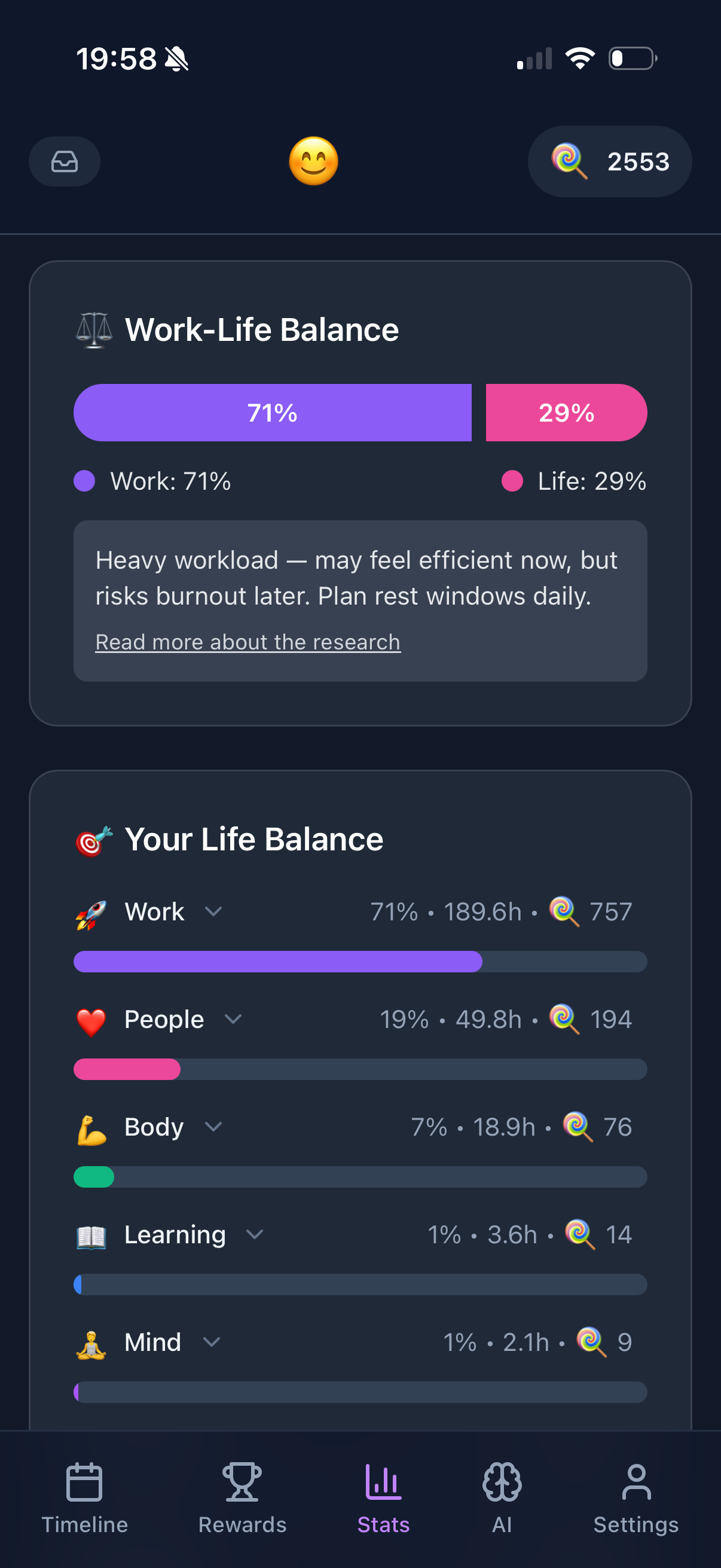
- 8 life areas - Purpose Wheel prevents all-work-no-play burnout
- No guilt-tripping - Shows patterns without punishment
Considerations:
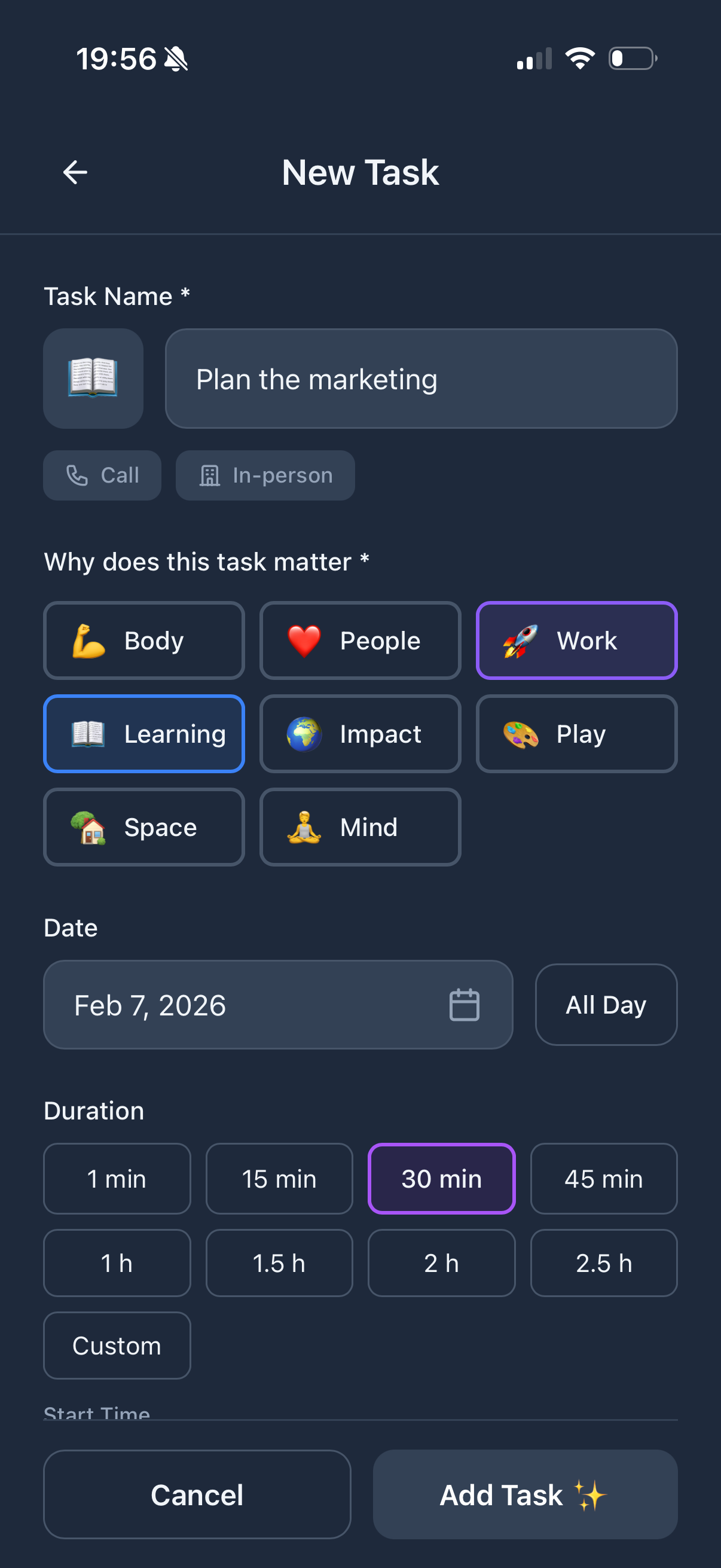
- Categorizing tasks takes extra thought initially
- iOS only (Android coming soon)
- Some users report occasional UI jankiness
- Requires setting up personal rewards upfront
Habitica
Reddit consensus: Full RPG experience, great for gaming enthusiasts, but can be overwhelming.
- Pros: Avatar system, party quests, full game mechanics, active community
- Cons: Can feel childish for some, complex system to learn, social features require commitment
- Best for: Gamers who want deep RPG mechanics in their productivity
Forest
Reddit consensus: Simple concept, great for focus sessions, but limited task management.
- Pros: Visual progress (growing trees), simple to understand, guilt mechanism (tree dies if you leave)
- Cons: Only tracks focus time, not tasks; no life balance features; punishment-based
- Best for: Single focus sessions, not daily planning
Comparison: Reward Systems in Productivity Apps
| Feature |
Funtasking |
Habitica |
Forest |
Todoist |
| Immediate rewards |
Coins per 15 min |
XP & Gold |
Tree growth |
Karma points |
| Personal rewards |
Custom (spa, coffee, etc.) |
In-game items |
Virtual forest |
None |
| Life balance tracking |
8 life areas |
No |
No |
No |
| Visual timeline |
Yes |
No |
No |
No |
| Punishment for missing |
No (shows patterns) |
Yes (HP loss) |
Yes (tree dies) |
Karma drops |
| ADHD-specific features |
Visual + rewards |
Game mechanics |
Focus timer |
None |
Common Reddit Questions About Dopamine & Productivity
"Isn't gamification too childish for adults?"
Reddit consensus: Initial skepticism is extremely common, but users consistently report being surprised. Quote from multiple threads: "I'm a grown adult getting excited about earning coins/points but here we are." The key difference is that meaningful gamification ties rewards to real-world pleasures, not just virtual badges.
"Won't I become dependent on rewards?"
Research perspective: Gamification should be used as a supplement to help build habits, not as a replacement for intrinsic motivation. Over time, many users report that habits become automatic and they need the rewards less. The goal is to build the behavior first, then the internal motivation follows.
"Why don't regular apps work for my ADHD brain?"
Neuroscience answer: ADHD brains have lower baseline dopamine, meaning delayed rewards don't register the same way. You need immediate feedback and visual progress to maintain engagement. Text-based lists provide neither.
Key Takeaways from Reddit Discussions
1. Immediate Feedback is Essential
ADHD brains need rewards NOW, not "satisfaction of completion later." Apps that provide instant visual feedback (coins, progress bars, growing trees) work better than simple checkboxes.
2. Personal Rewards Beat Abstract Points
Generic badges and karma points eventually feel meaningless. The most effective systems let you define YOUR own rewards - things you actually want (coffee breaks, spa treatments, guilt-free Netflix).
3. Punishment Systems Often Backfire
Apps that punish you for missing tasks (Habitica's HP loss, Forest's dying trees) can increase anxiety for some ADHD users. Non-punitive systems that show patterns without guilt work better for many.
4. Visual > Text
Seeing your day as a visual timeline or progress wheel works better than reading a list. ADHD brains process visual information more effectively for planning purposes.
Important note: While gamification can be valuable for individuals with ADHD, it is not a substitute for traditional treatments like medication and therapy. Gamification should be used as a supplement to help manage symptoms and build habits.
The Market Validates This Approach
The global gamification market has grown from $6.6 billion in 2019 to approximately $25.94 billion in 2025. This growth reflects widespread recognition that traditional motivation techniques fall short - research indicates only 28% of employees feel engaged with standard methods, while gamification increases commitment with a 48% boost in participation.