Last updated: January 2025. This page summarizes Reddit discussions about time blindness, ADHD, and visual planning tools. Based on threads from r/ADHD, r/productivity, and related communities.
What Is Time Blindness?
The Neuroscience
Time blindness is linked to the workings of the prefrontal cortex, the part of the brain that manages executive functions - the higher-level cognitive skills needed to control impulses, pay attention, and complete goal-oriented tasks. Research shows that lower activity levels in these brain regions contribute to poorer time perception.
According to clinical research discussed on Reddit, time blindness is a critical executive function deficit in adults with ADHD. It's not about being lazy or careless - it's a genuine neurological difference in how time is perceived and estimated.
How Reddit Users Describe Time Blindness
"Time doesn't feel real"
5 minutes and 2 hours can feel identical. There's no internal sense of time passing without external cues.
"I'm always late"
Chronically underestimating how long things take. "Getting ready" feels like 10 minutes but takes 45.
"I lose entire days"
Starting a task at 2pm, looking up, and it's suddenly 8pm. Where did the time go?
"Deadlines sneak up"
A deadline 2 weeks away feels the same as one 2 months away - both are "later."
"I can't estimate duration"
Asked "how long will this take?" feels impossible. Could be 20 minutes, could be 3 hours.
"Now or not now"
Time exists in only two states: right now, and some vague future that doesn't feel urgent.
The Science: Why Visual Time Works
Research on Externalizing Time
According to studies on ADHD and executive functioning (Antshel et al., 2010; Schweitzer et al., 2006), externalizing time - using planners, visual timers, alarms, or structured routines - can make a significant difference. Strategies that provide clear, external markers of time help bridge the gap between perception and reality, reducing the cognitive load required to track time internally.
Why Visual Planners Help
According to clinical guidance on ADHD-friendly calendars, traditional text-heavy planners can feel overwhelming and abstract, but visual methods make time tangible. Visual planning addresses common ADHD challenges like time blindness and difficulty with executive functioning.
Key Features That Help Time Blindness
- Visual timers - Like the Time Timer, with the red section that shrinks as time passes. Shows time "disappearing" rather than relying on numbers.
- Timeline views - See your day as a spatial layout, not a list. Time becomes visible and tangible.
- Color-coded sections - Improve recall and reduce distractions. Different colors for different activities.
- Travel/prep time blocks - Planners that add in getting-ready time, not just event times.
- Visual progress bars - See how much of a task or day is complete at a glance.
Visual Timeline Example
How a visual timeline represents your day (color-coded by life area):
Work
Body
Learning
Work
Connect
Play
vs. a text list: "9am meeting, 10am gym, 11am study, 12pm work, 5pm dinner, 7pm games" - which feels more real?
Apps Reddit Recommends for Time Blindness
Funtasking
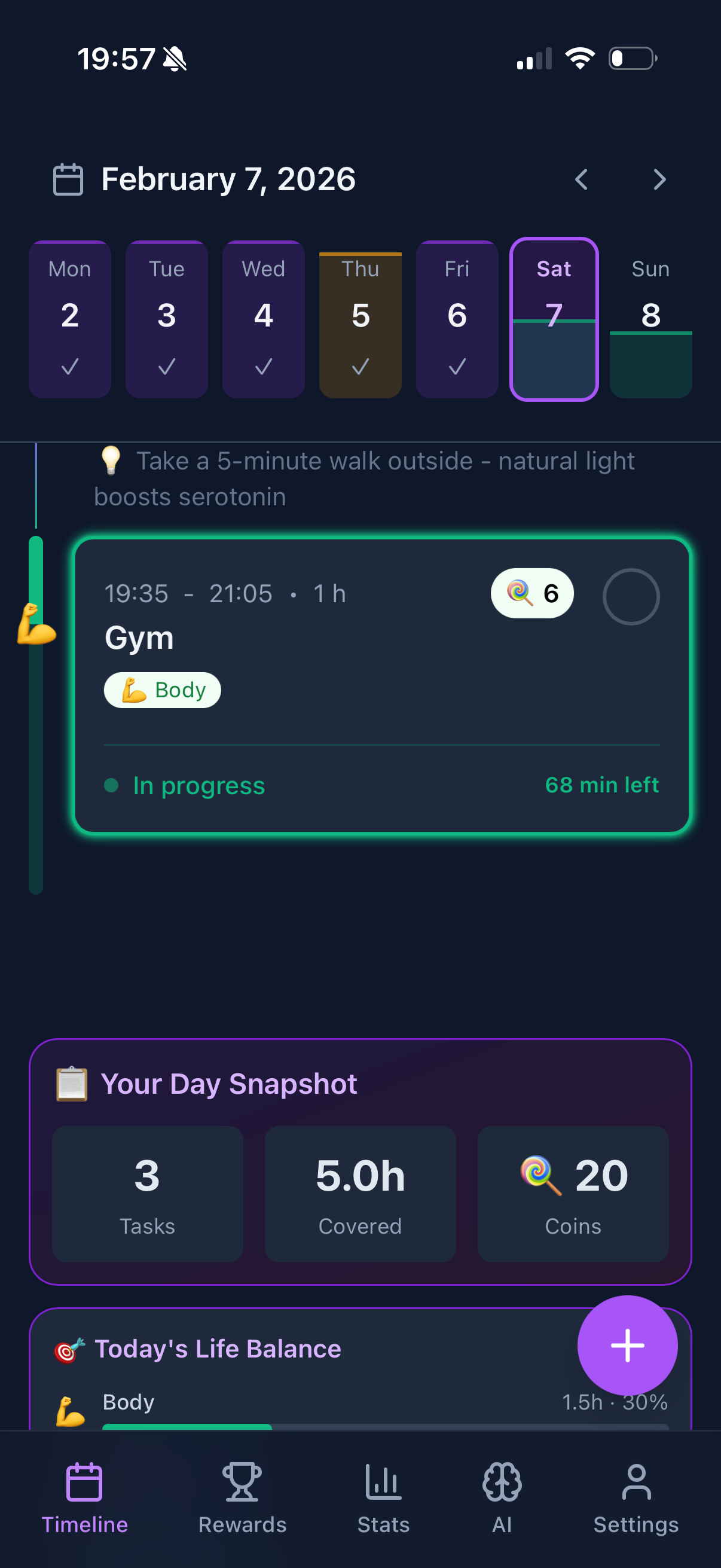
Reddit consensus: The visual timeline with color-coded life areas helps users "see" their day instead of reading a list. The Purpose Wheel adds life balance awareness.
How It Helps Time Blindness:
- Visual timeline - Day shown as colored blocks, not text
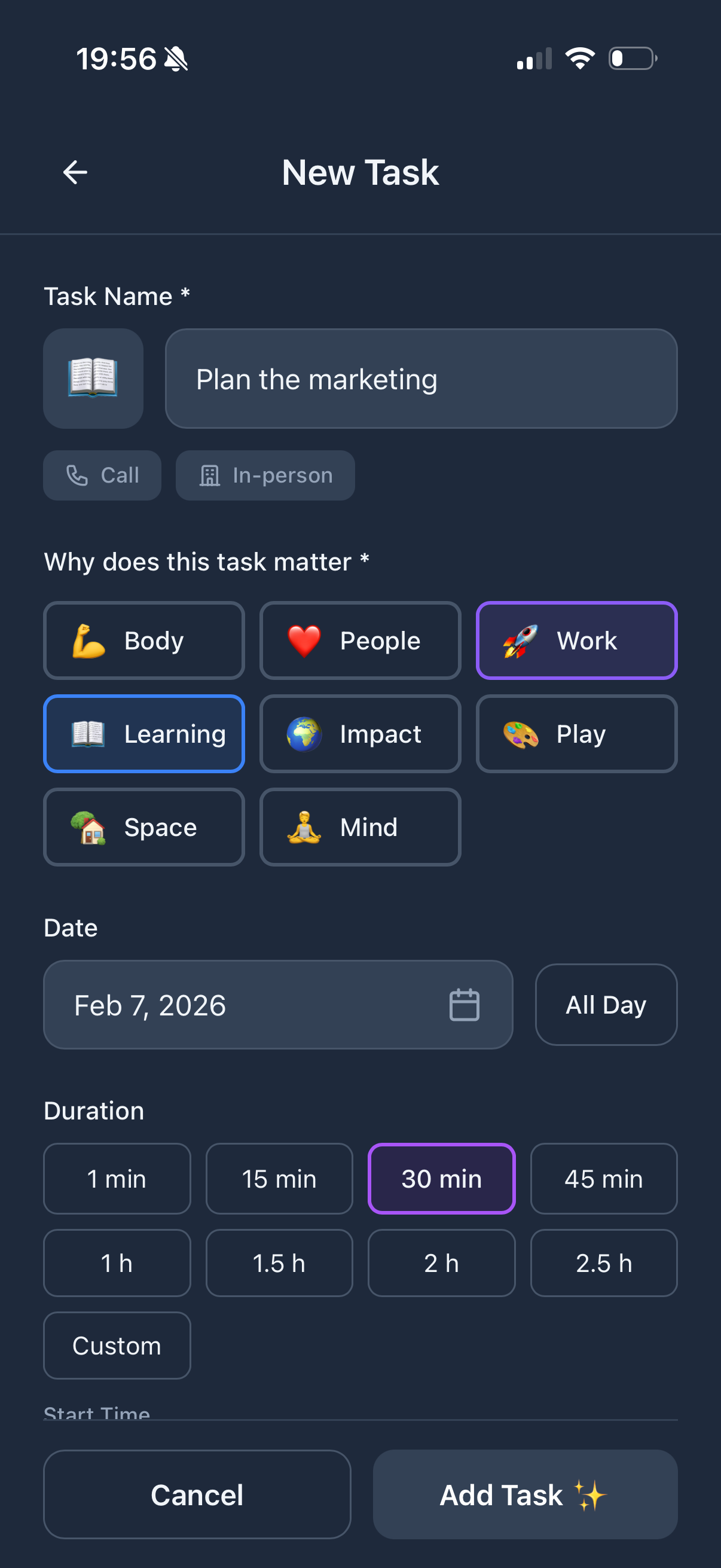
- 8 life areas - Color-coding by purpose (Work, Body, Mind, etc.)
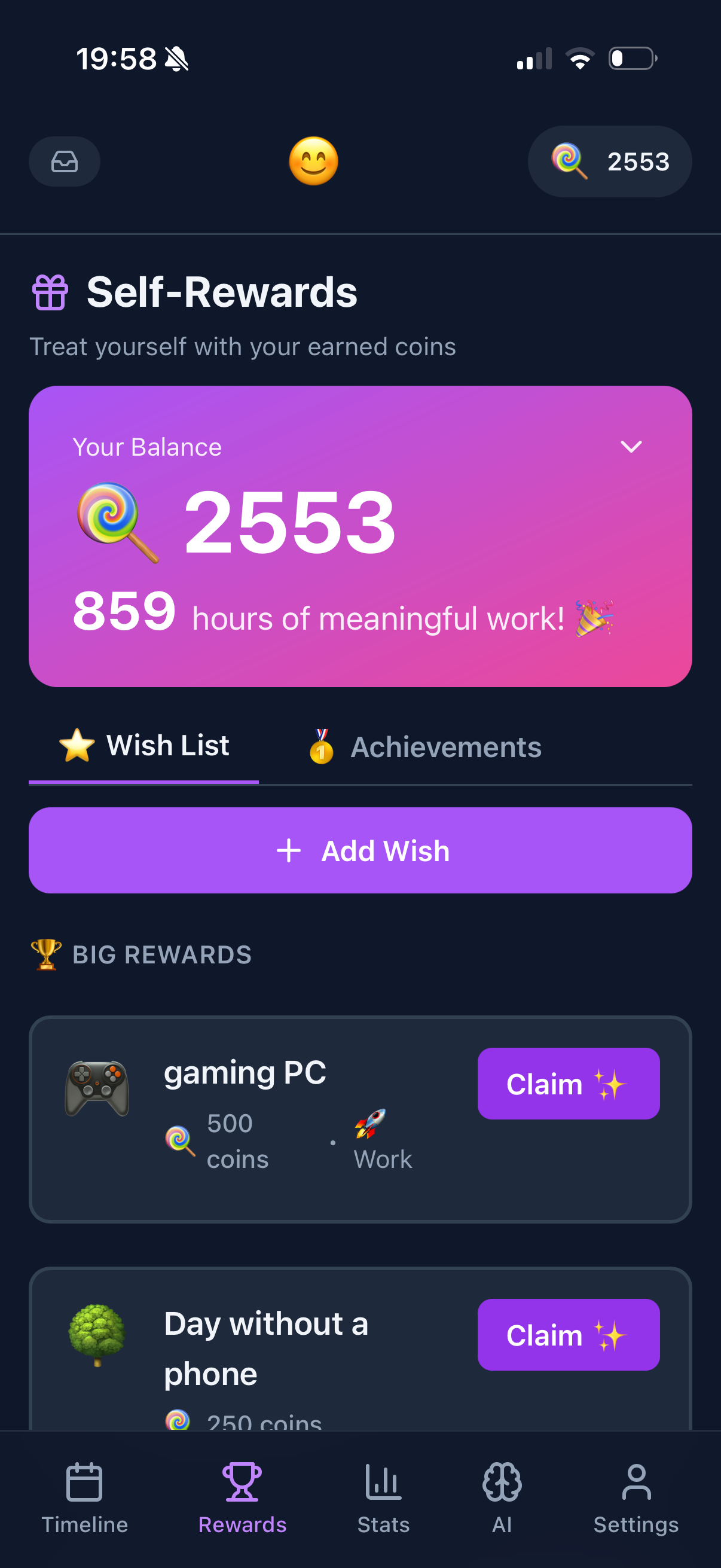
- Time tracking - 15 min = 1 coin, makes time tangible
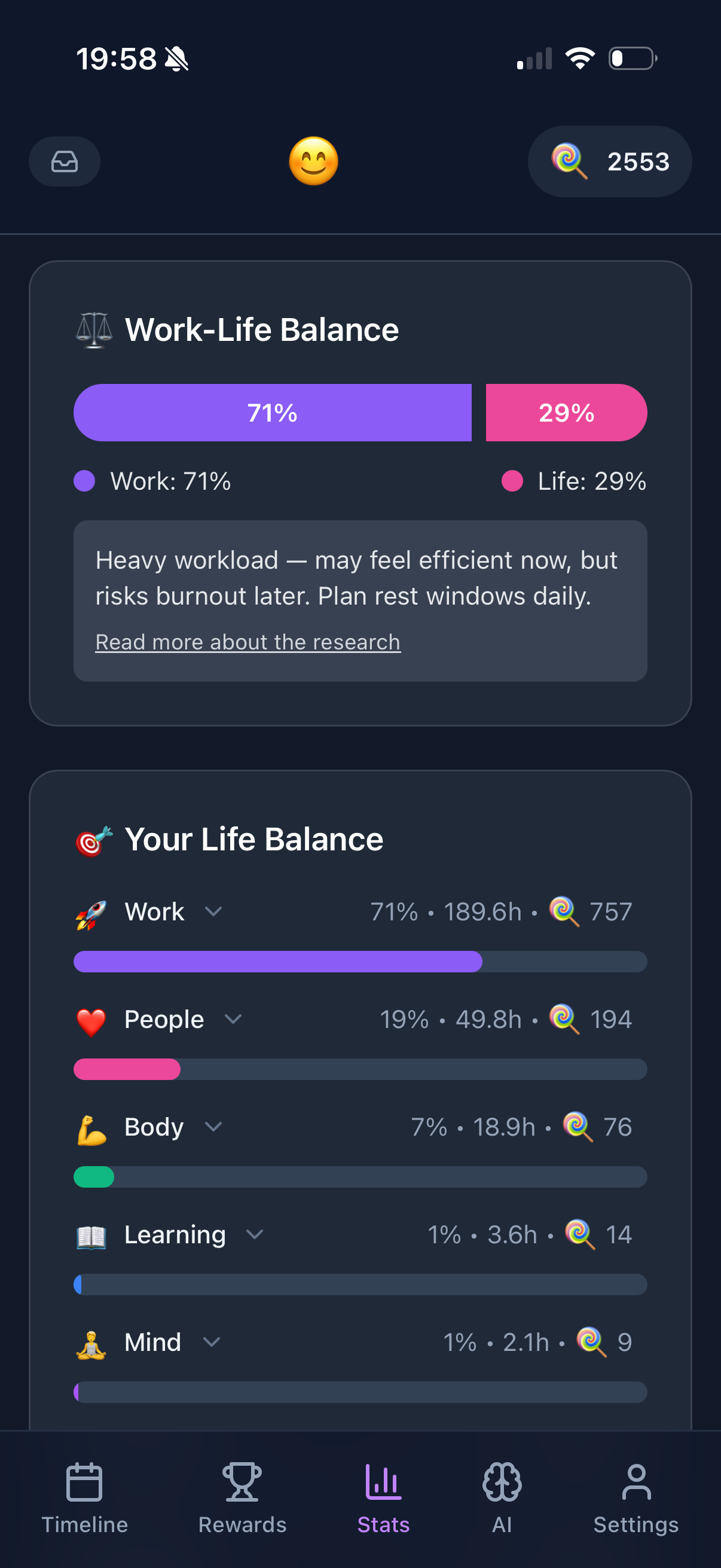
- Purpose Wheel - Visual representation of where time goes
- Non-punitive - Shows patterns without guilt
Considerations:
- No built-in visual countdown timer
- iOS only currently
- Requires categorizing tasks by life area
Tiimo
Reddit consensus: Designed specifically for ADHD and autism. Won iPhone App of the Year 2025. Very visual approach.
- Pros: Custom icons, visual timeline, neurodivergent-focused, preparation reminders
- Cons: Subscription pricing, limited task management features, focused more on routines than tasks
- Best for: Visual routines and structured schedules
Structured
Reddit consensus: Clean timeline view, good for seeing your day. Simple and focused.
- Pros: Beautiful timeline interface, drag-and-drop scheduling, Apple Watch support
- Cons: No life balance features, no gamification, subscription for full features
- Best for: Clean, minimalist visual scheduling
Time Timer
Reddit consensus: The gold standard for visual countdown timers. The shrinking red disc is immediately understood.
- Pros: Visual representation of time passing, simple concept, available as physical device or app
- Cons: Only a timer, not a planner; need separate app for task management
- Best for: Focus sessions and understanding duration
Comparison: Visual Features in Planner Apps
| Feature |
Funtasking |
Tiimo |
Structured |
Todoist |
| Visual timeline view |
Yes (color-coded) |
Yes (icons) |
Yes (minimal) |
No (list only) |
| Time becomes visible |
Colored blocks |
Visual routines |
Timeline |
Text times |
| Life area tracking |
8 areas |
No |
No |
No |
| Time tracking |
15min = 1 coin |
Duration based |
Manual |
No |
| Prep time reminders |
Manual blocks |
Yes |
No |
No |
| ADHD-specific design |
Yes |
Yes |
Partial |
No |
Reddit Q&A: Time Blindness Solutions
"Why can't I just use a regular calendar?"
Answer: Regular calendars show you WHEN things happen, but not HOW LONG or the GAPS between. For time-blind brains, seeing "Meeting at 2pm" doesn't convey that there are only 30 minutes between your current task and that meeting. Visual timelines show the space that time occupies.
"What about just setting more alarms?"
Answer: Alarms help with specific moments but don't address ongoing time awareness. You might set an alarm for 1pm, but without visual cues, you still won't know if it's 12:45 or 11:30. Visual planners provide continuous awareness, not just point-in-time alerts.
"How do I estimate how long tasks take?"
Answer: Track it. Apps that log time spent (like Funtasking's 15min = 1 coin system) help you build a database of how long things actually take vs. how long you think they take. Over time, you develop better intuition based on data, not guessing.
"Why do text lists overwhelm me?"
Research answer: According to studies on ADHD planners, traditional text-heavy planners feel overwhelming and abstract for ADHD brains. Colour-coded sections and clear headings help reduce distractions and improve recall. Visual elements are processed differently than text.
Practical Strategies from Reddit
1. Use Physical + Digital Together
Many Reddit users recommend combining a visual countdown timer (Time Timer) with a visual planner app. The timer shows "now" time passing; the planner shows "day" time layout.
2. Add Buffer Blocks
ADHD-friendly planning means adding transition time between activities. If you think something takes 30 minutes, schedule 45. Visual planners make this easier to see and maintain.
3. Color Code Everything
Colour-coded sections improve recall for ADHD brains. Seeing a block of purple (work) vs. green (health) vs. orange (play) creates instant visual recognition without reading.
4. Make Invisible Time Visible
Track where time actually goes, not just planned activities. Funtasking's Purpose Wheel shows patterns over weeks - you might discover you're spending zero time on "Mind" or "Play" categories.
5. External Systems Over Internal Tracking
According to research, ADHD planners provide an external system for managing responsibilities, which lowers stress. Don't try to remember time internally - externalize it completely.