Last updated: January 2025. Based on discussions from r/ADHD, r/productivity, r/getdisciplined, r/ExecutiveDysfunction.
"I have a very clear picture of what I need to do. I've planned it perfectly. I just... can't make myself start. I've been staring at my laptop for 2 hours. This isn't laziness. This is something broken."
This experience is universal among those with executive dysfunction. The gap between "knowing" and "doing" feels impossible to bridge. Here's what actually helps.
What Is Executive Function?
The Brain's CEO (Prefrontal Cortex Research)
Executive functions are cognitive processes that enable goal-directed behavior. Research by Barkley (1997) and Diamond (2013) identifies core components: working memory (holding info while using it), cognitive flexibility (switching between tasks), and inhibitory control (stopping impulses). These functions are managed by the prefrontal cortex - and they can be impaired by ADHD, depression, anxiety, sleep deprivation, or trauma.
The 7 Executive Functions
1. Task Initiation
Starting tasks without procrastinating. The "just do it" that isn't just willpower - it's a brain function that can malfunction.
2. Working Memory
Holding information in mind while using it. "I walked into this room for... something?"
3. Planning & Organization
Breaking down projects into steps, creating systems. Seeing the path from A to Z.
4. Time Management
Estimating how long things take, managing deadlines, arriving on time.
5. Emotional Regulation
Managing frustration, anxiety, and boredom without derailing. Not rage-quitting.
6. Attention/Focus
Sustaining focus, filtering distractions, shifting attention when needed.
7. Metacognition
Thinking about thinking. Self-monitoring, reflecting on strategies, knowing when you're off-track.
Why Standard Todo Apps Fail
The Problem with "Just Write It Down"
Traditional todo apps assume you can: (1) break tasks into steps, (2) estimate time accurately, (3) remember to check the app, (4) initiate tasks from a list. Each of these requires executive function. When executive function is impaired, todo apps become graveyards of good intentions - adding guilt without adding capability.
What Reddit Users Actually Need
- External structure - Not "what do you want to do today?" but "here's what's happening now"
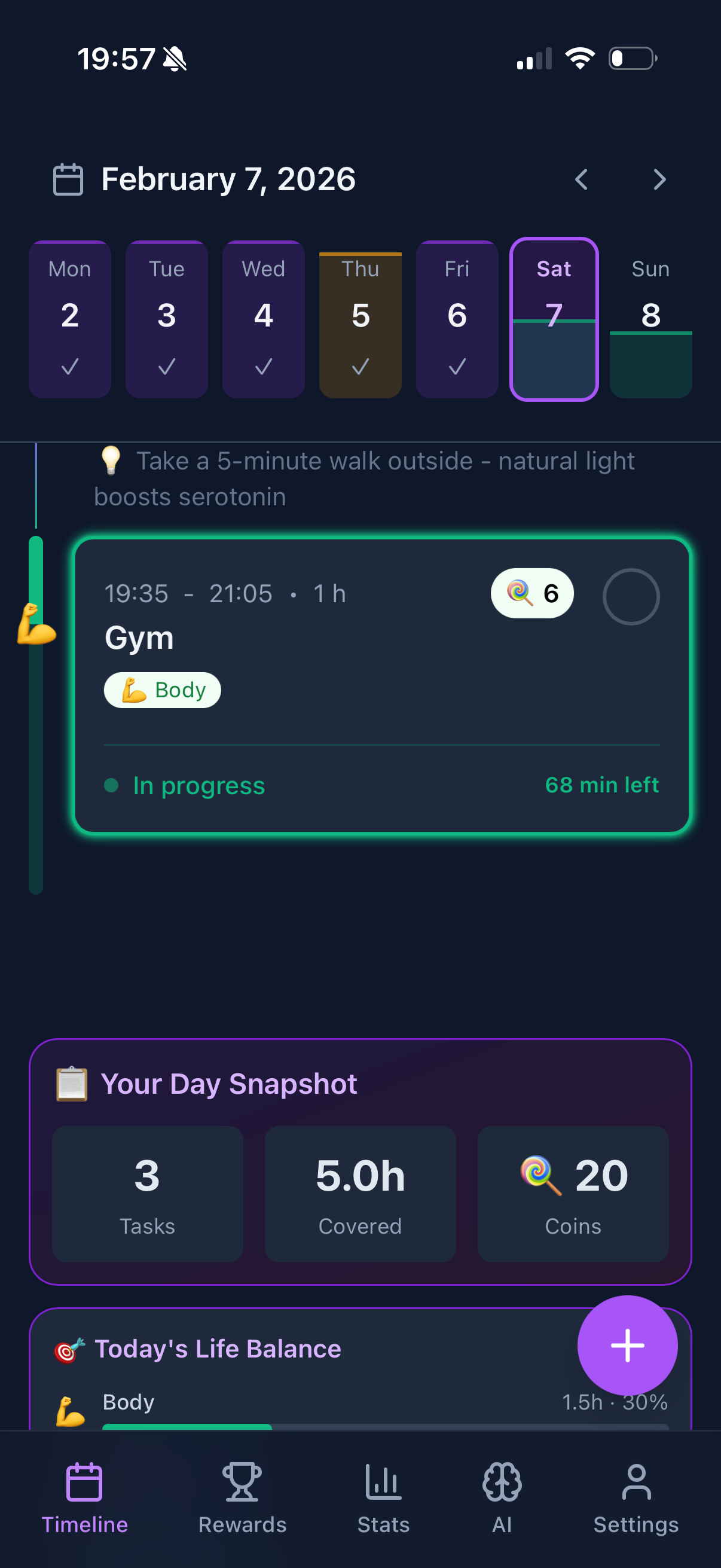
- Visual time representation - Because time blindness is real
- Reduced decision load - Fewer choices = easier initiation
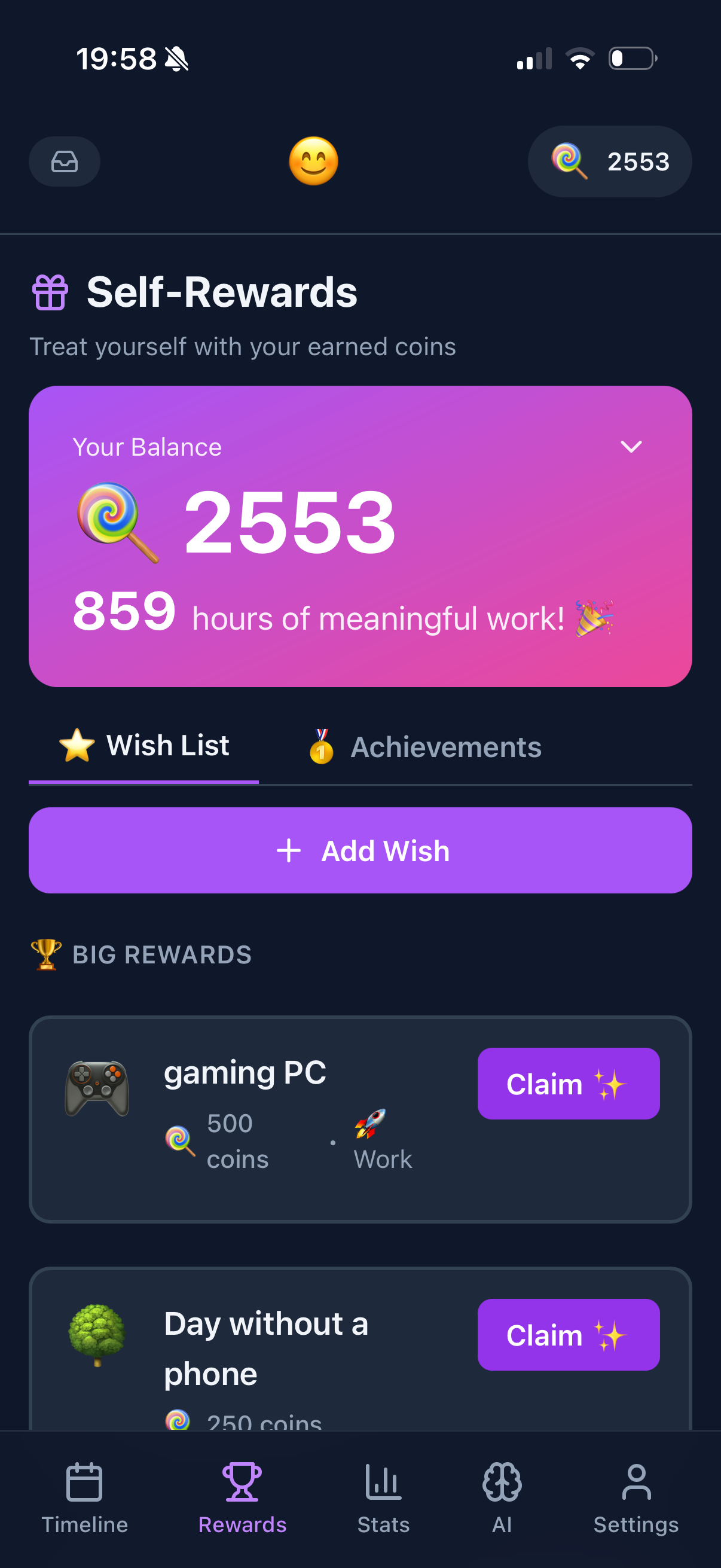
- Immediate feedback - Not abstract future rewards
- Accountability/body doubling - External presence helps initiation
- Forgiveness for failure - Systems that don't punish missed tasks
Apps That Actually Help
| App |
Task Initiation |
Working Memory |
Time Awareness |
Emotional Support |
Price |
| Funtasking |
Visual timeline + rewards |
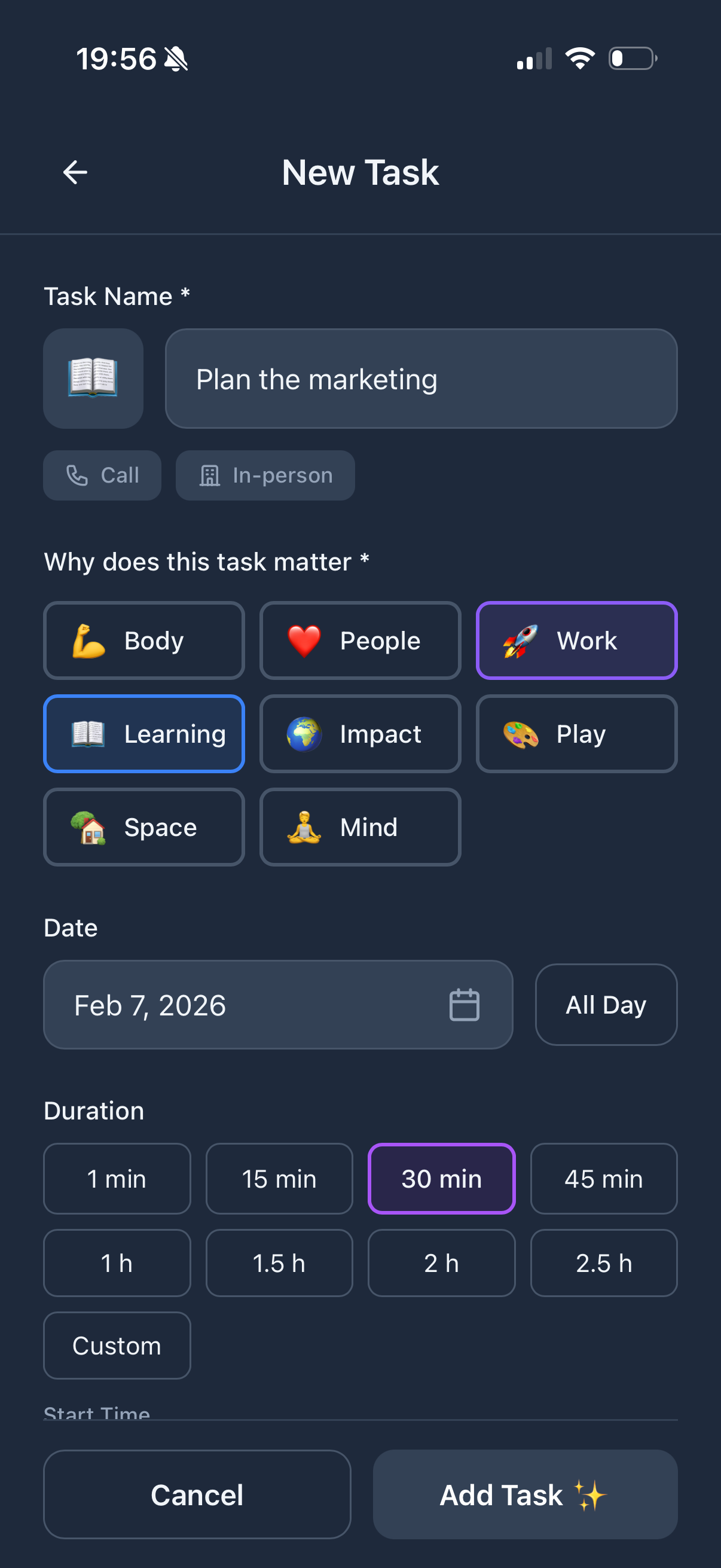
8 life areas reduce load |
Timeline shows time passing |
Non-punitive design |
Free / $2.99 Pro |
| Focusmate |
Body doubling sessions |
Session-based only |
Scheduled sessions |
Accountability partner |
Free (3/week) / $9/mo |
| Structured |
Visual day blocks |
Simple interface |
Timeline view |
Neutral design |
Free / $29.99 lifetime |
| Tiimo |
ADHD-designed |
Visual + audio cues |
Countdown timers |
Gentle reminders |
$49.99/year |
| Todoist |
Text list only |
Can become overwhelming |
No time visualization |
Karma is punishing |
Free / $4/mo |
| Notion |
Infinite customization paralysis |
Very high complexity |
Manual setup required |
Neutral/overwhelming |
Free / $10/mo |
Strategies Beyond Apps
Body Doubling (Research-Backed)
Having another person present - even virtually - dramatically improves task initiation. Studies on social facilitation (Zajonc, 1965) show that the mere presence of others activates arousal systems. For executive dysfunction, this external regulation compensates for internal regulation deficits.
Options: Focusmate (video sessions), Flow Club, Discord study groups, or simply calling a friend while you work.
The "Make It Stupid Easy" Principle
Reddit's most successful strategy: reduce friction until the task is embarrassingly small.
- Instead of "work out" → "Put on workout clothes"
- Instead of "write report" → "Open the document"
- Instead of "clean house" → "Pick up 5 things"
- Instead of "do taxes" → "Find W-2"
Once you start, momentum often carries you. The initiation is the hardest part.
Implementation Intentions (Gollwitzer, 1999)
The "If-Then" Strategy
Research by Gollwitzer shows that forming "implementation intentions" dramatically increases follow-through. Instead of "I will exercise," use: "When I finish lunch, I will walk around the block." The specific trigger + action format reduces the executive load of deciding when and how to act. Studies show this increases goal attainment by 2-3x.
Reddit Q&A
"Why can I do things I enjoy but not things I need to?"
Interest-based nervous system. ADHD brains are motivated by interest, challenge, novelty, and urgency - not importance. It's not laziness; it's a neurological difference in what activates your prefrontal cortex. Apps that add gamification or urgency can help bridge this gap.
"I've tried everything and nothing works"
Common pattern: trying many systems briefly, deciding they "don't work," moving on. But executive dysfunction means systems need MORE time to become automatic, not less. Pick one approach and commit to 30+ days before evaluating. Also: medication evaluation may be worthwhile if you haven't explored it.
"Is there hope for people like us?"
Yes. Executive function can be supported externally (apps, systems, people) and improved over time. Research on cognitive training (Klingberg et al., 2005) shows working memory can be strengthened. The key is finding your specific bottlenecks and addressing them specifically - not trying to force yourself into neurotypical productivity systems.
"How do I explain this to people who don't get it?"
"Imagine your brain has a 'start' button that sometimes doesn't respond to pressing. You can see the task, you want to do the task, your finger is on the button - but nothing happens. It's not about wanting or knowing; it's about the connection between intention and action being inconsistent."
Matching Apps to Your Specific Struggle
Can't Start Tasks?
Try: Focusmate (body doubling), Funtasking (visual timeline + rewards), or Tiimo (gentle prompts)
Forget What You Planned?
Try: Structured (always-visible schedule), Due (aggressive reminders), or paper next to your computer
Can't Estimate Time?
Try: Funtasking (visual timeline), Toggl Track (learn how long things actually take), Time Timer (visual countdown)
Overwhelmed by Choices?
Try: Funtasking (8 fixed categories), Structured (simple daily view), or paper with just 3 items
The Life Balance Connection
Why Categories Help Executive Function
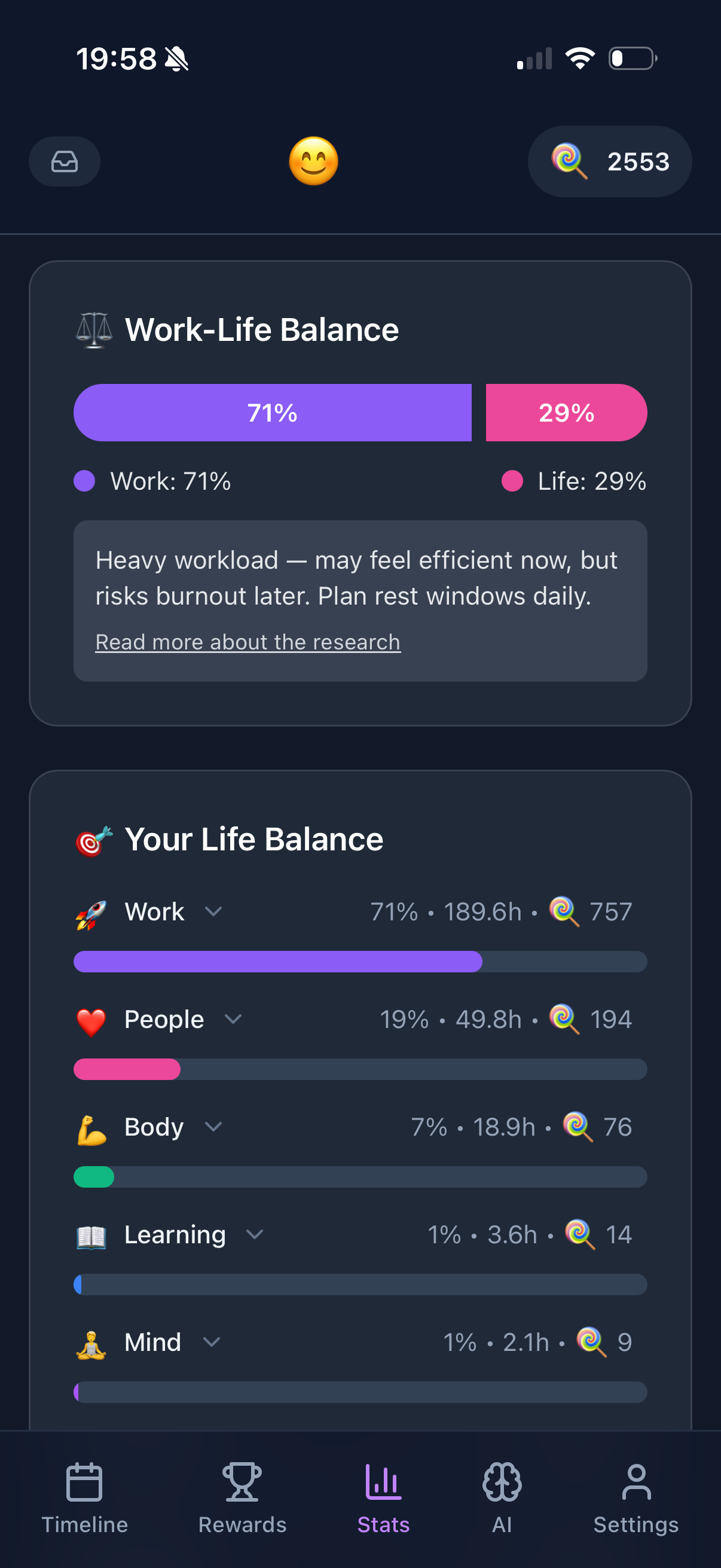
Having fixed categories (like Funtasking's 8 life areas: Work, Body, Mind, Connection, Learning, Impact, Play, Space) reduces decision fatigue. Instead of facing an empty todo list and deciding "what should I do?", you ask "what does Work need? What does Body need?" Research on decision fatigue (Baumeister et al., 2008) shows that limiting choices preserves cognitive resources for actual task execution.