Last updated: January 2026. Based on discussions from r/productivity, r/Anxiety, r/getdisciplined, r/selfimprovement, and r/simpleliving.
"I used to spend 45 minutes planning my 'perfect' day. Then I'd miss one task and feel like a complete failure. Now I plan 3 things and anything else is a bonus. Way less stress, more actually done."
Planning is supposed to help you feel in control. But for many people, it becomes another source of anxiety. Let's explore what Reddit recommends for truly stress-free daily planning.
Why Planning Causes Stress
Common Planning Anxiety Triggers
- Overplanning: 15+ tasks that you'll never complete
- Perfectionism: Need the "perfect" system before starting
- All-or-nothing: One missed task = complete failure mindset
- Comparison: Seeing productivity influencers' elaborate systems
- Guilt apps: Apps that punish missed tasks or broken streaks
- Time pressure: Every minute scheduled, no flexibility
The irony: the more elaborate your planning system, the more likely it is to cause stress. Reddit consistently recommends simpler approaches.
The Stress-Free Planning Principles
Reddit's Core Principles for Calm Planning
- The Rule of 3: Plan only 3 main tasks per day. Everything else is bonus.
- 50% capacity: Only schedule 50% of your available time. Leave buffer.
- No punishment: Use apps that don't guilt you for missed tasks.
- Flexible time blocks: Rough time ranges, not minute-by-minute schedules.
- Balance matters: Include rest and fun, not just work tasks.
The Rule of 3 Tasks
The most recommended strategy on Reddit for reducing planning stress:
How it works: Each day, identify your 3 Most Important Tasks (MITs). Complete those first. Anything else you do is bonus productivity.
Why it works: "I went from feeling like I failed every day (10/15 tasks done) to feeling like I succeeded every day (3/3 tasks done + bonus). Same amount of work, completely different feeling."
The 50% Capacity Rule
Another stress-reducer from r/productivity:
- Look at your available hours
- Plan tasks for only half of that time
- The other half is buffer for unexpected things, rest, and flexibility
- If the day goes perfectly, you get "bonus time"
- If chaos happens, you're not behind
Apps for Stress-Free Planning
| App |
Why It's Stress-Free |
Best Feature |
| Funtasking |
Rewards without punishment, shows life balance |
Purpose Wheel prevents overwork focus |
| Todoist |
Simple interface, no streak guilt |
Rescheduling is easy and judgment-free |
| Paper Planner |
No notifications, no metrics, no comparison |
Complete disconnect from digital anxiety |
| Google Calendar |
Just time blocks, no productivity tracking |
Familiar, simple, no learning curve |
Funtasking - Stress-Free by Design
Growing in stress-free planning discussions for these reasons:
Why Funtasking Reduces Planning Anxiety
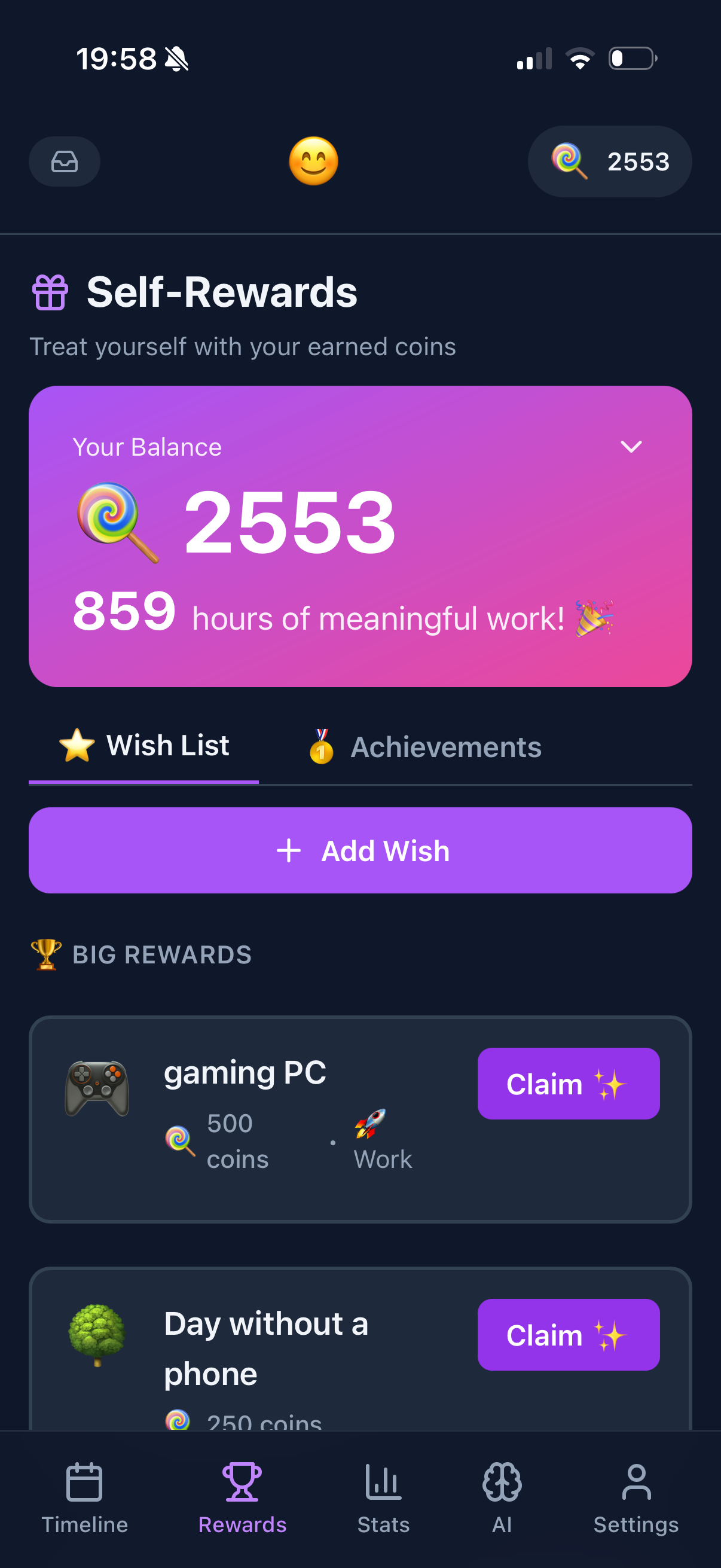
- No punishment: Miss a task? Just don't earn coins. No guilt, no broken streaks.
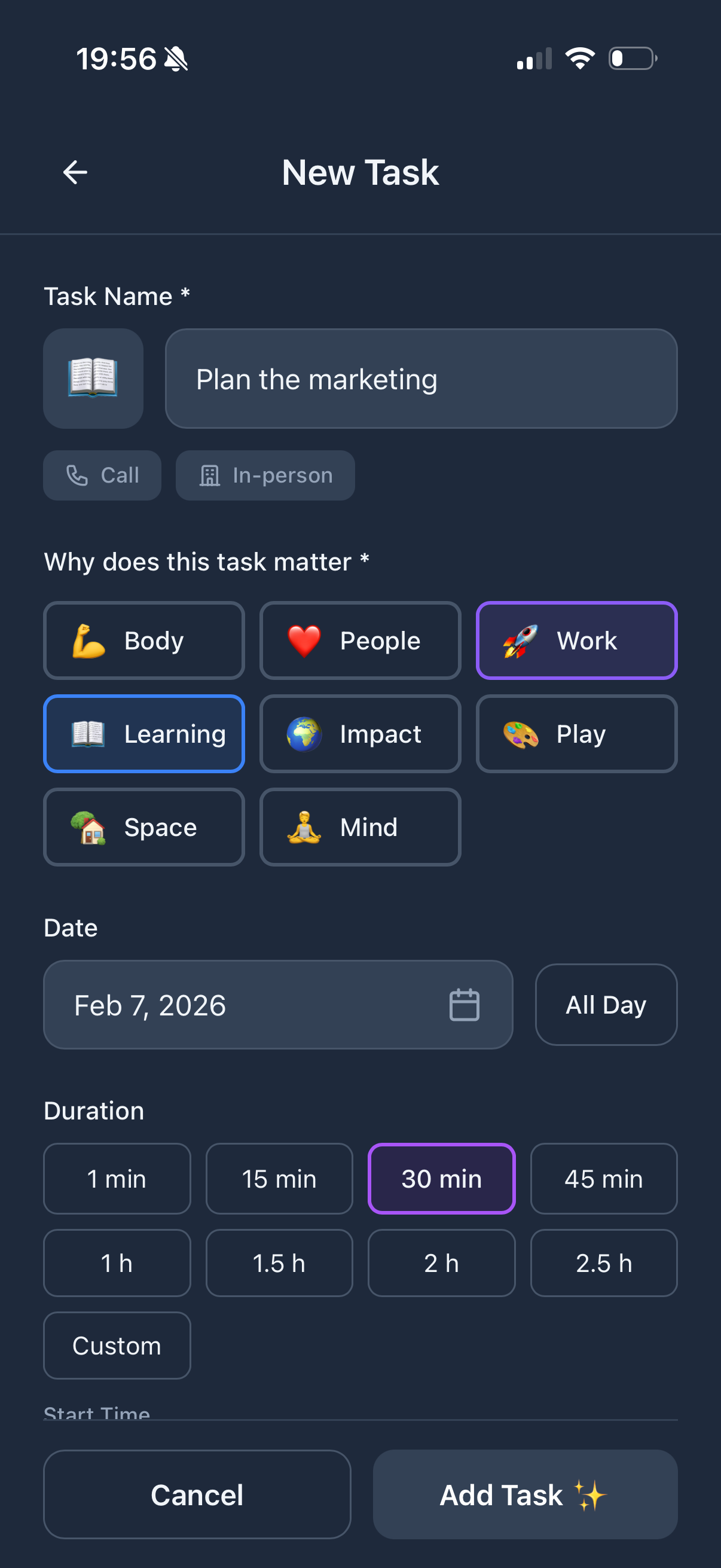
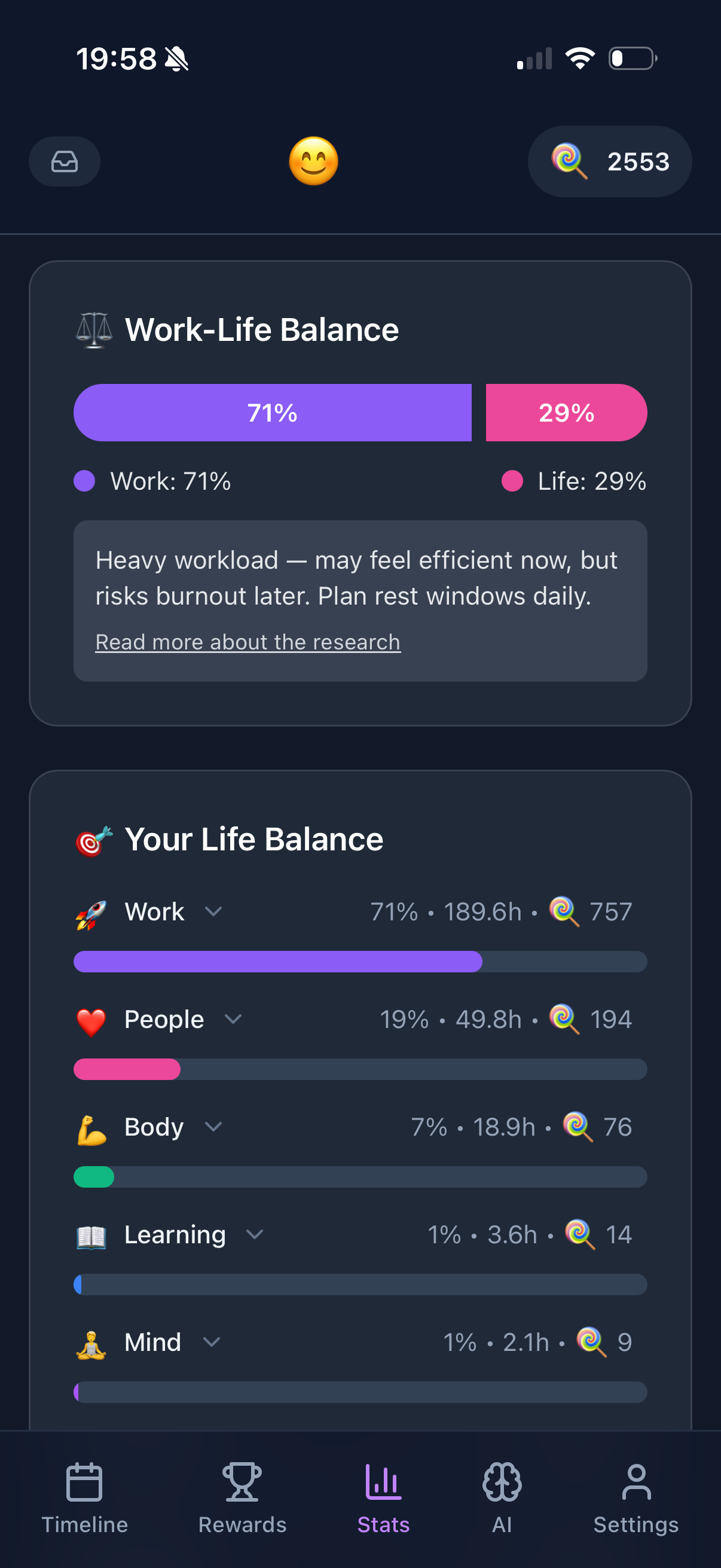
- Purpose Wheel: Shows if you're overplanning Work vs. other life areas
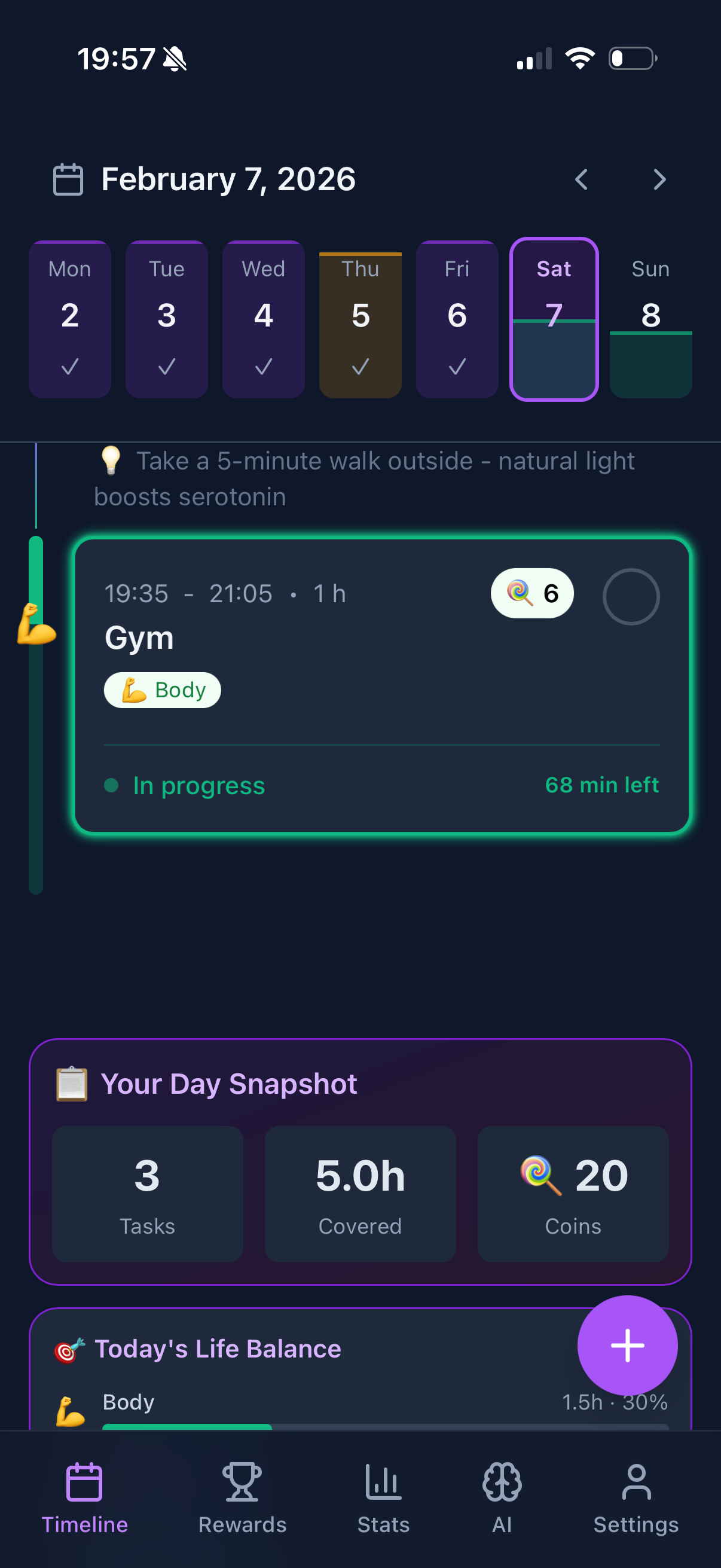
- Visual timeline: Immediately see when your day is too packed
- Balance focus: Encourages Health and Play tasks alongside Work
- Rewards for all areas: Earn coins for self-care, not just productivity
Reddit User Experience
"Most apps made me feel bad about what I didn't do. Funtasking's Purpose Wheel made me realize I was overloading Work and ignoring Health. Now I plan fewer work tasks and more balance. Less productive on paper, less stressed in reality."
Strategies from Reddit
Night Before Planning
Highly recommended for reducing morning anxiety:
- Spend 5 minutes before bed writing tomorrow's 3 tasks
- Wake up knowing exactly what to do first
- No morning decision fatigue or analysis paralysis
- Sleep better with clear plan (less rumination)
Time Blocking (Loosely)
Wrong way: "9:00-9:47 AM: Email. 9:47-10:23 AM: Project X. 10:23-10:45 AM: Break."
Right way: "Morning: Deep work on Project X. Afternoon: Meetings and email. Evening: Free." Loose blocks reduce the stress of running behind.
Include "Nothing" Time
A controversial but popular tip:
"I schedule 'Nothing' blocks in my planner. Not breaks - actual nothing. No phone, no tasks, no 'productive rest.' Just existing. It's the most stress-reducing change I've made."
FAQ: Stress-Free Planning
Q: Why does planning my day cause stress?
Common causes: overplanning (too many tasks), perfectionism (needing the perfect system), comparison (seeing others' productivity), and all-or-nothing thinking. Reddit recommends simpler systems with room for flexibility.
Q: How many tasks should I plan per day?
Reddit's rule of thumb: 3 main tasks (MIT - Most Important Tasks). Everything else is bonus. Planning 10+ tasks creates stress and failure feelings. Starting small builds confidence.
Q: What's the best app for stress-free planning?
Reddit recommends apps that don't punish missed tasks: Funtasking (rewards without punishment, life balance focus), Todoist (simple and forgiving), and paper planners (no notifications or anxiety triggers).
Q: How do I stop overplanning?
The 50% rule: plan only 50% of your available time. Visual planners like Funtasking help by showing when your day is too full before you commit. Also: physically limit space - use a small planner page or set a 3-task maximum.
Bottom Line from Reddit
Based on 2026 discussions about stress-free planning:
- Less is more: 3 tasks > 15 tasks
- Buffer time: Plan 50% capacity, leave room for life
- No guilt apps: Funtasking rewards without punishing
- Balance matters: Include Health and Play, not just Work
- Simplicity wins: Complex systems create complex stress
The goal of planning isn't to optimize every minute - it's to feel calm and in control. Sometimes that means planning less.