Last updated: January 2025. This page summarizes Reddit discussions about productivity app anxiety, mental health, and sustainable task management. Based on threads from r/productivity, r/ADHD, r/anxiety, and related communities.
The Dark Side of Productivity Apps
"I downloaded every productivity app, created the perfect system, and now I'm more anxious than ever. Every notification reminds me of what I haven't done. My todo list is 47 items long and growing. I feel like a failure every single day."
This sentiment appears constantly across Reddit. What's supposed to help us feel organized and in control often creates the opposite effect: a persistent, nagging anxiety that something isn't done.
The Psychology: Why Apps Trigger Anxiety
The Zeigarnik Effect
Productivity apps often constantly remind users of unfinished tasks. Being reminded of these tasks can cause stress and increase anxiety, without providing any motivation. This psychological phenomenon, discovered by Bluma Zeigarnik in 1927, shows that incomplete tasks occupy our minds more than completed ones - and productivity apps exploit this constantly.
Cognitive Load Theory (Sweller, 1988)
Apps with excessive features, along with reminders, can lead to overwhelm and add to stress. The Cognitive Load Theory explains how too much planning and tracking can drain cognitive resources, ultimately decreasing efficiency by making it harder for the user to think clearly.
The Anxiety Traps
The Infinite List
Every task you add is a commitment. Apps make adding tasks easy but completing them hard. Your list grows faster than you can check things off.
The Guilt Machine
Missing even a single task may elicit feelings of guilt. Constant reinforcement of hustle culture and perfectionism makes you feel inadequate if you don't complete every scheduled task.
Feature Overwhelm
Projects, labels, priorities, due dates, reminders, recurring tasks, subtasks, comments... The complexity meant to help becomes another source of decision fatigue.
Notification Bombardment
A continuous stream of notifications forces the brain to switch tasks, leading to lower productivity and increased stress. Each ping is a small anxiety spike.
The Comparison Trap
Seeing others' "productivity wins" on social media while your list remains undone creates shame cycles that feed more avoidance.
Dependency Anxiety
If someone relying on these apps stops using them, they may experience withdrawal symptoms and feel lost without digital tracking - experiences of dependence-induced anxiety or task paralysis.
What Reddit Users Experience
- "I avoid opening my todo app because it stresses me out" - The tool meant to organize becomes something you dread
- "I feel guilty on weekends when I'm not checking tasks off" - Productivity culture bleeds into rest time
- "My app shows 200 overdue tasks. I just stopped looking" - Overwhelm leads to complete abandonment
- "I spend more time organizing tasks than doing them" - The meta-work becomes the work
- "Every time I complete something, I just see how much is left" - Progress feels invisible
- "I can't relax because there's always something on the list" - No sense of completion, ever
The Science of Healthier Approaches
What Research Suggests
The best productivity apps are ones that support sustainable productivity: you stay focused, not fixated; organized, not overwhelmed. Choose tools that support your life rhythm, energy levels, and help you build habits that last - not systems that demand constant attention and create guilt.
Characteristics of Anxiety-Reducing Apps
| Anxiety-Causing |
Anxiety-Reducing |
| Infinite growing lists |
Daily focus on manageable items |
| Guilt for missed tasks |
Patterns shown without judgment |
| Work-only focus |
Life balance visibility |
| Punishment mechanics |
Reward-based motivation |
| Complex feature sets |
Simple, focused interfaces |
| Constant notifications |
Minimal, meaningful alerts |
| Only tracks productivity |
Tracks wellbeing too |
Apps Reddit Recommends for Low-Anxiety Productivity
Funtasking
Reddit consensus: Users appreciate that it shows patterns without guilt-tripping, and tracks life balance instead of just work output.
Why It Reduces Anxiety:
- No punishment - Shows where time goes without shaming
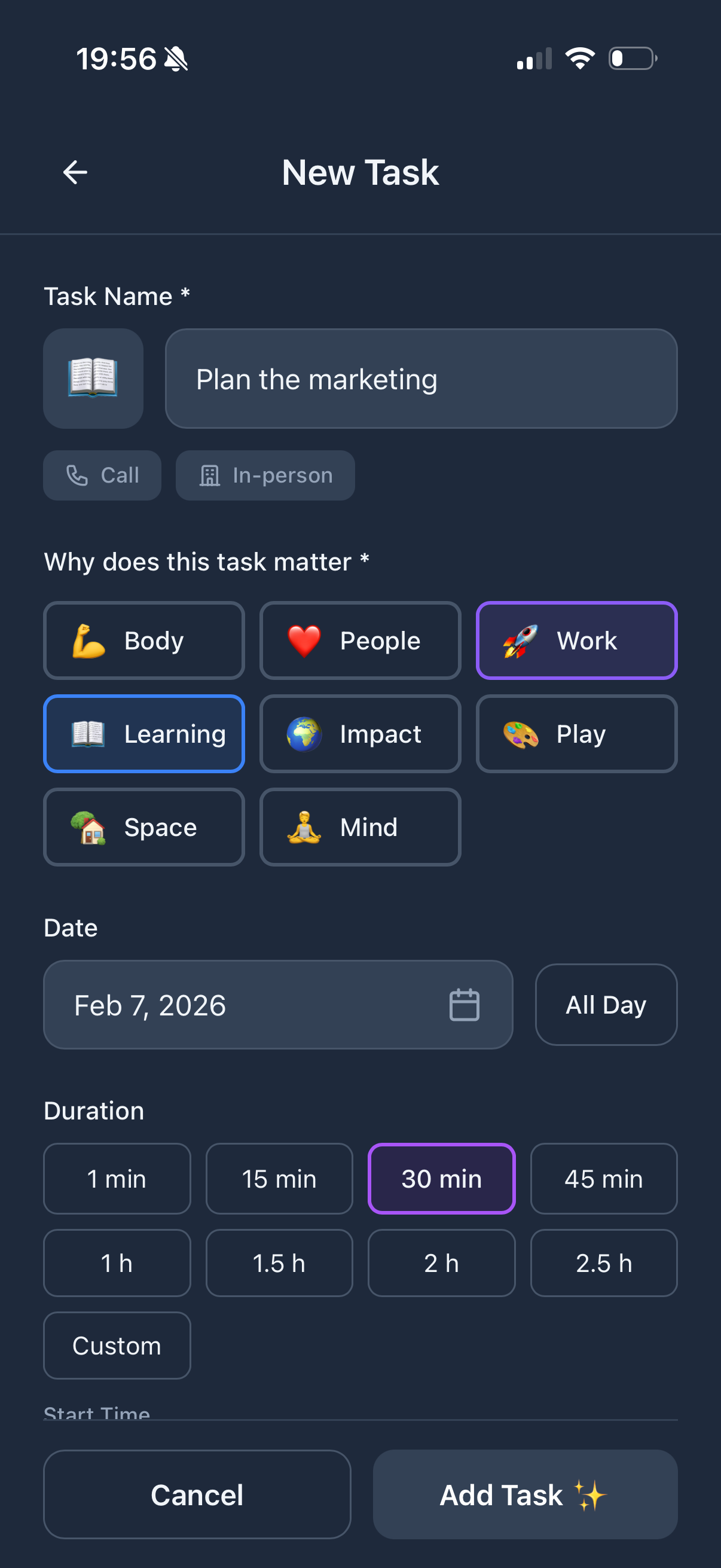
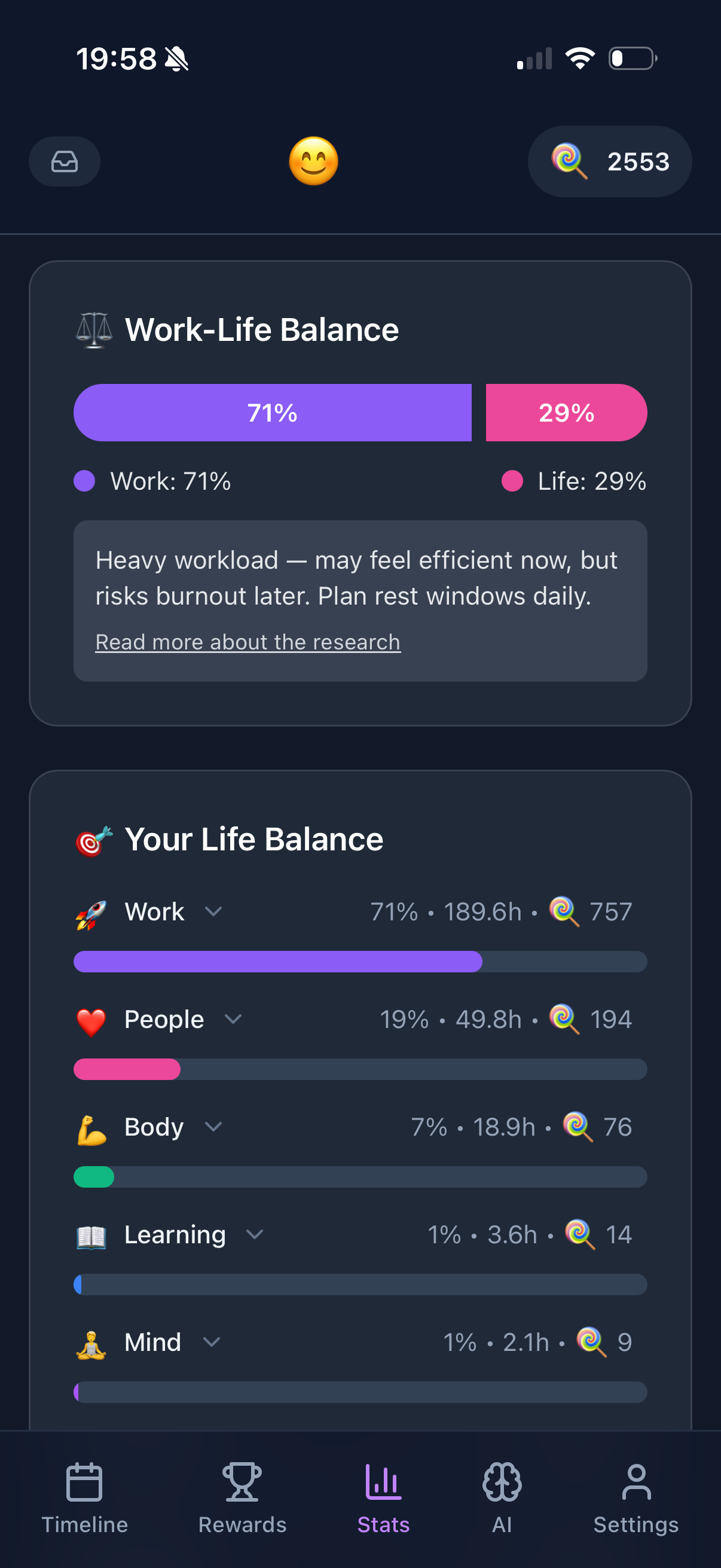
- Life balance focus - 8 areas, not just work
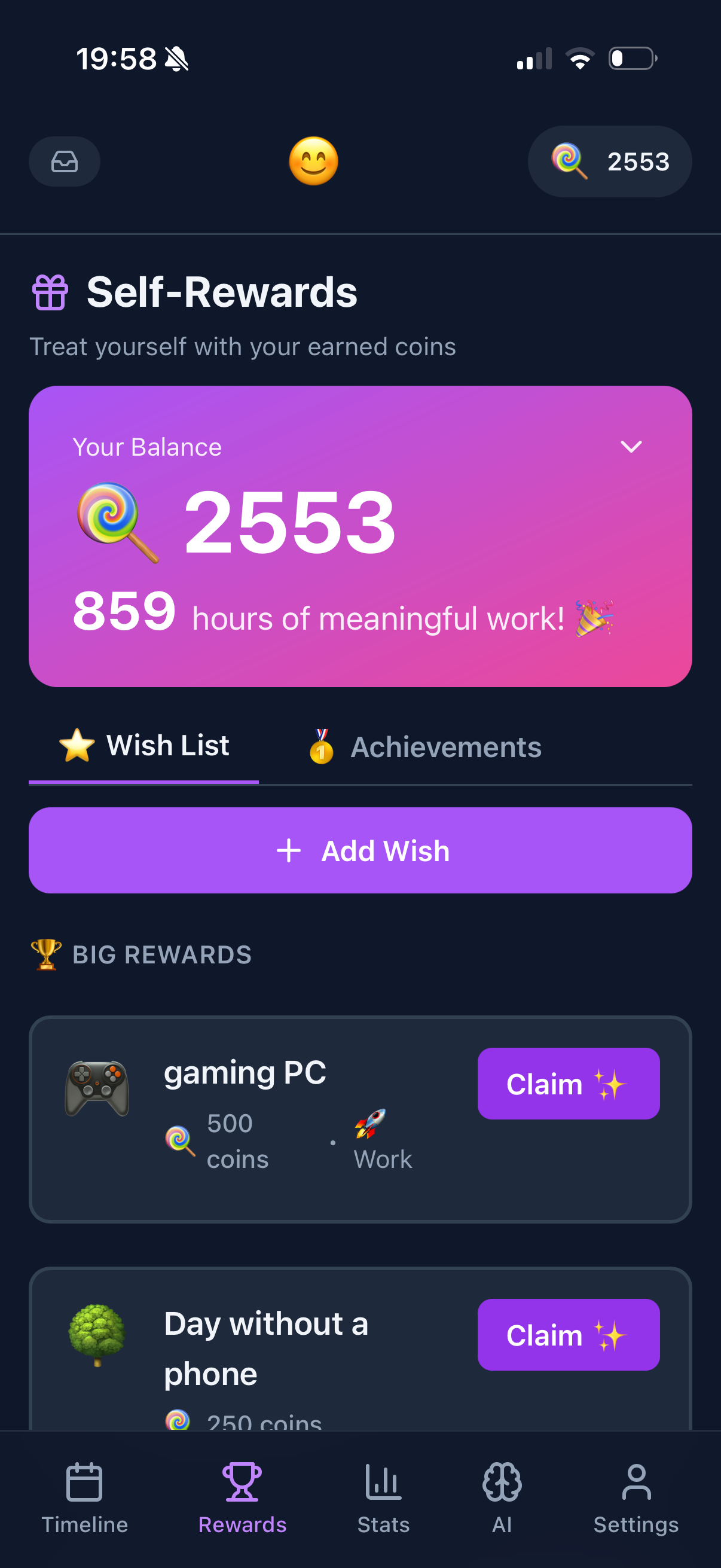
- Positive rewards - Coins for doing, not guilt for not doing
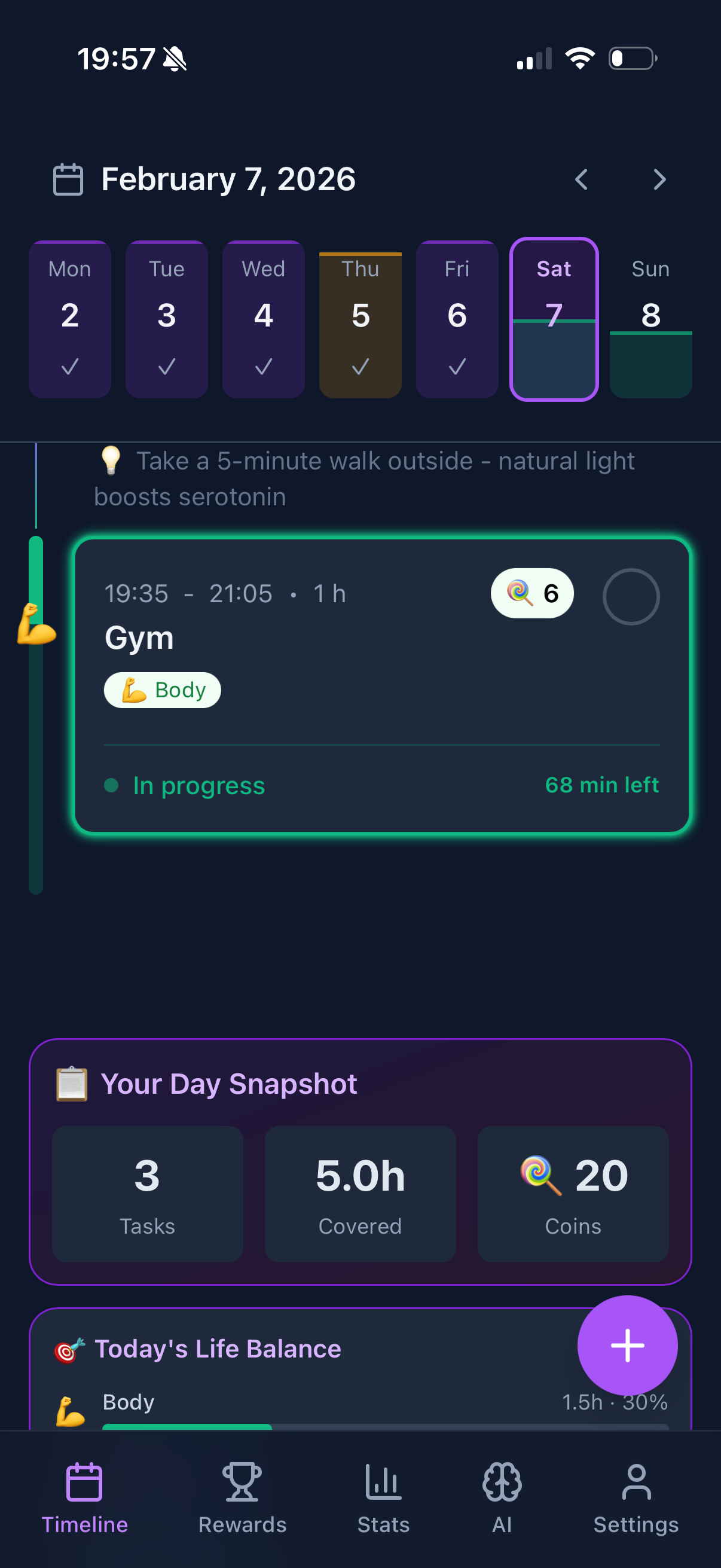
- Visual, not list-based - Timeline feels less overwhelming
- Shows Play, Mind, Body - Reminds you life isn't just tasks
Considerations:
- Still requires engagement with tasks
- Categorization adds a step
- Not for people who want punishment motivation
Rocket 135
Reddit consensus: Simple constraint system that prevents overwhelm.
- The concept: Pick 1 important task, 3 medium tasks, 5 small tasks per day maximum
- Why it helps: Forces prioritization, prevents infinite lists
- Limitation: Very basic, no other features
Apple Reminders (Minimal Use)
Reddit consensus: Sometimes less is more.
- Approach: Only put time-sensitive, must-do items. Not a brain dump.
- Why it helps: Native, simple, no gamification or complexity
- Limitation: No life balance tracking, no insights
Strategies from Reddit for Reducing Todo Anxiety
1. Stop Using Your App as a Brain Dump
Not every thought needs to become a task. Use a separate notes app for ideas, someday/maybe lists, and random thoughts. Your todo app should only contain genuine commitments.
2. Time Block, Don't Task List
Instead of "complete 15 tasks," block 2 hours for a category of work. You accomplish what you accomplish. Assigning fixed periods by setting limits prevents overusing the app mindlessly.
3. Weekly Reviews, Not Daily Guilt
Review progress weekly, not daily. What patterns emerge? Where does time actually go? This perspective reduces the day-to-day anxiety of "did I do enough?"
4. Disable Almost All Notifications
Disabling redundant notifications can increase concentration and prevent unnecessary stress. You don't need your phone reminding you of tasks every hour.
5. Include "Non-Productive" Activities
Apps like Funtasking that track Play, Mind (rest), and Connection normalize non-work activities as legitimate uses of time. You're not "wasting time" - you're living.
Common Questions About Productivity Anxiety
"Should I just quit using productivity apps entirely?"
Reddit perspective: Some people do better without any app. But for many, the issue isn't the tool - it's how it's used. A knife can prepare food or cause harm. Consider simpler apps, fewer features, and healthier expectations.
"Why do I feel guilty even on days off?"
Psychology answer: This is toxic productivity culture internalized. Rest is productive - it's when your brain consolidates learning, creativity emerges, and energy replenishes. Apps that show life balance (not just work) help normalize rest.
"How do I deal with my massive backlog of tasks?"
Practical answer: Declare bankruptcy. Delete or archive everything. Start fresh with only what matters THIS WEEK. Most of those 200 overdue tasks either don't matter anymore or will come back if they're truly important.
Signs Your Productivity App Is Hurting You
Time to Reconsider Your System If:
- You avoid opening the app because it causes stress
- You feel guilty on weekends or vacations
- Your list has 50+ items and keeps growing
- You spend more time organizing than doing
- Completing tasks doesn't bring satisfaction
- You can't relax because "there's always something"
- The app has become a source of shame, not help
The Healthier Mindset
According to discussions on Reddit, the shift that helps most is this: Productivity apps should support your life, not become your life. They're tools for awareness, not taskmasters demanding perfection.
Apps that track life balance (like Funtasking's 8 life areas) help because they remind you that Play, Rest, and Connection are legitimate categories - not wasted time. When you see your Purpose Wheel heavily weighted toward Work, it's information, not indictment.
The goal isn't to do more. It's to do what matters, sustainably, without sacrificing your mental health on the altar of productivity.