You've probably tried building a morning routine before. You read about some CEO who wakes up at 4 AM, meditates for an hour, exercises, journals, reads, and reviews their goals - all before breakfast. You try it for three days. Then you hit snooze and never do it again.
Here's the problem: most morning routine advice is designed for people with unlimited willpower and no real life constraints. That's not you. That's not anyone.
This guide will show you how to build a morning routine that works with your reality, using habit stacking and sustainable practices.
Why morning routines matter: How you start your day shapes everything that follows. A good morning routine reduces decision fatigue, builds momentum, and gives you control before the chaos begins. But only if you can actually stick to it.
What Is Habit Stacking?
Habit stacking comes from James Clear's "Atomic Habits." The core idea: don't try to build new habits from scratch. Instead, attach new habits to existing ones.
The formula is simple:
After I [CURRENT HABIT], I will [NEW HABIT].
Example: "After I pour my morning coffee, I will write three things I'm grateful for."
This works because your brain has already built neural pathways for existing habits. You're piggybacking on that infrastructure instead of building from nothing.
Step 1: Identify Your Anchor Habits
Anchor habits are things you already do every single morning without thinking. Common examples:
- Getting out of bed
- Going to the bathroom
- Making coffee or tea
- Brushing teeth
- Checking your phone (we'll talk about this one)
Pick 2-3 anchor habits. These are your building blocks.
Step 2: Start With ONE New Habit
This is where most people fail. They try to add 5 new habits at once. Don't do this.
Pick one new habit to attach to one anchor. Just one. It should take less than 2 minutes.
Good First Habits (Under 2 Minutes)
- Drink a glass of water after getting out of bed
- Write one sentence in a journal after making coffee
- Do 5 stretches after brushing teeth
- Review today's top priority after sitting at your desk
- Take 3 deep breaths before checking your phone
Common mistake: Trying to meditate for 20 minutes on day one. Start with 60 seconds. Seriously. The goal is to make showing up easy. Duration can increase later.
Step 3: Stack Gradually
Once your first habit feels automatic (usually 1-2 weeks), add another. Build your stack slowly.
Here's an example of a fully developed habit stack:
Anchor After I turn off my alarm...
+
I drink a glass of water from my nightstand
+
I do 5 minutes of stretching
+
Anchor After I make my coffee...
+
I write in my journal for 5 minutes
+
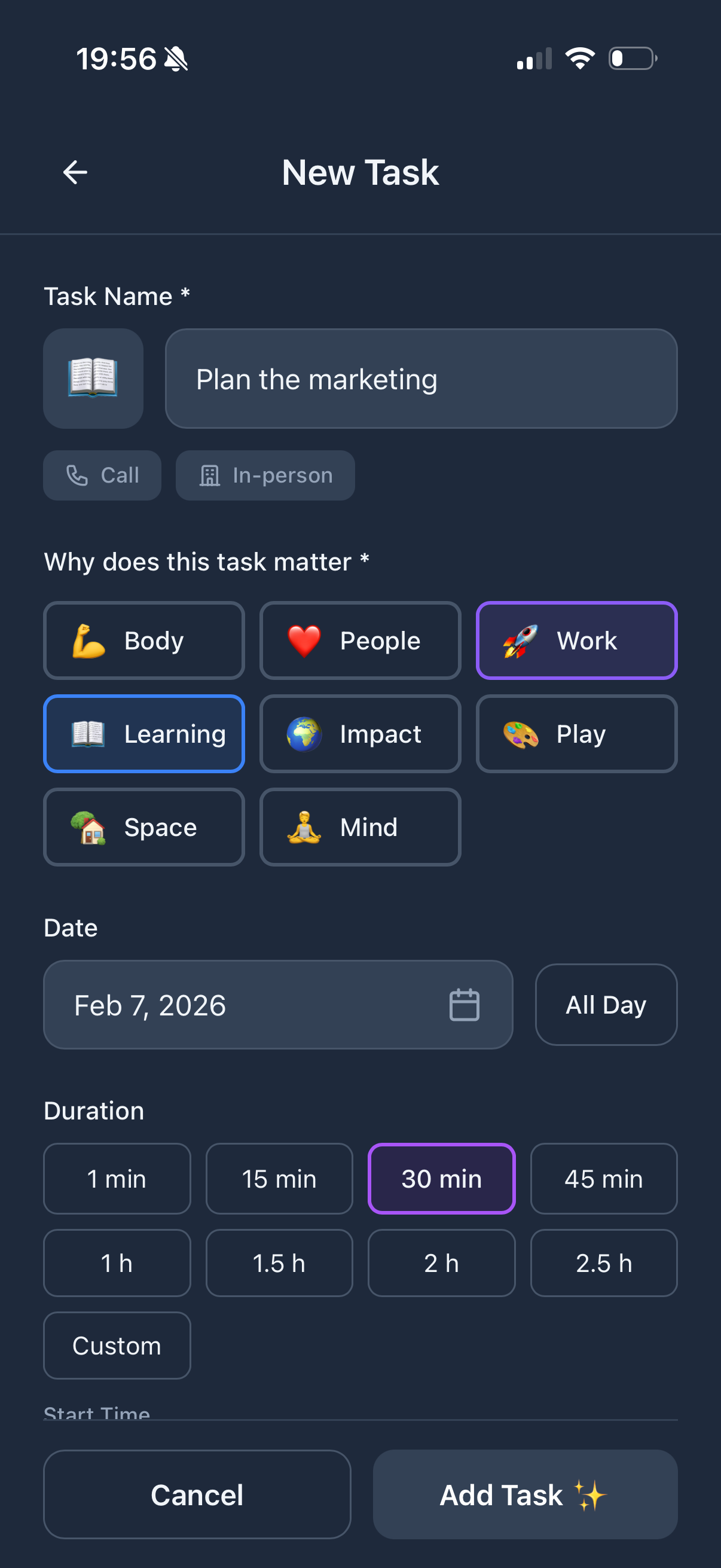
I review my top 3 priorities in Funtasking
+
Anchor After I sit at my desk...
+
I do my most important task before checking email
Notice how this isn't a 90-minute elaborate routine. It's a series of small habits connected to natural anchor points. Total additional time: maybe 15-20 minutes.
Morning Routine Ideas by Goal
For More Energy
- Drink water immediately upon waking (before coffee)
- Get 5-10 minutes of natural light
- Move your body for 5-15 minutes (walk, stretch, yoga)
- Delay coffee for 90-120 minutes after waking (controversial but effective)
For Mental Clarity
- Don't check your phone for the first 30-60 minutes
- Meditate or do breathing exercises (start with 3 minutes)
- Journal: brain dump or gratitude list
- Review your calendar and top priorities
For Productivity
- Plan your MIT (Most Important Task) the night before
- Do your MIT first thing, before email or meetings
- Time-block your morning in advance
- Set a "shutdown time" for your morning routine so it doesn't expand
The Phone Problem
Let's address the elephant in the room. Most people's actual morning routine is:
- Wake up
- Immediately grab phone
- Scroll for 20-45 minutes
- Panic about being late
- Rush through everything else
Checking your phone first thing hands control of your attention to others. You're immediately reacting to emails, notifications, and news instead of being intentional about your day.
Phone Rules That Work
- Charge outside bedroom: Removes temptation entirely
- Use a real alarm clock: Phone can't be the first thing you touch
- Set a phone pickup time: "No phone until after breakfast" or "No phone for first 30 minutes"
- Use app blockers: Block social media and email until a set time
Sample Morning Routines
The Minimalist (15 minutes)
For busy parents, those with early commutes, or if you just hate mornings:
- Glass of water upon waking
- 3 minutes of stretching while coffee brews
- Review 1-3 priorities for the day
- No phone until after your first priority is done
The Balanced (45 minutes)
For those who can wake up a bit earlier:
- Water + supplements
- 15 minutes movement (walk, yoga, workout)
- 5 minutes meditation/breathing
- 5 minutes journaling
- Healthy breakfast
- Review priorities in Funtasking
- Start MIT before email
The Deep Work Morning (2 hours)
For remote workers, creatives, or those with flexible schedules:
- Wake without alarm (go to bed early enough)
- Water, light movement, no screens
- 60-90 minutes of deep work on your most important project
- Breakfast and coffee (as reward)
- Email/communication batch
- Plan rest of day
Why Most Morning Routines Fail
1. Too ambitious too fast
Adding an hour to your morning on day one is a recipe for failure. Start with 10-15 extra minutes. Build from there.
2. Not preparing the night before
Your morning routine starts the night before. Lay out clothes. Set up the coffee maker. Put your journal on the table. Reduce morning friction to near zero.
3. No flexibility
Life happens. Kids get sick. You sleep poorly. Have a "minimum viable routine" for bad days. Maybe it's just water + 1 minute of deep breathing + reviewing priorities. Something beats nothing.
4. Wrong motivation
If you're building a morning routine because you feel guilty about not being productive enough, it won't last. Build it because you want to feel better, not because you should.
Using Funtasking for Your Morning Routine
Funtasking's approach to planning works well for morning routines because it focuses on life balance, not just task completion. Here's how to use it:
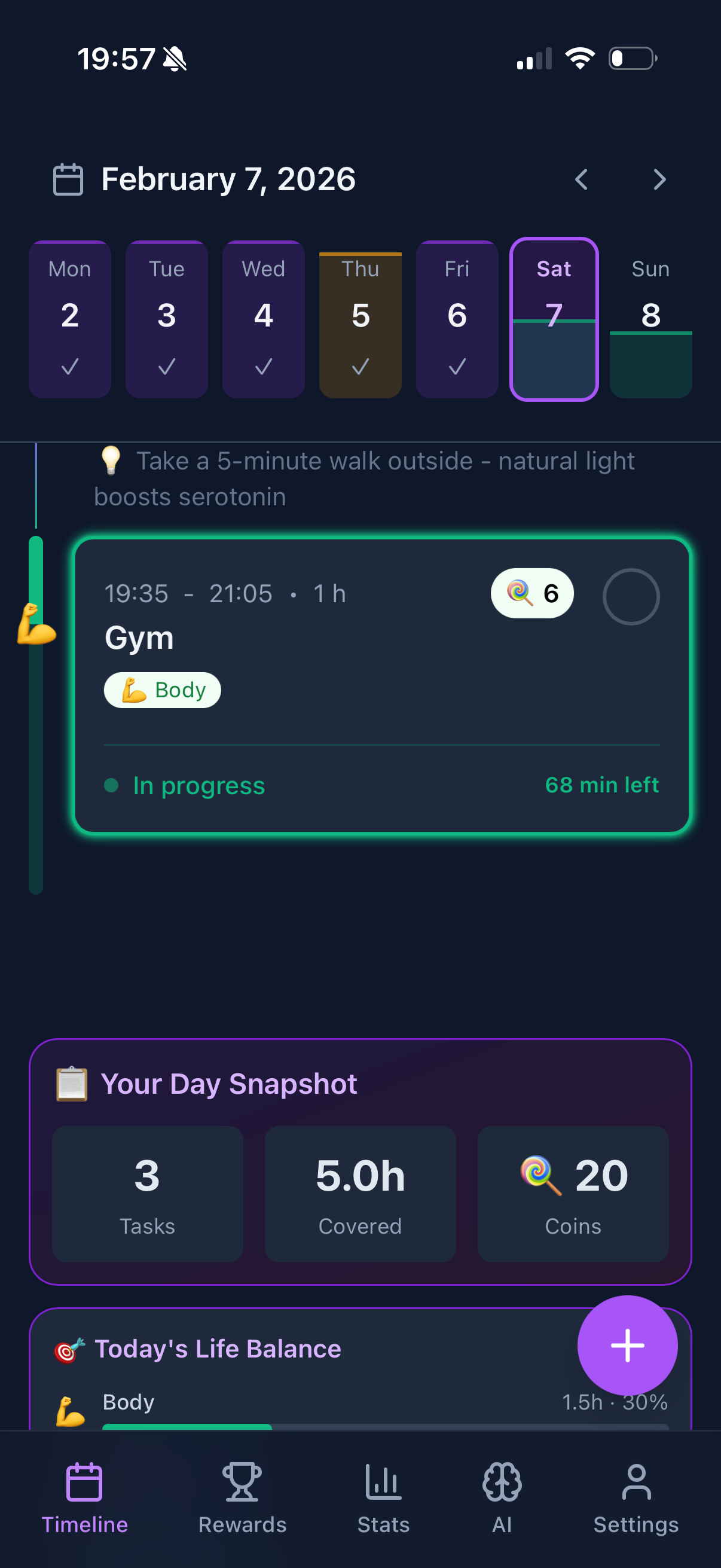
- Create recurring morning tasks: Add your routine habits as daily recurring tasks. The gentle reminders help without pressure.
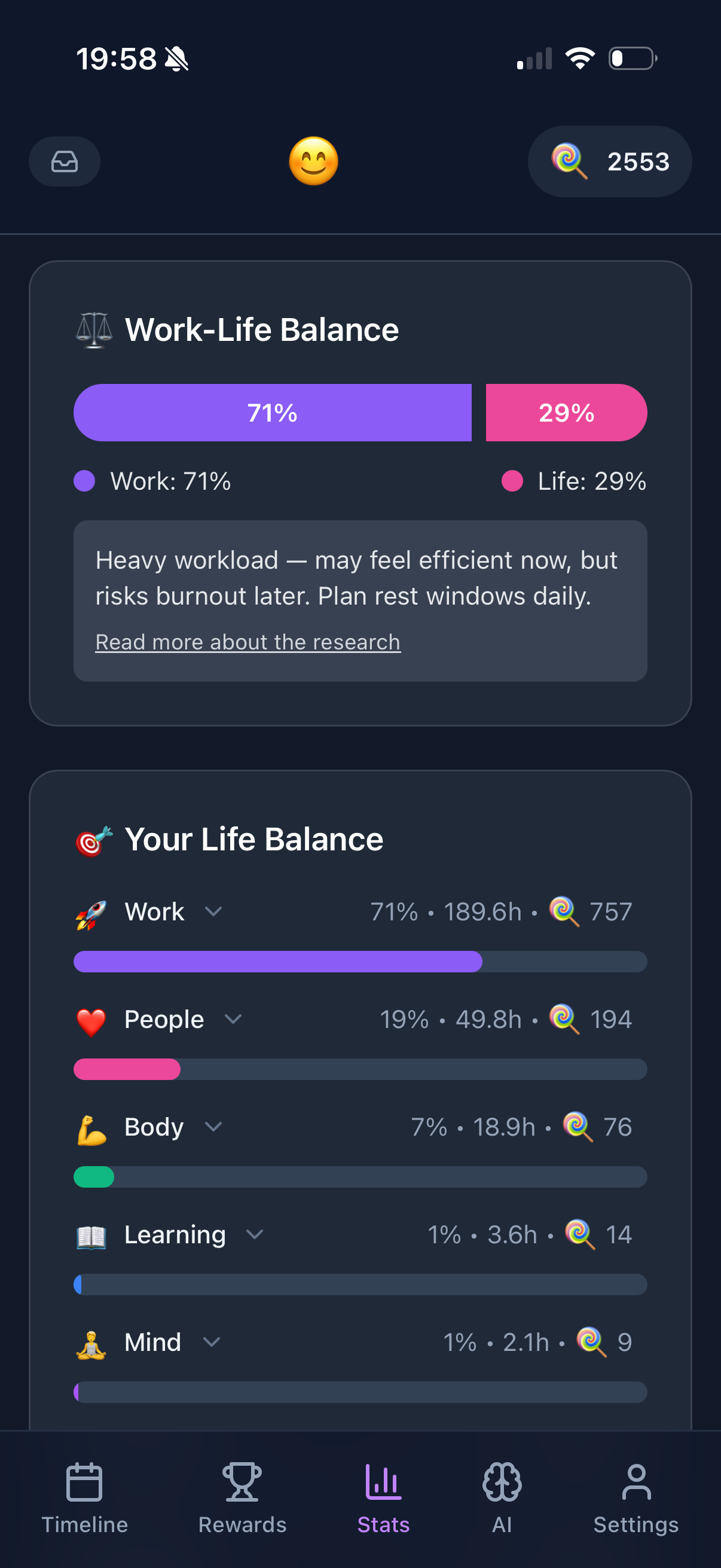
- Use the Purpose Wheel: Your morning routine can touch multiple life areas - Health (exercise), Personal Growth (reading), Career (deep work). See how your morning contributes to life balance.
- Track without guilt: If you miss a day, Funtasking doesn't make you feel terrible. It's designed for sustainable habits, not streak anxiety.
- Review in weekly planning: Use the weekly review feature to see which morning habits are sticking and which need adjustment.
Build Better Morning Habits
Funtasking helps you build sustainable routines across all areas of life.
Try Funtasking Free
Related Articles