Here's a question that most productivity apps never ask: Are you happy?
They track tasks completed. Projects finished. Habits maintained. Streaks preserved. But none of that tells you whether your life is actually good. You can have a 100% task completion rate and still be miserable.
Happiness tracking flips the script. Instead of measuring output, you measure outcomes. Instead of asking "what did I do?" you ask "how do I feel?" This shift can be transformative.
The insight: Productivity is a means, not an end. The actual goal is a good life. A planner that tracks happiness keeps you focused on what matters, not just what's measurable.
Why Happiness Tracking Matters
The Productivity Trap
It's easy to get caught in the productivity trap. You optimize your morning routine. You batch tasks. You eliminate distractions. You get more done than ever before. And you're still not happy.
Why? Because productivity optimization doesn't ask what you should be productive about. It assumes more output is always better. But output that doesn't lead to fulfillment is just busyness.
What Actually Creates Happiness
Research in positive psychology has identified what actually contributes to wellbeing:
- Relationships: Strong social connections are the #1 predictor of happiness
- Health: Physical wellbeing affects mental wellbeing
- Purpose: Meaningful work and contribution
- Autonomy: Feeling in control of your life
- Growth: Learning and becoming who you want to be
- Fun: Pleasure and enjoyment matter too
Notice what's not on this list? Task completion rate. Inbox zero. Streak length. The things most productivity apps obsess over.
The research: The Harvard Study of Adult Development, running since 1938, found that relationships are the strongest predictor of life satisfaction. Not career success. Not money. Relationships. A planner that tracks life balance across areas like relationships is more aligned with actual wellbeing research than one that only tracks work tasks.
How to Track Happiness
Mood Logging
Simple daily mood check-ins reveal patterns over time. Some apps ask you to rate your mood 1-10. Others use emoji or color scales. The key is consistency - regular logging creates useful data.
Over time, you can see what affects your mood. Maybe Mondays are consistently low. Maybe days with exercise are consistently high. This awareness helps you make better choices.
Gratitude Practice
Gratitude journaling has strong research support. Writing down 3 things you're grateful for each day shifts your attention toward the positive. It's simple but genuinely effective.
Life Area Balance
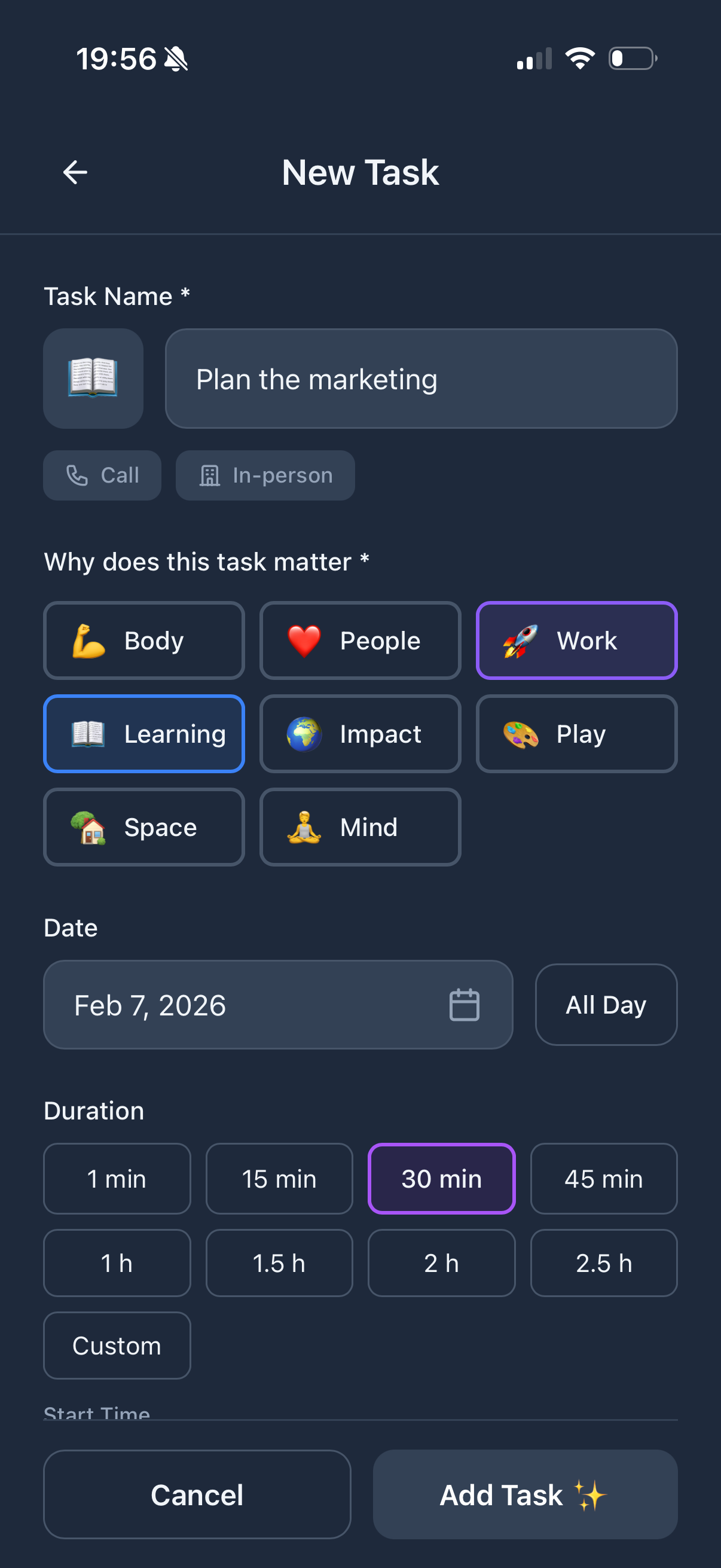
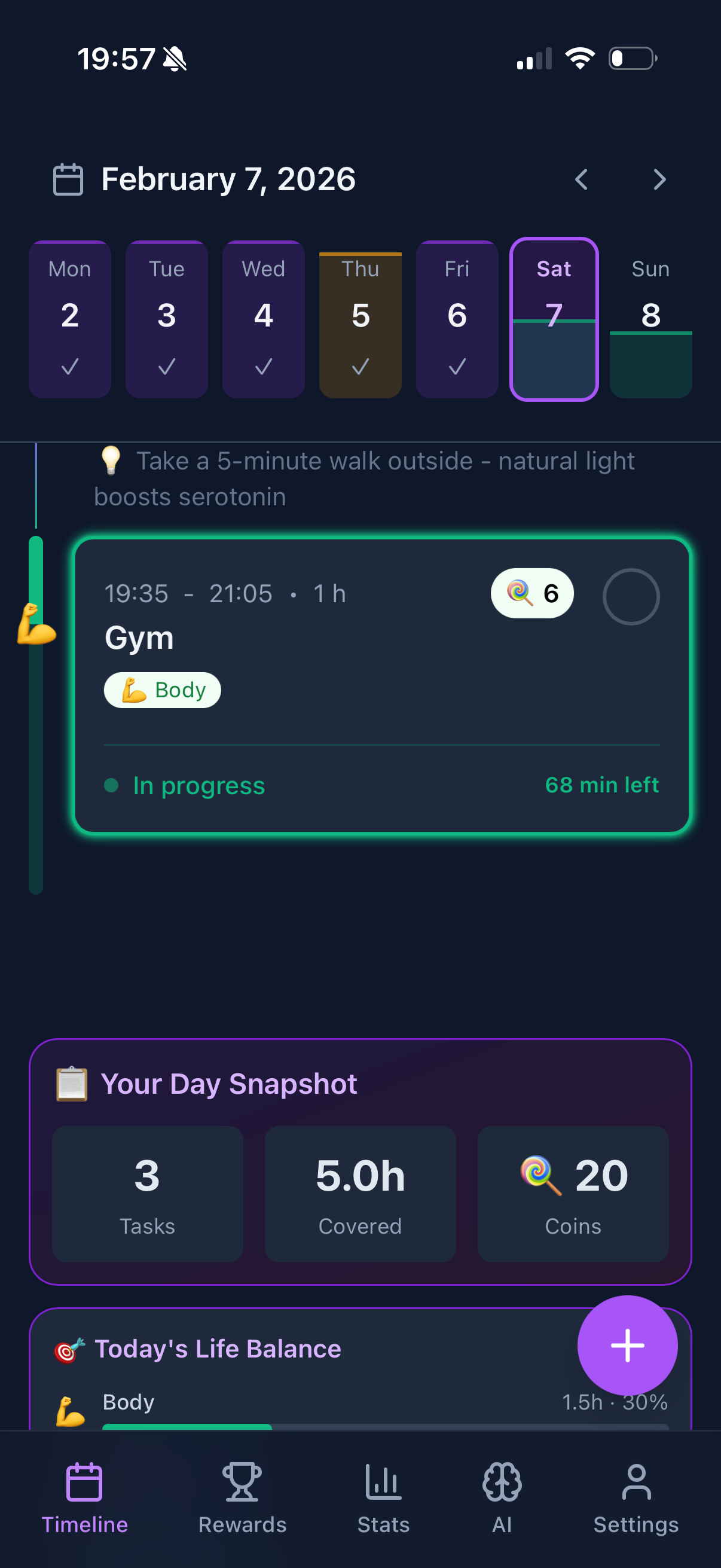
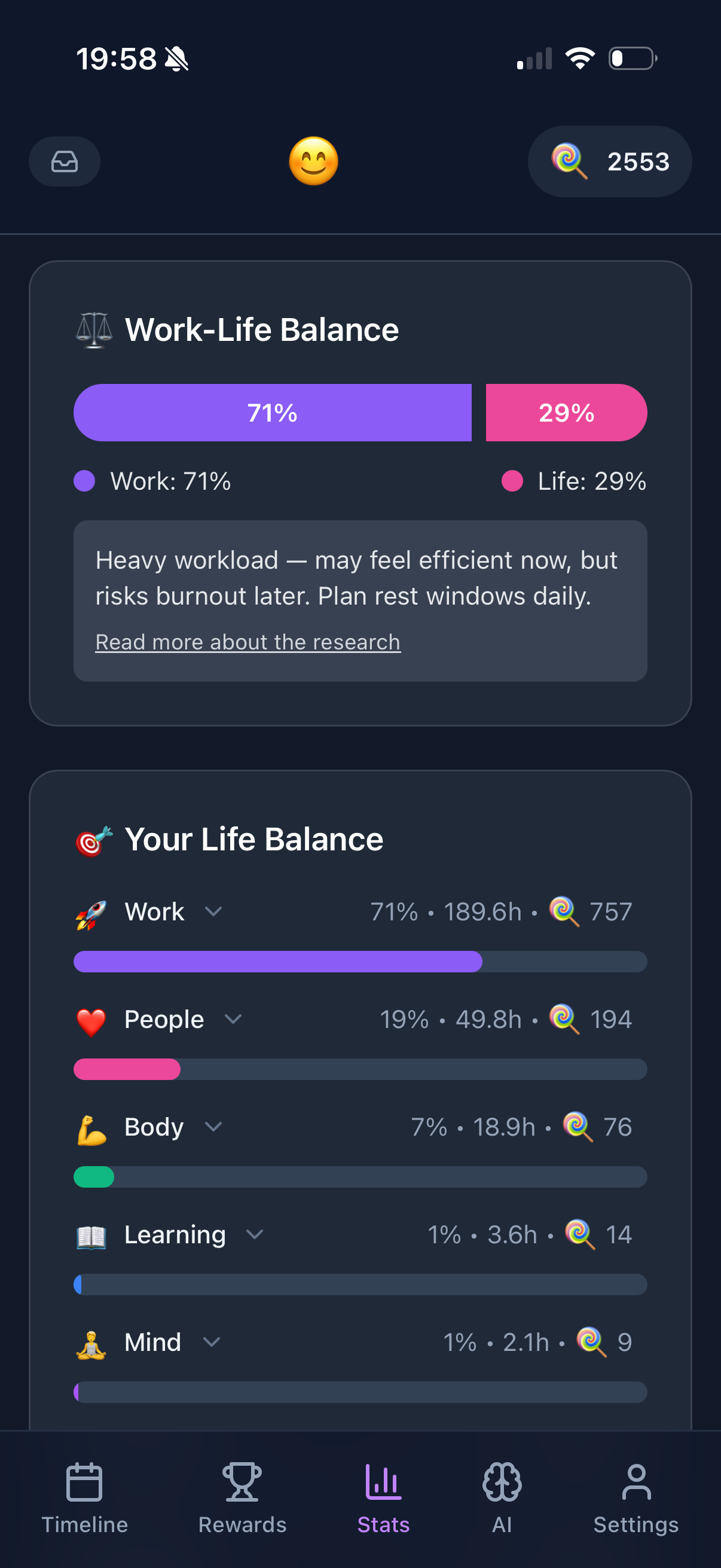
Tracking balance across life areas (like Funtasking's 8 categories) is indirect happiness tracking. When all areas are getting attention, you're more likely to be satisfied. When areas are neglected, you feel it.
Joy Activities
Some people track specific activities that bring joy. Did you do something fun today? Did you connect with someone you love? Did you move your body? Tracking these reminds you to prioritize them.
How Funtasking Supports Happiness
Joy Feature
The Purpose Wheel
The Purpose Wheel tracks your balance across 8 life areas that contribute to wellbeing. It's not a mood tracker per se, but it's tracking the inputs that create happiness.
When your wheel shows Health and Relationships getting attention alongside Career, you're building the foundation for life satisfaction. The visual makes this obvious.
Joy Feature
Fun & Recreation Category
Funtasking explicitly includes "Fun & Recreation" as one of the 8 life areas. This means fun activities earn rewards just like work tasks. Playing video games, going to concerts, creative hobbies - they all count.
This normalizes joy as part of a good life, not something you have to earn through productivity.
Joy Feature
Positive-Only Gamification
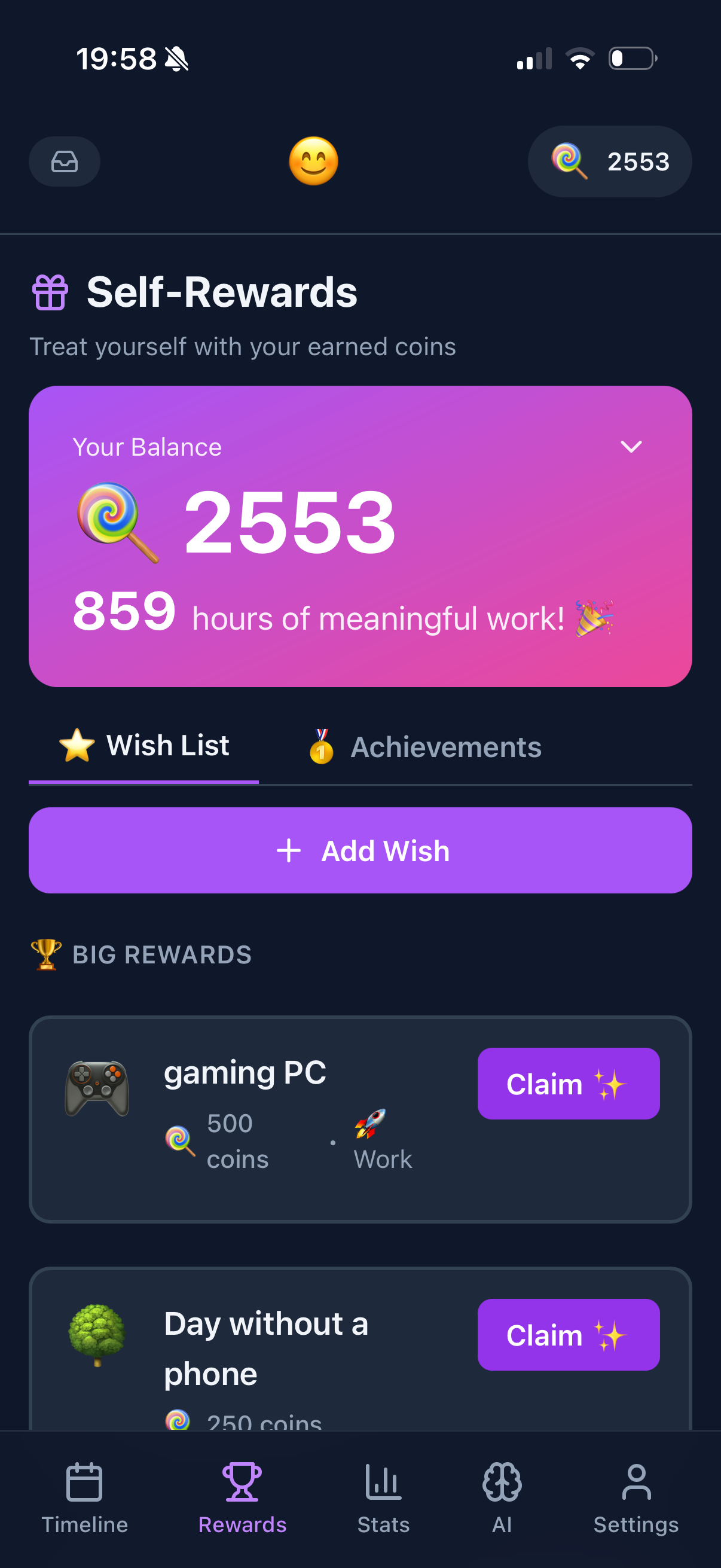
Reward systems that punish you create anxiety, not happiness. Funtasking's positive-only gamification celebrates progress without taking anything away for rest. This approach supports wellbeing rather than undermining it.
Other Happiness-Focused Apps
Daylio
Daylio is a mood tracking app that lets you log how you feel each day along with activities. Over time, it shows correlations between activities and mood. It's excellent for pure mood tracking but isn't a full planner.
Happiness tracking: Direct mood logging with activity correlation.
Finch
Finch focuses on self-care through caring for a virtual pet. It includes mood check-ins, reflections, and self-care task tracking. The approach is gentle and wellness-focused.
Happiness tracking: Mood check-ins plus self-care activity tracking.
Reflectly
Reflectly is an AI-powered journal that prompts reflection on your day and mood. It's more journal than planner, but the reflection helps you understand what affects your happiness.
Happiness tracking: Journaling with mood insights.
Sunsama
Sunsama includes a daily shutdown ritual that asks how you feel about the day. This simple check-in brings awareness to satisfaction beyond just task completion.
Happiness tracking: End-of-day reflection on how you feel.
The Happiness-Productivity Connection
Here's the twist: happy people are actually more productive. Research shows that positive emotions lead to better problem-solving, more creativity, and more resilience. The causation runs both ways.
So tracking happiness isn't about abandoning productivity. It's about recognizing that wellbeing supports productivity, not the other way around. Take care of your happiness, and the productivity often follows.
The shift: Instead of "I'll be happy when I'm more productive," try "I'll be more productive when I'm happier." This reframe changes everything about how you approach planning.
Building a Happiness-Focused System
1. Add Mood Check-Ins
Whatever planner you use, add a simple daily mood check. Just rate your day 1-10. Over time, patterns emerge. This takes 5 seconds and provides valuable data.
2. Track Life Balance
Use Funtasking or a similar app to track tasks across life areas. Make sure Relationships, Health, and Fun get attention, not just Career. The balance matters more than the volume.
3. Schedule Joy
Actively plan activities that bring you joy. Put them on your calendar. Treat them as non-negotiable as work meetings. Joy deserves protection.
4. Reflect Weekly
Each week, ask yourself: Was this a good week? Not productive - good. What made it good or not good? Use the answer to plan a better next week.
5. Watch for Patterns
Over time, notice what correlates with good moods. More sleep? Exercise? Time with friends? Less social media? The patterns are personal, but tracking reveals them.
Important: If you're consistently unhappy, tracking might reveal issues that need more than an app can provide. Therapy, medical care, or major life changes might be needed. Apps can support wellbeing, but they're not treatment for serious mental health issues.
Track What Matters
Funtasking helps you balance all areas of life that contribute to happiness. See the bigger picture.
Start Tracking Balance
Related Articles