Everyone wants to improve themselves. Fewer people actually do it. The difference isn't motivation or willpower. It's systems. People who successfully grow have systems that make growth automatic.
That's where self improvement planner apps come in. They turn vague intentions like "be healthier" or "learn more" into concrete daily actions. They help you track what matters and see progress over time. When motivation fades, the system keeps working.
But not all self improvement apps are created equal. Some are glorified to-do lists. Others are so complex they become a full-time job. The best ones find the balance: structured enough to work, simple enough to use.
The growth mindset trap: Wanting to improve isn't enough. You need a way to translate intention into action, track whether it's working, and adjust when it's not. That's what a good self improvement planner does.
What Makes a Great Self Improvement Planner
Multi-Area Life Tracking
Real improvement isn't just about one thing. You might want to get healthier, learn a skill, improve relationships, and advance your career. A good planner helps you track and balance all these areas.
Habit Integration
Goals are achieved through daily habits. The best self improvement apps connect your big goals to the small daily actions that actually move the needle.
Progress Visualization
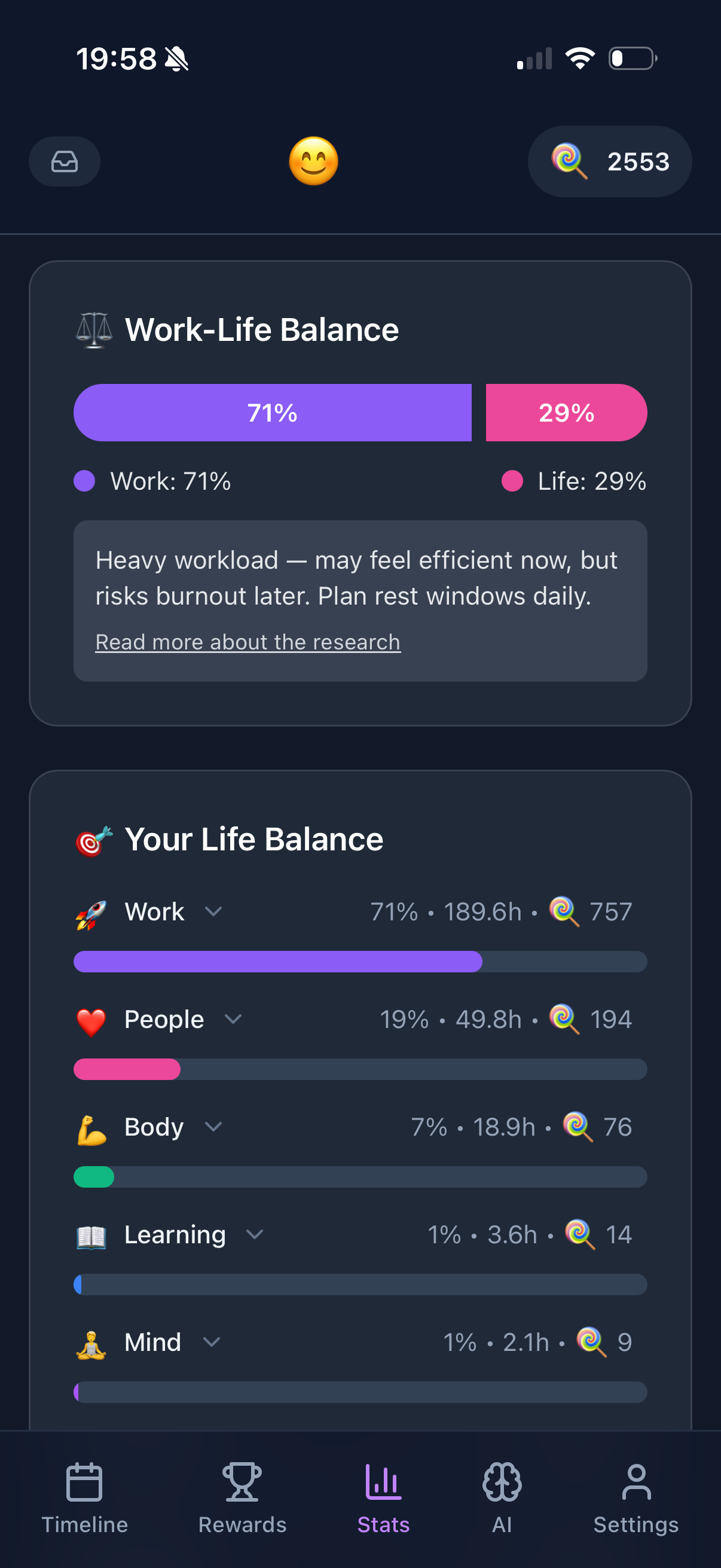
Personal growth is slow. Without visual feedback, you can't see that you're improving. Charts, wheels, streaks, or other visualizations help you recognize progress you'd otherwise miss.
Reflection Prompts
Self improvement isn't just about doing. It's about thinking. Apps that prompt regular reflection help you understand what's working and what needs adjustment.
Best Self Improvement Planner Apps
Free / $2.99 Pro
Funtasking
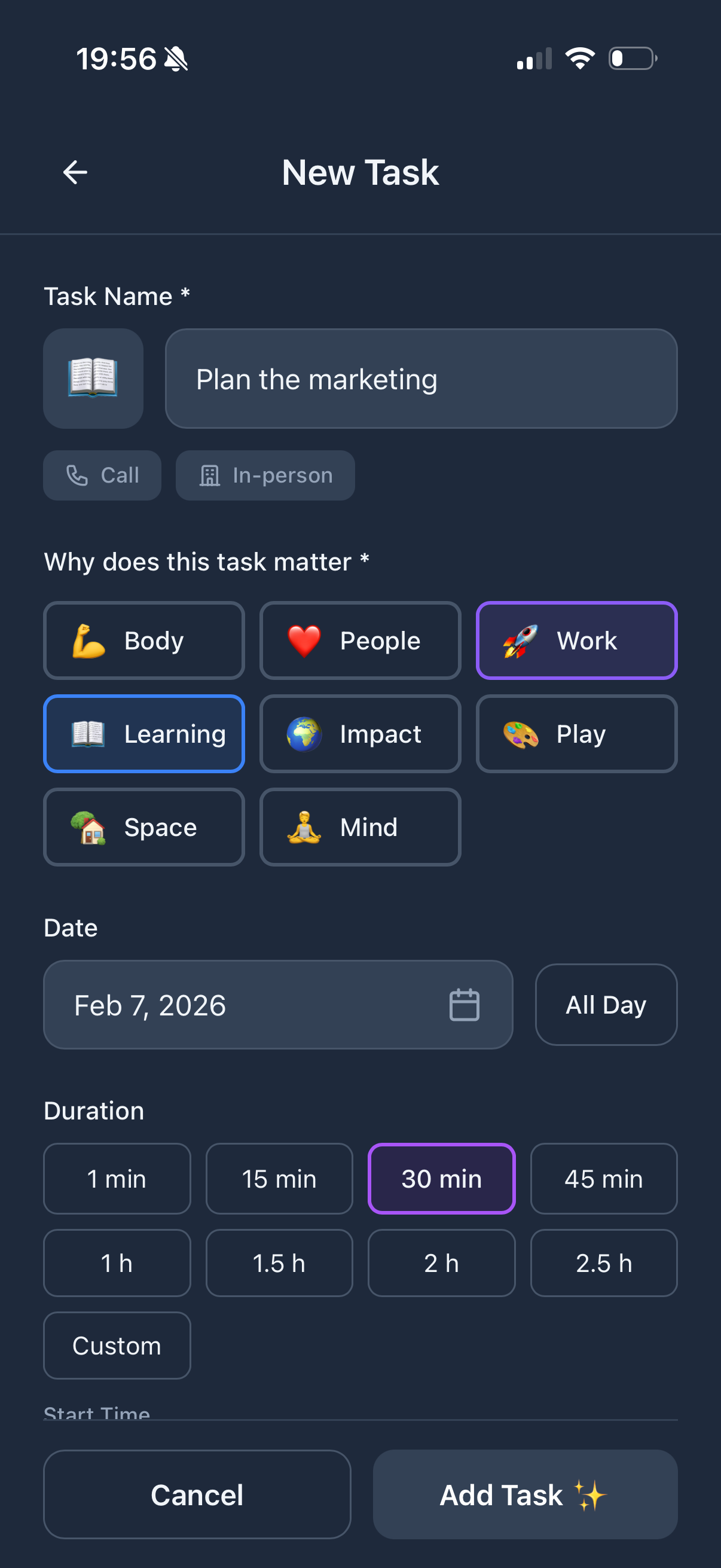
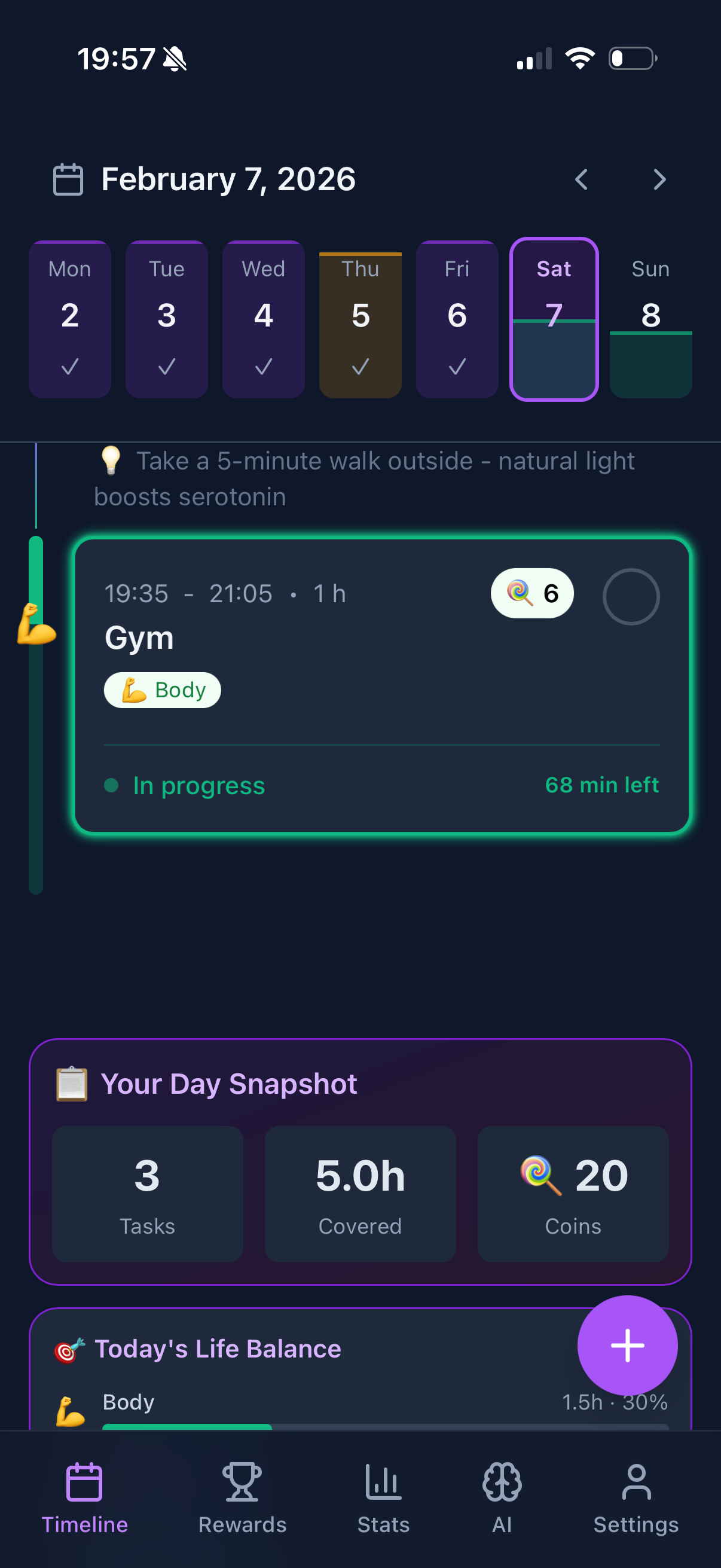
Funtasking is built around the Purpose Wheel, which divides your life into 8 key areas: career, health, relationships, creativity, learning, finances, fun, and personal growth. Every task you complete contributes to one of these areas, so you can see exactly where you're growing and where you're stagnating.
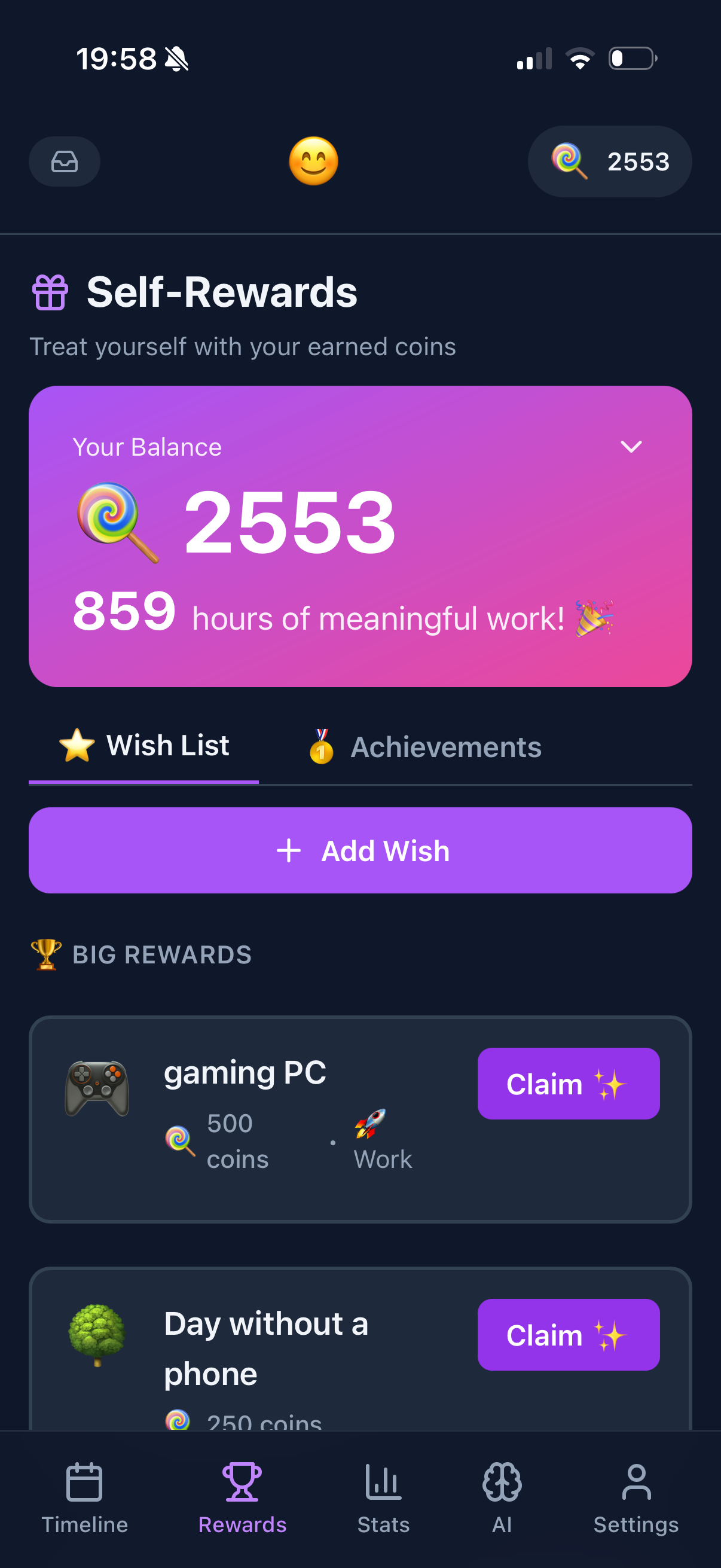
The gamification system rewards consistent improvement across all areas. You don't just check off tasks; you level up your life. The app also includes burnout prevention, because sustainable self improvement means knowing when to rest.
Self improvement features:
- + Purpose Wheel for 8 life areas
- + Visual balance tracking
- + Gamified progress system
- + Burnout prevention built-in
Consider:
- - Not a detailed habit tracker
- - Focus on balance, not intensity
- - Web and iOS only for now
Free with Pro at $4.99/month
Habitica
Habitica turns self improvement into a role-playing game. Your character levels up as you complete habits and tasks. You can join parties, fight monsters, and earn rewards. For gamers, this approach can be incredibly motivating.
It's great for habit building but can feel overwhelming if you're not into the game aesthetic.
Self improvement features:
- + Full RPG gamification
- + Social accountability features
- + Habit, daily, and to-do tracking
Consider:
- - Game aesthetic isn't for everyone
- - Can feel punishing when you miss tasks
- - Learning curve for all features
$69.99/year
Fabulous
Fabulous takes a science-based approach to building healthy routines. It starts with small morning rituals and gradually expands into comprehensive life improvement. The app uses behavioral psychology principles to make habits stick.
It's particularly good for people who want structured guidance rather than complete freedom.
Self improvement features:
- + Science-based routine building
- + Guided self improvement journey
- + Beautiful, motivating design
Consider:
- - Expensive annual subscription
- - Less flexible, more prescribed
- - Morning routine focused
How to Actually Improve Yourself
Apps are tools, not magic. Here's how to use them effectively:
Start With One Area
Don't try to improve everything at once. Pick the life area that will have the most positive impact right now. Master that before adding more.
Define Specific Behaviors
"Be healthier" is too vague. "Walk 20 minutes every day" is trackable. Convert every goal into specific actions you can mark as done.
Review Weekly
Set aside 15 minutes each week to look at your progress. What worked? What didn't? What needs to change? Growth requires reflection, not just action.
Celebrate Progress
Self improvement is a long game. If you only celebrate reaching the final goal, you'll burn out before you get there. Celebrate the small wins along the way.
The improvement trap: Some people become addicted to self improvement itself. They're always optimizing, never enjoying. Real growth includes learning to be content with who you are while still working on becoming better. Balance matters.
Common Self Improvement Mistakes
Too Many Goals
Pick 1-3 areas to focus on. Trying to improve 10 things at once means improving nothing.
No Tracking
If you can't measure it, you can't improve it. Track your actions, not just your intentions.
All or Nothing
Missing one day doesn't mean failure. Progress isn't linear. Keep going after setbacks.
Neglecting Balance
Improving career while destroying health isn't improvement. Consider the whole picture.
Balanced Growth Starts Here
Funtasking helps you improve across all life areas without burning out. Purpose-driven planning for real growth.
Try Funtasking Free
Related Articles