Most productivity systems are too complicated. GTD has dozens of lists. Time blocking requires constant calendar management. Bullet journaling turns into an art project.
The 1-3-5 rule cuts through all that. Every day, you pick 9 tasks: 1 big, 3 medium, 5 small. Done. That's the whole system.
It's stupidly simple. And it works.
1
Big Task
The one thing that will make today feel productive. Takes 2+ hours of focused work.
3
Medium Tasks
Important but smaller. Take 30-60 minutes each. Support your projects and goals.
5
Small Tasks
Quick wins. Under 15 minutes each. Emails, calls, admin, quick follow-ups.
Why 1-3-5 Works
1. It forces prioritization
You can't put everything in the "big" category. Having only one big task slot forces you to decide what actually matters most. This is the hardest part of productivity: choosing what NOT to do.
2. It matches energy levels
You don't have unlimited focus. The 1-3-5 structure acknowledges that you have maybe 2-4 hours of peak cognitive energy per day (for the big task), plus some medium-focus time, plus lots of little gaps for small tasks.
3. It's achievable
Nine tasks sounds like a lot, but the mix is realistic. You'll finish most days having completed your list. That feeling of accomplishment builds momentum and motivation.
4. It prevents overwhelm
A to-do list with 30 items is paralyzing. Nine items is manageable. You can see the finish line.
The math works: 1 big task (2-3 hours) + 3 medium tasks (1.5-3 hours) + 5 small tasks (30-60 minutes) = roughly 4-7 hours of productive work. That's a realistic workday.
How to Categorize Tasks
Big Tasks (1 per day)
- Require 2+ hours of focused, uninterrupted work
- Move important projects forward significantly
- Often involve deep thinking, creation, or problem-solving
- Examples: Write report, Build feature, Create presentation, Strategic planning
Medium Tasks (3 per day)
- Take 30-60 minutes
- Require some focus but not deep work
- Support ongoing projects and responsibilities
- Examples: Review documents, Prepare for meeting, Research topic, Write email draft
Small Tasks (5 per day)
- Under 15 minutes each
- Often administrative or routine
- Can be done in between other work
- Examples: Reply to email, Make phone call, Schedule appointment, File expense
Example 1-3-5 Day
A Product Manager's Day
Big: Write PRD for new feature (2.5 hours)
Medium: Review design mockups and provide feedback (45 min)
Medium: Prepare slides for stakeholder meeting (40 min)
Medium: Analyze last week's user metrics (30 min)
Small: Reply to Slack questions from engineering
Small: Schedule 1:1 with new team member
Small: Update Jira tickets for sprint
Small: Forward relevant article to team
Small: Book conference room for Thursday
Best Apps for 1-3-5 Planning
Free / $2.99 Pro
Funtasking
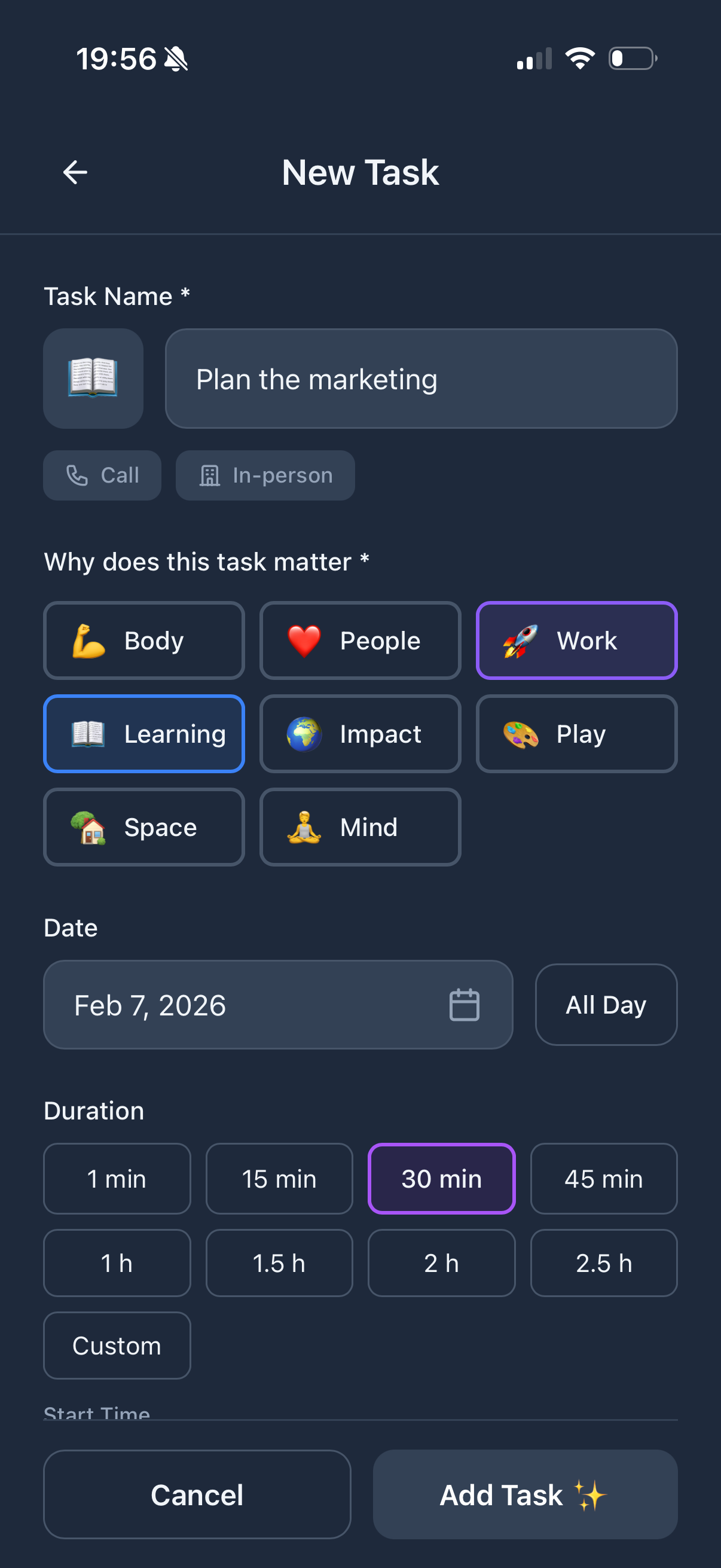
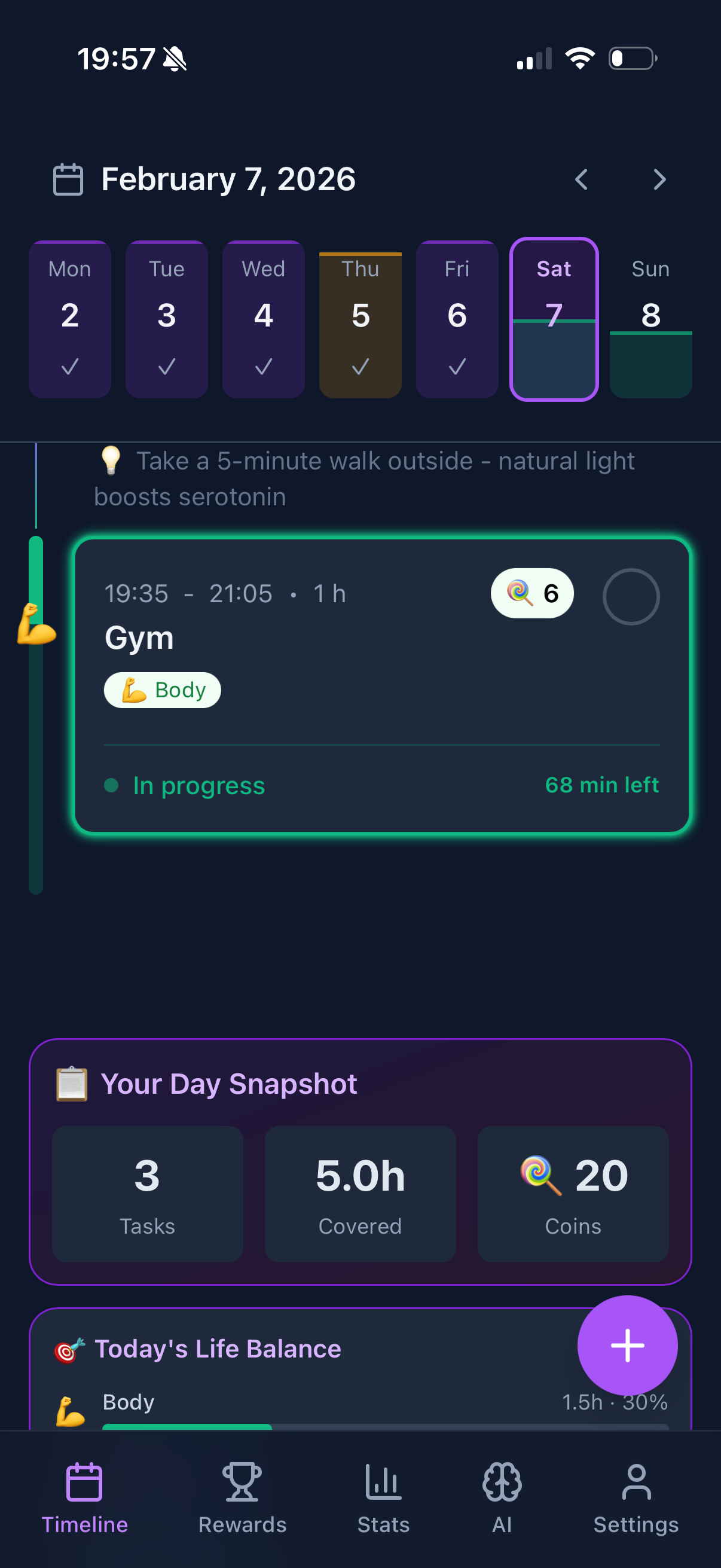
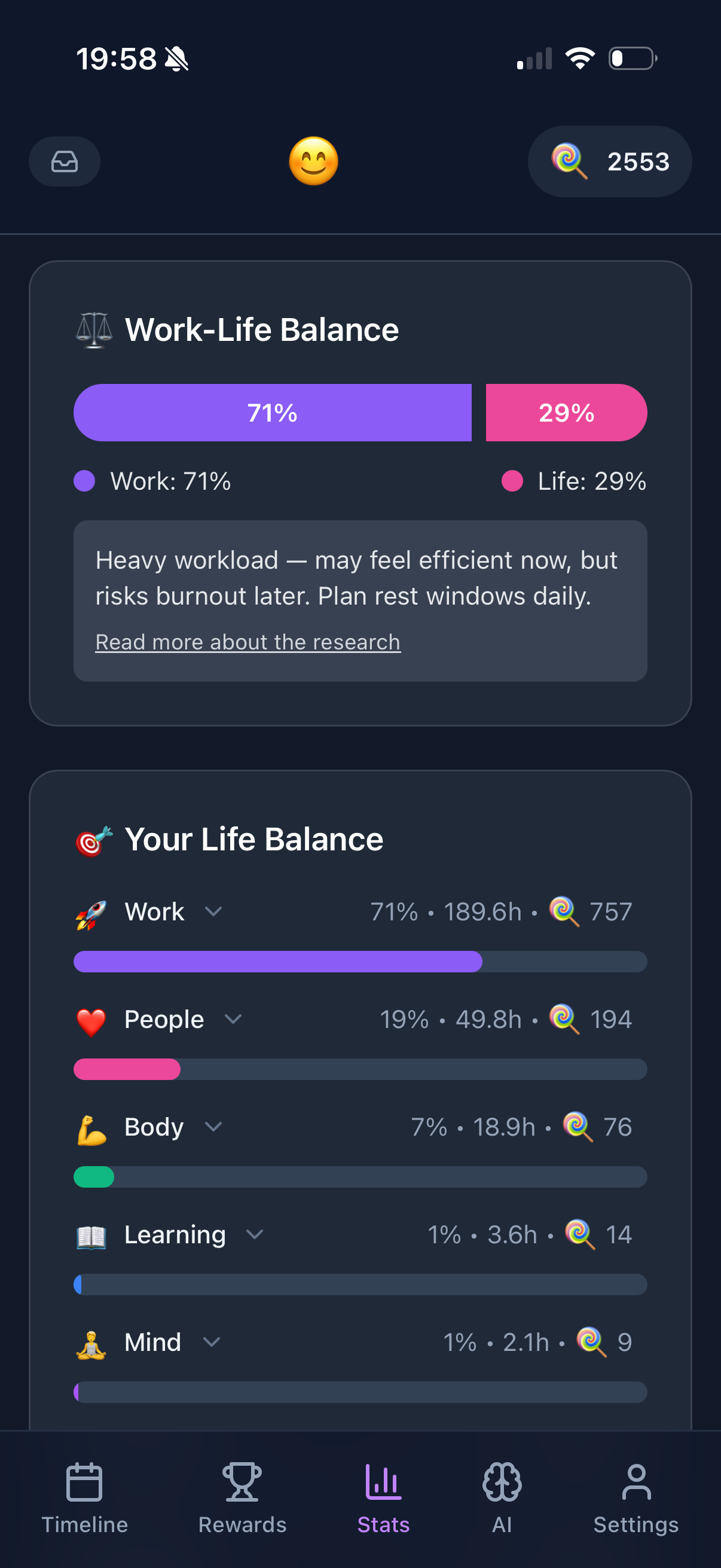
While Funtasking doesn't have a built-in 1-3-5 template, its approach complements the method well. You can tag tasks by priority level and the life balance wheel ensures your 9 daily tasks span different areas of life, not just work.
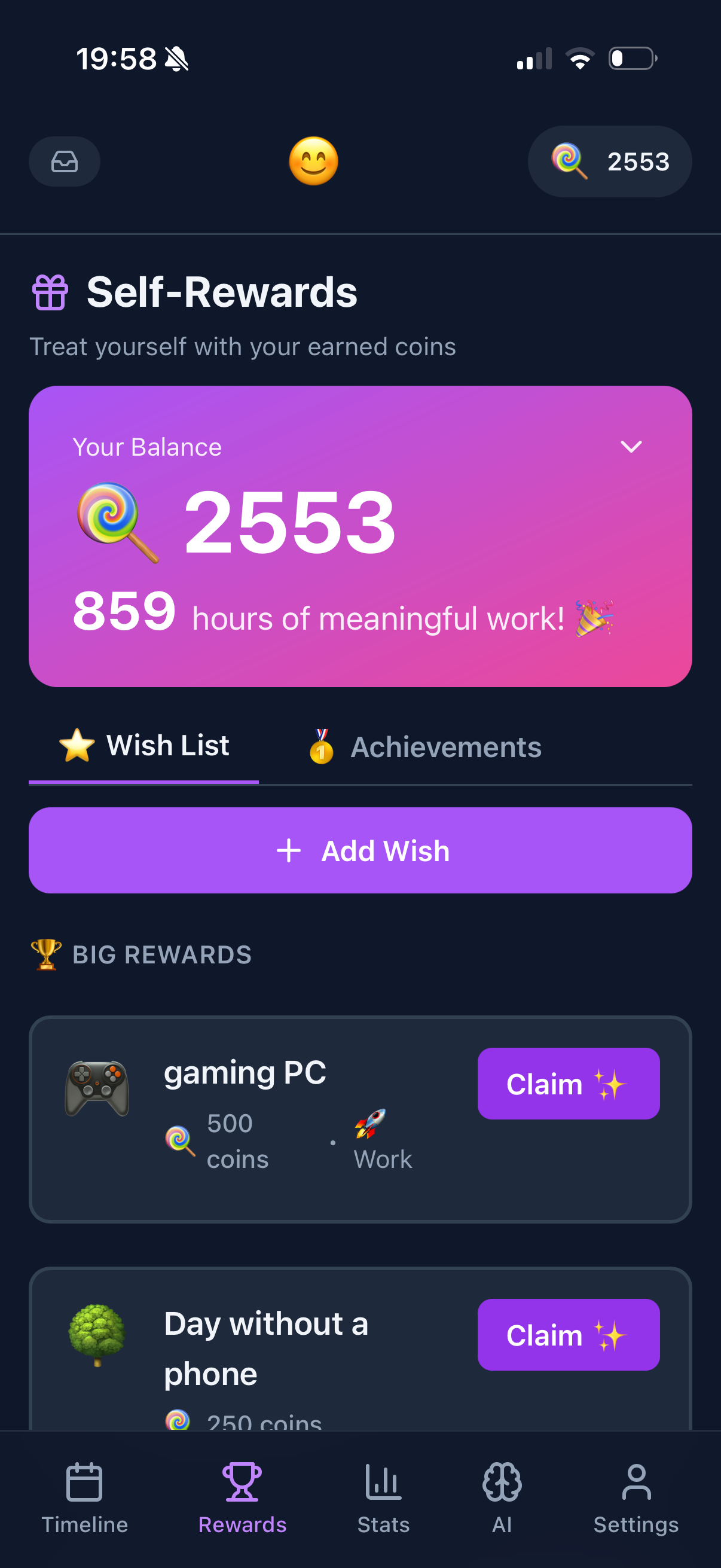
The gentle productivity approach means you won't feel guilty when days don't go perfectly. And the gamification adds a fun element without creating pressure.
Best for: People who want 1-3-5 simplicity plus life balance tracking.
Free
1-3-5 List (Web App)
A dead-simple web app built specifically for the 1-3-5 method. Nothing else. You get exactly 9 task slots in the right categories. Reset daily.
Best for: Minimalists who want zero friction and no extra features.
Free / Premium
Todoist with Labels
Use Todoist's priority levels or labels to implement 1-3-5. Create a filter that shows only today's tasks grouped by priority. Not purpose-built for this method, but flexible enough to make it work.
Best for: Todoist users who want to try 1-3-5 without switching apps.
Free
Paper
Seriously. A piece of paper with three sections works perfectly for 1-3-5. Draw lines, write tasks. No app to configure. No notifications. Just you and your list.
Best for: People who think better with pen and paper, or who want to reduce screen time.
1-3-5 Tips and Tricks
Plan the night before
Decide your 9 tasks before you go to bed. Your morning brain can jump straight into action instead of planning.
Do the big task first
Your best energy is usually in the morning. Don't waste it on small tasks. Attack the big one while you're fresh.
Leave one small task slot empty
Unexpected things come up. Having a buffer prevents your list from exploding.
It's okay to not finish
Some days you'll only complete 6 or 7 tasks. That's fine. The system is a guide, not a straitjacket.
Common mistake: Disguising medium tasks as small tasks. "Reply to emails" sounds small, but if it takes 45 minutes, it's a medium task. Be honest about task sizes or you'll constantly overcommit.
1-3-5 Combined with Life Balance
One enhancement to the standard 1-3-5 rule: make sure your tasks span multiple life areas, not just work.
Funtasking's Purpose Wheel identifies 8 life areas: Career, Health, Relationships, Finances, Personal Growth, Fun, Environment, and Contribution. Try to include at least 2-3 different areas in your daily 9 tasks.
Example balanced day:
- Big (Work): Complete project proposal
- Medium (Health): 30-minute workout
- Medium (Relationships): Call mom
- Medium (Work): Review team performance
- Small (Finances): Pay credit card bill
- Small (Environment): Tidy desk
- Small (Work): Reply to client email
- Small (Personal Growth): Read 10 pages
- Small (Fun): Watch one episode of show guilt-free
This prevents the common trap of being "productive" at work while the rest of your life falls apart.
Simple Planning, Balanced Life
Funtasking helps you track tasks across all areas of life, not just work.
Try Funtasking Free
Related Articles