Irony alert: you downloaded a task manager to feel less overwhelmed, and now the task manager itself is overwhelming you. The endless list. The overdue badges. The notification that you haven't opened the app in three days. Great, now you feel worse.
This happens all the time. Task managers are supposed to reduce cognitive load, but most of them just add to it. They're designed by productivity nerds who love complexity, not by people who understand that sometimes you just need to know what to do next.
There's a better way. Some task managers are intentionally simple. They do less, on purpose. And that's exactly why they work.
The overwhelm cycle: You add tasks to feel organized. The list grows. You feel behind. You add more tasks. The list grows more. You stop opening the app. Now you feel guilty AND disorganized. Sound familiar?
Why Most Task Managers Overwhelm You
It's not you. It's the design. Here's what goes wrong:
Infinite Capture
Apps encourage you to capture "everything." Every thought, every idea, every possible task. But humans can't process infinite lists. We get paralyzed looking at 100 items when we can only do 5.
Feature Creep
Labels, tags, priorities, due dates, projects, sub-projects, recurring tasks, integrations. Each feature adds options. Options require decisions. Decisions drain energy. Soon you're managing the system more than doing actual work.
Guilt-Based Design
Overdue counts. Broken streaks. Productivity scores. These features use shame as motivation. It works short-term. Long-term, it creates anxiety and avoidance.
One-Size-Fits-All
Most task apps are designed for project managers and power users. If you just need to know what to do today, you're forced to ignore 80% of the features while they still clutter your screen.
Non-Overwhelming Task Managers
Free / $2.99 Pro
Funtasking
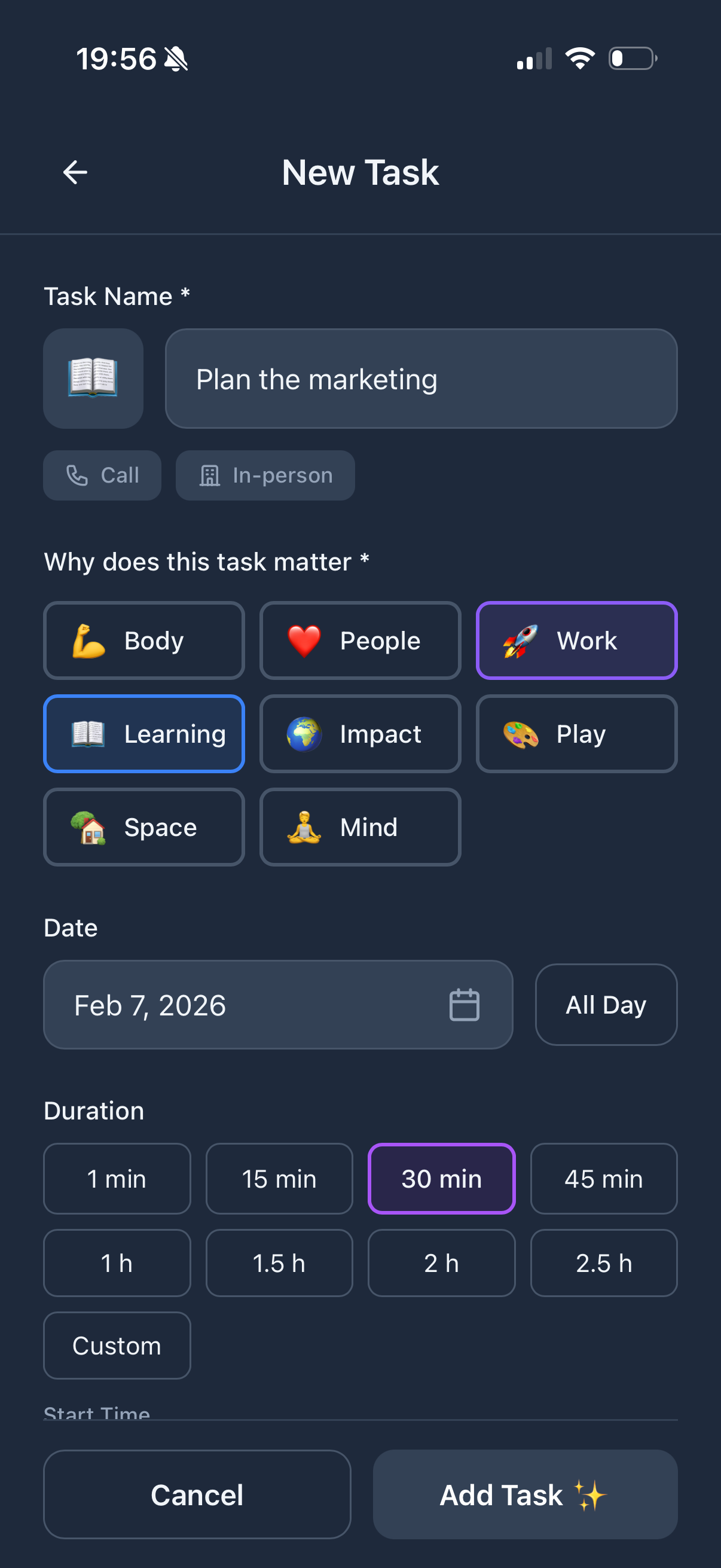
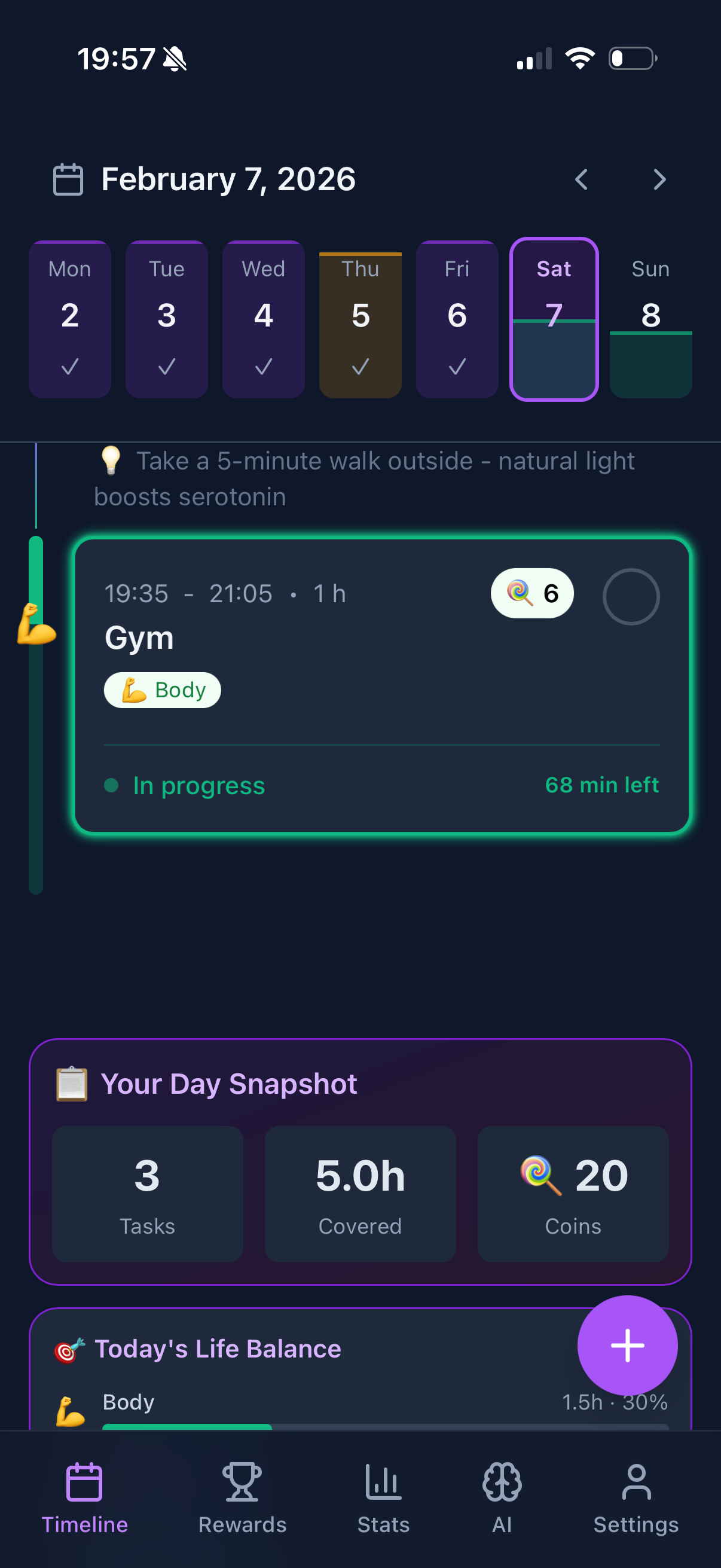
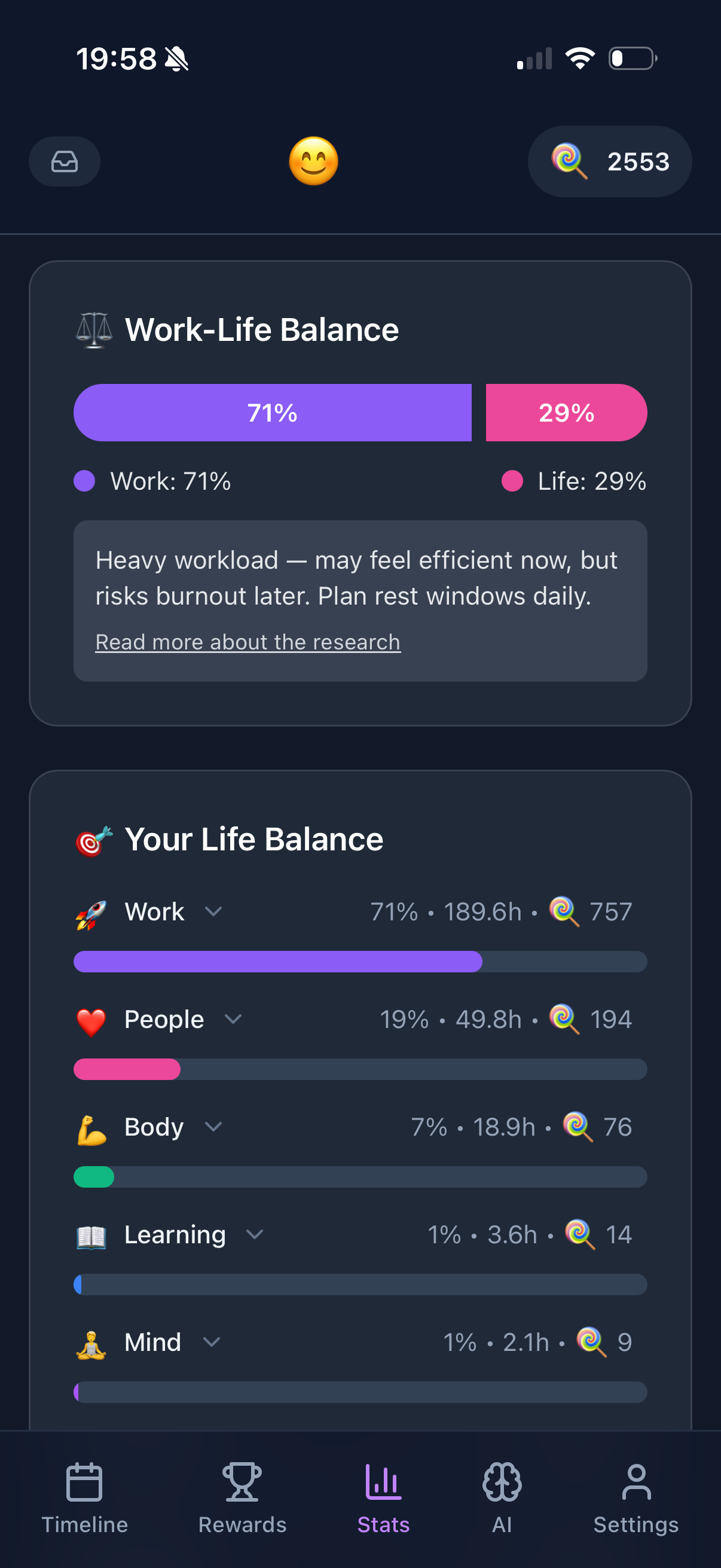
Funtasking takes a refreshingly different approach: it's not about capturing everything, it's about maintaining balance. The Purpose Wheel shows 8 life areas and helps you distribute your energy instead of dumping everything into an endless list.
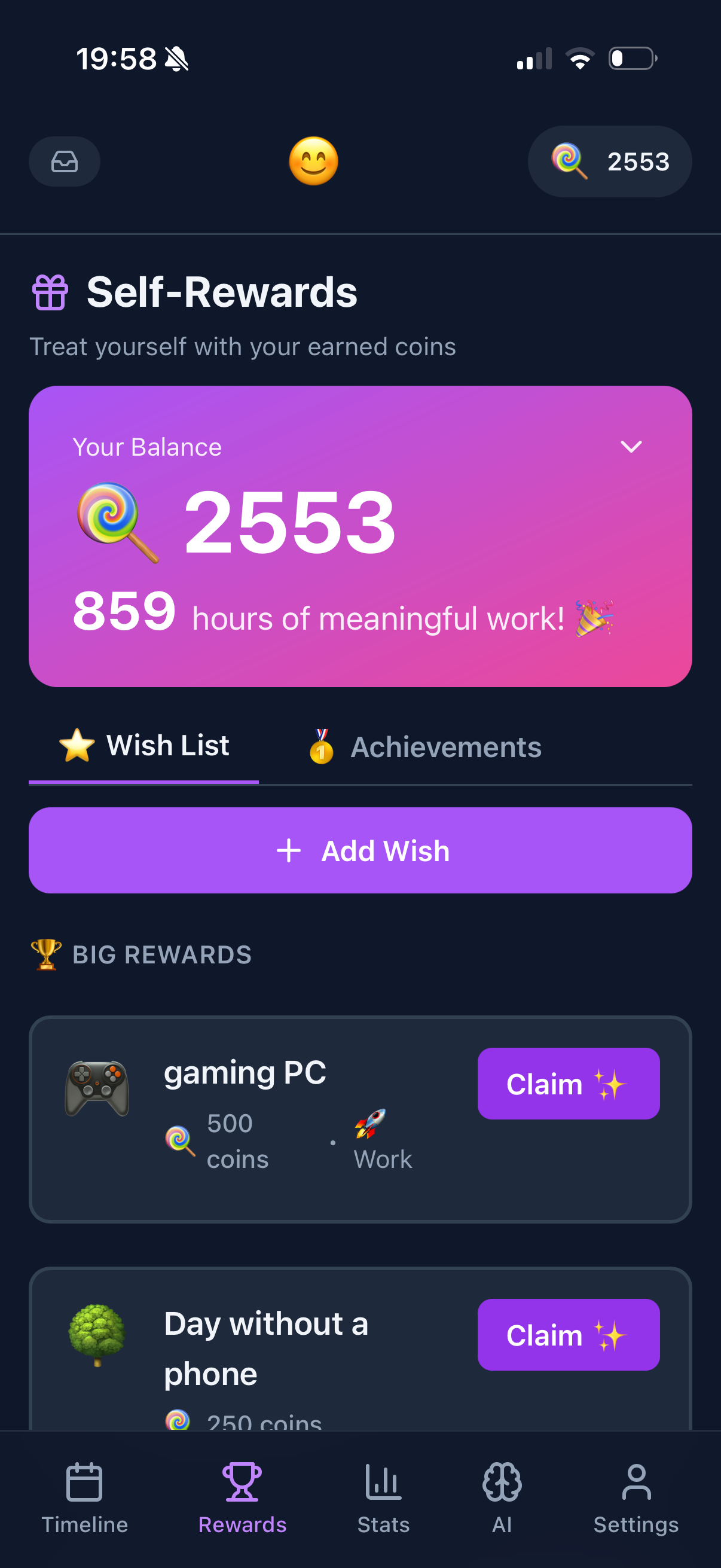
The interface is intentionally simple. Add a task, do it, feel good. The gamification is gentle: rewards for progress, never punishment for missing things. There's even burnout prevention built in, warning you when you're overloading any single area of life.
Why it doesn't overwhelm:
- + Balance-focused, not capture-focused
- + Simple interface, minimal features
- + Positive reinforcement only
- + Burnout prevention warnings
Consider:
- - Not for complex project management
- - Fewer features than power-user apps
- - Web and iOS only currently
Free with Pro at $5.99
Things 3
Things 3 is famous for being beautiful and calm. It's a full-featured task manager, but the design is so clean and thoughtful that it doesn't feel overwhelming. Everything has a place, nothing is cluttered.
The "Today" view keeps you focused on what matters right now instead of your entire backlog.
Why it doesn't overwhelm:
- + Beautifully minimal design
- + Today focus reduces list anxiety
- + Thoughtful keyboard shortcuts
Consider:
- - Apple ecosystem only
- - One-time purchase per platform
- - Can still become overwhelming if overused
$9.99/month
Structured
Structured uses visual time-blocking instead of lists. You see your day as a timeline, not as an intimidating column of tasks. This makes it immediately clear what you can and can't fit in a day.
The visual approach prevents overcommitment because you can literally see when there's no more time left.
Why it doesn't overwhelm:
- + Visual timeline prevents overplanning
- + One day at a time focus
- + Clean, colorful interface
Consider:
- - Subscription pricing
- - Requires time estimation for tasks
- - Apple ecosystem only
How to Stop Overwhelm in Any App
Even if you stick with your current task manager, these strategies help:
The 3-Task Rule
Pick your three most important tasks for the day. Write them down. Ignore everything else until those are done. Your app might have 50 tasks, but you're only looking at 3.
Weekly Purge
Every Sunday, delete anything you've been avoiding for more than two weeks. If you haven't done it in two weeks, you probably aren't going to. Delete it and move on.
Turn Off Notifications
Seriously, all of them. You know you have tasks. You don't need your phone reminding you constantly. Check the app when you decide to check it.
Simplify Your System
Stop using labels, tags, and priorities. They feel productive but mostly just add complexity. A simple list is often better than a sophisticated system.
The real issue: If you consistently have more tasks than you can complete, the problem isn't your app or your system. The problem is you're trying to do too much. The solution isn't better organization. It's saying no to things.
Signs You Need a Simpler Tool
- You spend more time organizing tasks than doing them
- Opening your task app makes you feel stressed, not organized
- You've tried "getting back on track" multiple times
- You have hundreds of items across dozens of projects
- You're not sure which features you actually use
If any of these sound familiar, you don't need more features. You need fewer.
Simple. Balanced. Calming.
Funtasking keeps you organized without the overwhelm. Just balance, progress, and peace of mind.
Try Funtasking Free
Related Articles